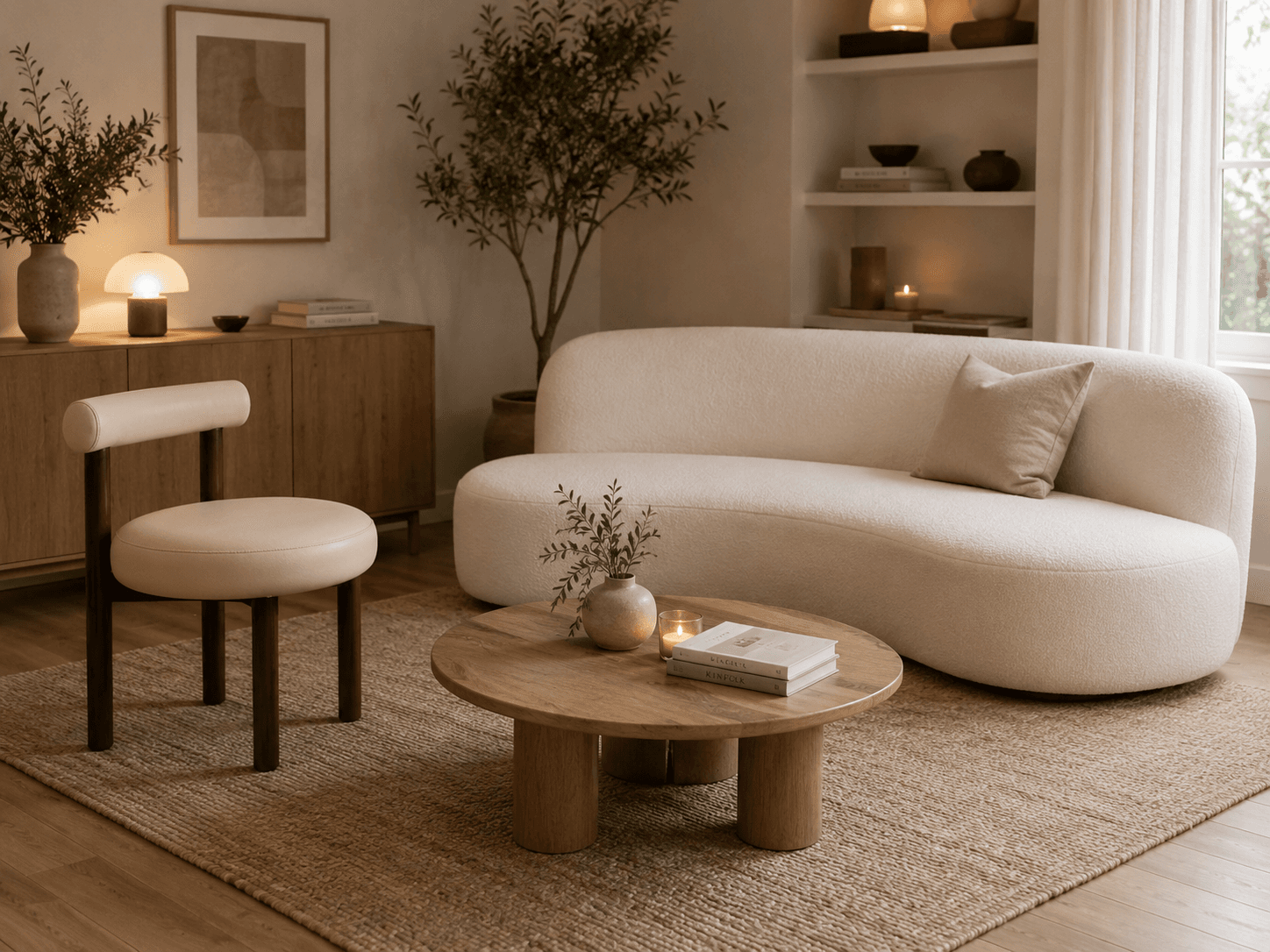
Fabric vs Leather Sofa: Which Is Better for Malaysian Homes?

Photo by FRWD Furniture
The short answer: for most Malaysian homes, fabric wins — it's RM3,000–10,000 cheaper, doesn't turn sticky in our humidity, and modern easy-clean weaves have closed the old "leather is easier to wipe" gap. Leather wins if your living room is air-conditioned most of the day, you want a 15–20-year sofa, and you're prepared to pay RM5,000+ for real leather — because under that price, "leather" in Malaysia usually means PU that peels in 3–5 years. That trap catches more buyers than the fabric-vs-leather question itself, so we'll deal with it properly below.
Fabric vs Leather at a Glance
Fabric sofa | Genuine leather sofa | "Leather" under RM5k (usually PU) | |
|---|---|---|---|
Price (3-seater, MY) | RM1,200–8,500 | RM5,000–15,000+ | RM1,200–3,000 |
Feel in KL humidity | Breathable, stays comfortable | Sticky on bare skin without aircon | Stickiest of all — plastic layer |
Lifespan (daily use) | 7–12 yrs (quality weave + good foam) | 15–25 yrs, ages into patina | 3–5 yrs before peeling starts |
Spills & cleaning | Easy-clean weaves: blot with damp cloth | Wipe instantly; condition 2×/yr | Wipes clean — until it peels |
Pets | Tight weaves & bouclé handle claws | Scratches show; can be buffed | Claws puncture; punctures spread |
Colours & styles | Practically unlimited | Browns, blacks, tans mostly | Limited |
Allergies / dust mites | Vacuum weekly | Best choice — nothing to burrow into | Fine |
Repair | Recover/reupholster possible | Recondition, re-dye — repairable | Not repairable once peeling |
Why Fabric Wins for Most Malaysian Homes

Photo by FRWD Furniture
1. The humidity problem is real. Leather is a skin: it doesn't breathe the way a weave does, and on a 33°C afternoon without air-conditioning, bare skin sticks to it. Fabric stays sittable all day. This is the single biggest reason fabric outsells leather in Malaysia — and why the fabric-vs-leather advice you read on US sites (written for cold winters) mostly doesn't transfer here.
2. The price gap buys a lot of sofa. A genuinely good fabric 3-seater — solid wood frame, high-density foam, 25,000+ Martindale upholstery — costs RM3,000–5,000. Genuine leather at equivalent build quality starts around RM5,000 and climbs fast. The RM3,000 you save covers a dining set.
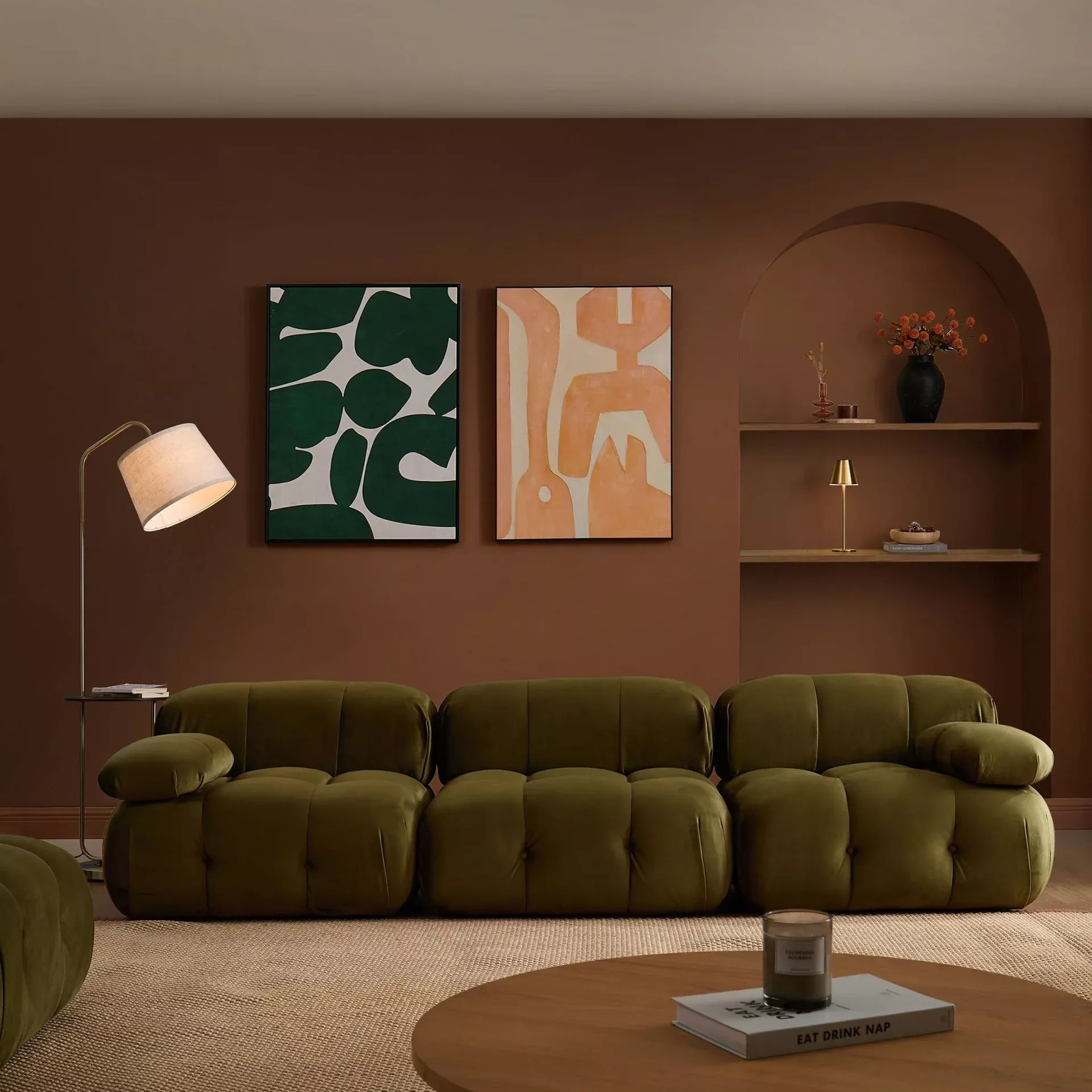
3. Modern easy-clean fabrics ended leather's cleaning advantage. The old argument — "kids and curry, get leather, it wipes" — predates easy-clean technology. Coated weaves like the one on our Castelia (RM3,550) let you blot Milo, kopi, and most sauces off with a damp cloth before they set. Not every fabric does this — it's a specific treated weave, so look for "easy clean" on the spec sheet, not the ad.
4. Fabric handles pets better than you've heard. Tight weaves and bouclé resist claws well — loops hide pet hair and minor scuffs. Our Elsa (RM6,450) is upholstered in pet-friendly bouclé for exactly this reason. Full breakdown in our pet-friendly sofa guide.
What fabric costs you: more frequent vacuuming (weekly, or dust and mites build up), untreated weaves stain, and light colours show wear sooner. A washable-cover design or an easy-clean weave solves most of it.
When Leather Is Genuinely the Better Buy

Photo by FRWD Furniture
Honest list — leather earns its price when all three are true:
Your living room is air-conditioned most of the time you use it. Cooled to 24°C, leather feels superb — cool, smooth, and it never gets the "warm fabric" mustiness.
You're buying for 15+ years. Real leather doesn't wear out so much as wear in — it stretches, softens, and develops a patina. A quality leather sofa can outlive two fabric ones, which changes the per-year math: RM9,000 over 20 years beats RM4,000 over 8.
Allergies rule your household. Dust mites can't burrow into leather. For serious dust-mite allergy sufferers, leather (or microfibre leather) is the medically sensible choice — wipe weekly and it's as allergen-free as furniture gets.
What leather costs you: the sticky-skin problem without aircon, conditioning twice a year (skip it and Malaysian humidity swings dry it into cracks), scratches that show (cats especially), a limited colour palette, and the price of the real thing.
The Trap: "Leather" That Isn't — the RM2,000 Leather Sofa Problem
This is the part most retailers won't explain, and it causes more regret than any fabric-vs-leather mistake. "Leather" on a Malaysian price tag can mean five different materials:
What the tag says | What it actually is | How long it lasts |
|---|---|---|
Full-grain leather | The whole hide, top layer intact — the real thing | 20+ years, improves with age |
Top-grain leather | Sanded and refinished hide — still real, slightly less character | 15–20 years |
Split / genuine leather | The lower layers of the hide, coated | 8–12 years; stiffer feel |
Bonded leather | Leather scraps glued to a backing (~10–20% leather) | 2–5 years; peels like sunburn |
PU / faux / "vegan" leather | Plastic (polyurethane) on fabric — no leather at all | 3–5 years in daily MY use, then peels |
The rule of thumb: a real full- or top-grain leather 3-seater cannot be made and sold for RM2,500. If the price says RM1,500–3,000 and the tag says "leather," it's bonded or PU — fine materials if you know that's what you're buying and price the 3–5-year lifespan in. The failure mode isn't buying PU; it's paying leather expectations for PU reality.
Three questions that expose it in any showroom: (1) "Which grade — full-grain, top-grain, split, bonded, or PU?" (2) "Can I see the spec sheet?" (3) "What does the warranty say about peeling?" If the answers are vague, the grade is low.
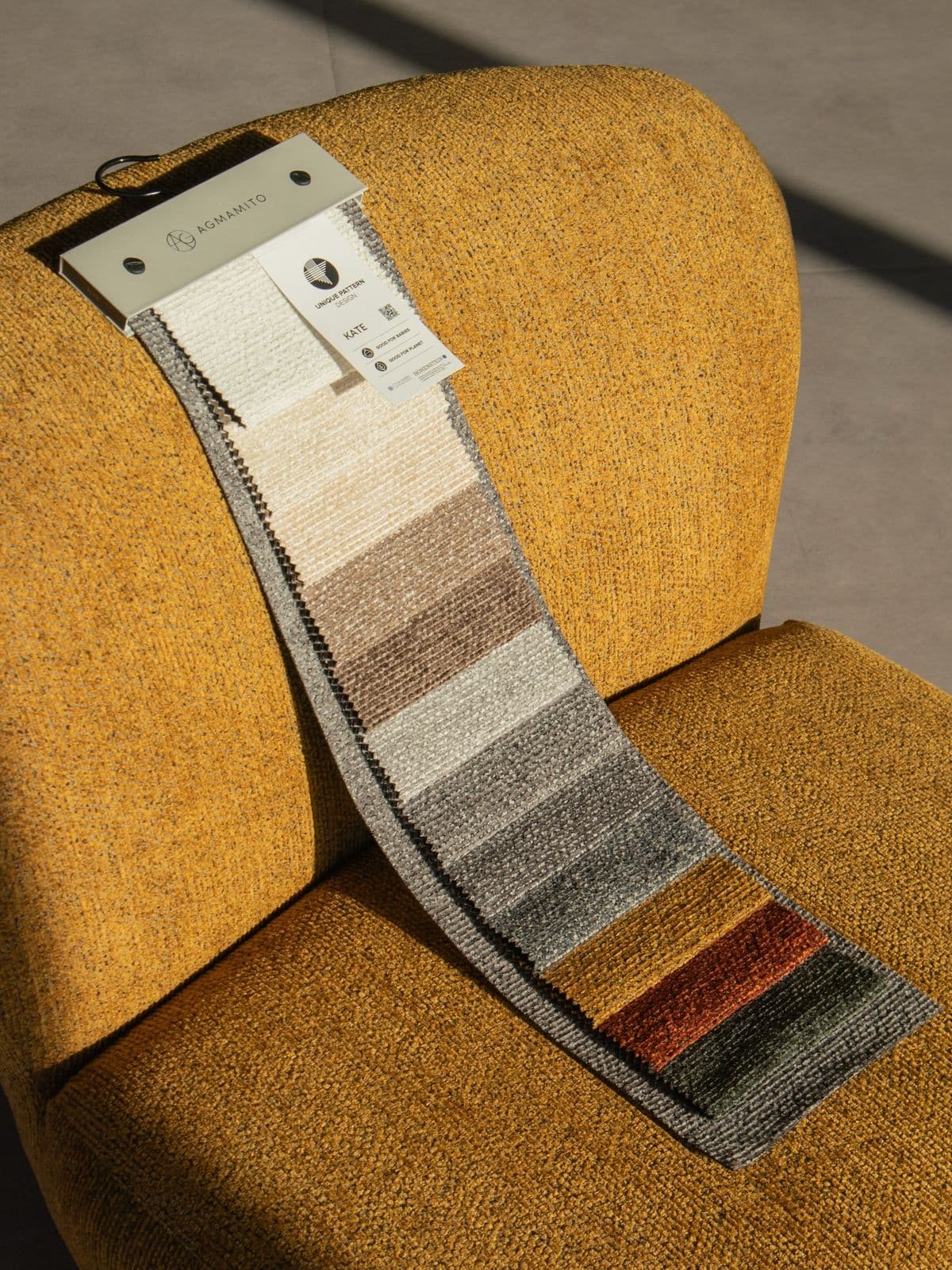
Where we stand: FRWD's sofa range is fabric — bouclé, easy-clean weaves, and wool blends chosen specifically for Malaysian humidity, with the exact upholstery named on every spec sheet (e.g. the Camille's Jay Ideal JR1088 weave). We don't currently sell leather sofas, so we make nothing from this comparison either way — which is exactly why you can trust it. When any product of ours is leather-look, the spec sheet says PU or microfibre leather in those words. The exact upholstery and frame material are named on every FRWD product page — and the Elsa's spec sheet goes further and prints its foam density (32 kg/m³), the level of transparency we're pushing the whole range toward.
Fabric vs Leather: Durability Is Mostly Not the Upholstery
A truth that reframes the whole debate: most sofas die from the inside. Sagging seats (foam below ~22 kg/m³ compressing), creaking frames (particleboard joints loosening), and flattened cushions kill far more sofas than worn upholstery does. A leather cover on a 18 kg/m³ foam seat is a 3-year sofa in a 20-year skin.

Photo by Mortise & Tenon Handmade Furniture
So whichever side you pick, check the two specs that actually predict lifespan: solid wood frame (not MDF/particleboard) and 28+ kg/m³ seat foam. Full explainer in our sofa materials guide — and if a spec sheet doesn't state them, ask; we'll give you the numbers on any FRWD model straight.
The Verdict
Your situation | Buy |
|---|---|
Young family, spills, no full-day aircon | Easy-clean fabric |
Pets with claws | Bouclé or tight-weave fabric |
Air-conditioned living room, 15-year horizon, RM5k+ budget | Genuine top/full-grain leather |
Dust-mite allergies | Leather or microfibre leather |
Want the leather look under RM3k | Buy it knowingly (PU, 3–5 yrs) — or get a quality fabric instead |
Renting / might move / style changes | Fabric — cheaper to replace, easier to sell |
For most Malaysian living rooms, that decision tree lands on fabric — which is why our range is built the way it is. Sit on both before deciding: our Bangsar Experience Centre has the fabric side covered, and no showroom visit ever made this decision worse.
Interior Designer · FRWD Furniture
Laila is a furniture and interiors specialist at FRWD Furniture's Bangsar Experience Centre, with expertise in contemporary design trends, material finishes, and creating spaces that balance aesthetics with everyday function.
Frequently Asked Questions
1.Which is better for a sofa — leather or fabric?
Which is better for a sofa — leather or fabric?
In Malaysia: fabric for most homes (breathable in humidity, RM3,000+ cheaper, easy-clean weaves handle spills). Leather is better if the room is consistently air-conditioned, you want 15+ years of life, and the budget clears RM5,000 for genuine top- or full-grain.
2.What are the disadvantages of a leather sofa?
What are the disadvantages of a leather sofa?
Sticky against bare skin in Malaysian heat without aircon; needs conditioning twice a year or it cracks; visible scratches (especially with cats); limited colours; and genuine leather starts around RM5,000 — anything much cheaper labelled "leather" is usually bonded or PU, which peels within 3–5 years.
3.Do fabric sofas last longer than leather?
Do fabric sofas last longer than leather?
No — genuine leather outlasts fabric (15–25 years vs 7–12) if it's real full- or top-grain and gets conditioned. But PU "leather" lasts less than quality fabric (3–5 years before peeling). And either cover outlives the sofa only if the frame is solid wood and the seat foam is 28+ kg/m³ — that's what usually fails first.
4.Which material is best for a sofa?
Which material is best for a sofa?
Depends on your household's biggest risk — spills, pets, heat, or budget. We compare all 17 options (with prices and ratings) in the complete sofa materials guide.