INTRODUCTION
Choosing a sofa material in Malaysia is a different decision from choosing one anywhere else. The same fabric that lasts a decade in a London flat may peel, moult, or go mouldy within two years in a KL condo — not because of poor quality, but because of two conditions unique to how Malaysians live: year-round humidity between 70–90% RH, and daily temperature cycling between 30°C+ outdoor heat and 18–24°C air-conditioned interiors.
These two conditions are the primary cause of PU leather peeling, natural linen moulding, and velvet pile collapsing before its time. Most sofa material guides are written for temperate climates and don't account for them. This one is.
What follows is an honest, climate-specific assessment of every sofa material available in Malaysia — rated for how each actually performs in real Malaysian homes, not in a controlled showroom. If you're still deciding on which sofa type suits your space before thinking about material, see the Sofa Malaysia Condo Buying Guide first. For the broader room planning picture, the Complete Malaysian Living Room Furniture Guide covers everything from layout to furniture selection.
Why Malaysia's Humidity Changes Everything
Most sofa guides are written for temperate climates. In those conditions, nearly any material performs reasonably well. Malaysia's climate creates three specific stressors that determine how your sofa material holds up over time.
High ambient humidity (70–90% RH year-round) means natural materials absorb moisture and can develop surface mould within 6–12 months without AC or regular conditioning. Synthetic materials with low breathability trap moisture and accelerate bacterial growth in the foam beneath.
Daily AC cycling is the primary cause of PU leather peeling. The repeated contraction and expansion caused by shifting between 18–24°C indoor air and 30–34°C outdoor temperature causes polyurethane coatings to crack and delaminate at seams and fold lines — typically within 2–4 years of regular use.
Airborne dust and particulate accumulate faster in Malaysia's urban environment than in cooler climates. Open-weave and looped materials like bouclé and natural linen trap particulate more readily and require specialist tools to clean properly.
Choosing the right material means your sofa looks and performs like new at the 5-year mark. The wrong choice means reupholstering or replacing it at the 3-year mark.
7 Sofa Materials: At-a-Glance Comparison
Ratings reflect performance in Malaysian climate conditions with regular use in a typical AC-cooled condo environment.
Material | Humidity Resistance | Ease of Cleaning | Breathability | Pet-Friendly | Longevity | Price Value |
|---|---|---|---|---|---|---|
Genuine Leather | ★★★★☆ | ★★★★☆ | ★★★☆☆ | ★★★☆☆ | ★★★★★ | ★★★☆☆ |
Leathaire | ★★★★★ | ★★★★★ | ★★★★☆ | ★★★★☆ | ★★★★☆ | ★★★★☆ |
PU Leather | ★★★☆☆ | ★★★★☆ | ★★☆☆☆ | ★★★☆☆ | ★★★☆☆ | ★★★★☆ |
Performance Fabric | ★★★★★ | ★★★★★ | ★★★★☆ | ★★★★★ | ★★★★☆ | ★★★★☆ |
Linen & Cotton | ★★★☆☆ | ★★★☆☆ | ★★★★★ | ★★★☆☆ | ★★★☆☆ | ★★★★★ |
Velvet | ★★☆☆☆ | ★★★☆☆ | ★★★☆☆ | ★★☆☆☆ | ★★★☆☆ | ★★★☆☆ |
Bouclé & Teddy | ★★☆☆☆ | ★★☆☆☆ | ★★★☆☆ | ★☆☆☆☆ | ★★★☆☆ | ★★★☆☆ |
★★★★★ Excellent · ★★★★☆ Good · ★★★☆☆ Acceptable · ★★☆☆☆ Poor · ★☆☆☆☆ Avoid
1. Genuine Leather
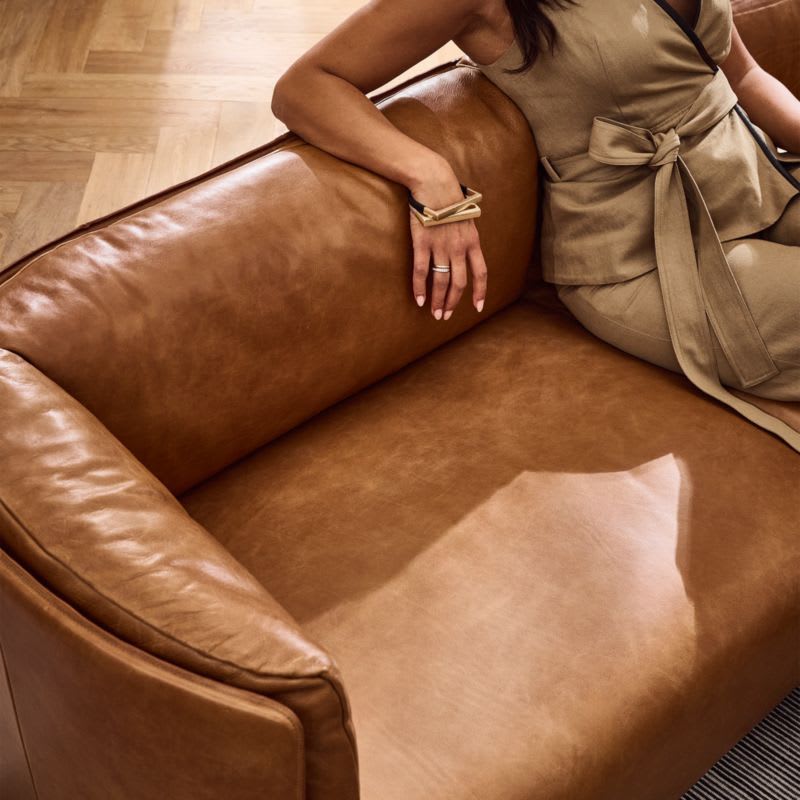
Photo by Pinterest
The highest-longevity sofa material available — but only if your home has consistent air-conditioning and you're committed to annual conditioning. Without AC, genuine leather is a poor long-term choice for Malaysian conditions.
How it performs in Malaysia
Genuine leather (full-grain, top-grain) develops a patina over time that many buyers find more appealing than the original surface — but this requires the leather to stay dry and conditioned. In a Malaysian home without consistent AC, leather absorbs ambient humidity and can develop surface mould within a single wet season. In a well-maintained, air-conditioned home, top-grain or full-grain leather can last 15 years or more with annual conditioning — the best longevity of any sofa material on the market.
What to check in the showroom
Grade matters: full-grain leather (the outer hide layer) is the most durable. Top-grain is sanded and treated — slightly less durable but more uniform in appearance. Bonded leather (leather scraps compressed with adhesive) should be avoided entirely — it peels within 2–4 years even in climate-controlled rooms. Press your thumb into the surface: full-grain leather wrinkles naturally at the edges of the pressure point. Treated or bonded leather does not.
Genuine leather sofas are available across the Malaysian market in the RM8,000–25,000+ range. If this is your choice, ensure your room has consistent AC and build an annual conditioning routine into your maintenance schedule.
2. Leathaire
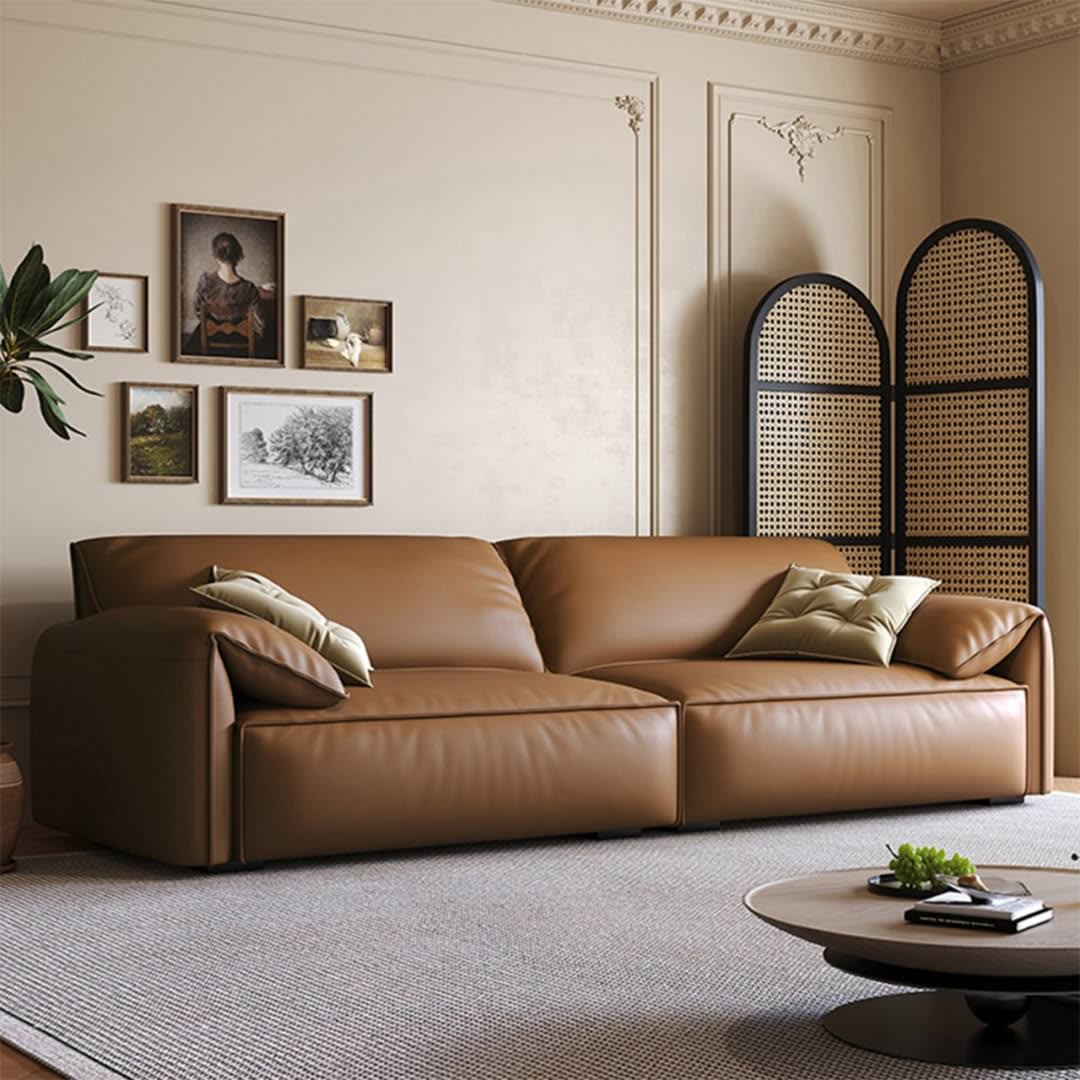
Photo by Pinterest
Leathaire is the recommended default for most Malaysian households when buying in the leather-look category. It combines the visual appearance of leather with engineered breathability and humidity resistance that neither genuine leather nor PU leather can match — and at a significantly lower price point than genuine leather.
How it performs in Malaysia
Leathaire is a nanotech synthetic fabric — not a coating applied over a base material, but a structured fabric engineered to be breathable and flexible across the full range of Malaysian humidity and temperature cycling. Unlike PU leather, there is no polyurethane coating layer that can crack or peel. Unlike genuine leather, it requires no conditioning and does not absorb moisture at the surface level.
In practice: leathaire stays cool to the touch, does not become sticky in heat, and wipes clean with a damp cloth. For Malaysian households with children, or in rooms that are air-conditioned but not perfectly climate-controlled, leathaire consistently outperforms both genuine leather and PU leather at the same price point.
Leathaire vs PU Leather — the critical difference
PU leather is a polyurethane coating applied over a woven fabric base. The coating provides the leather-like appearance — and it is the coating that fails. In Malaysian humidity and AC cycling conditions, PU leather coatings begin to crack and peel at fold lines typically within 2–4 years. Once peeling begins, it cannot be reversed.
Leathaire's nanotech structure is integral — there is no separate coating layer to delaminate. At a comparable price point to mid-range PU leather, leathaire delivers substantially longer usable life.
When shopping the leather-look category, always ask the retailer specifically whether a sofa is leathaire or PU leather — the visual difference at the point of purchase is negligible, but the performance difference over 3–5 years in Malaysian conditions is significant.
3. PU Leather
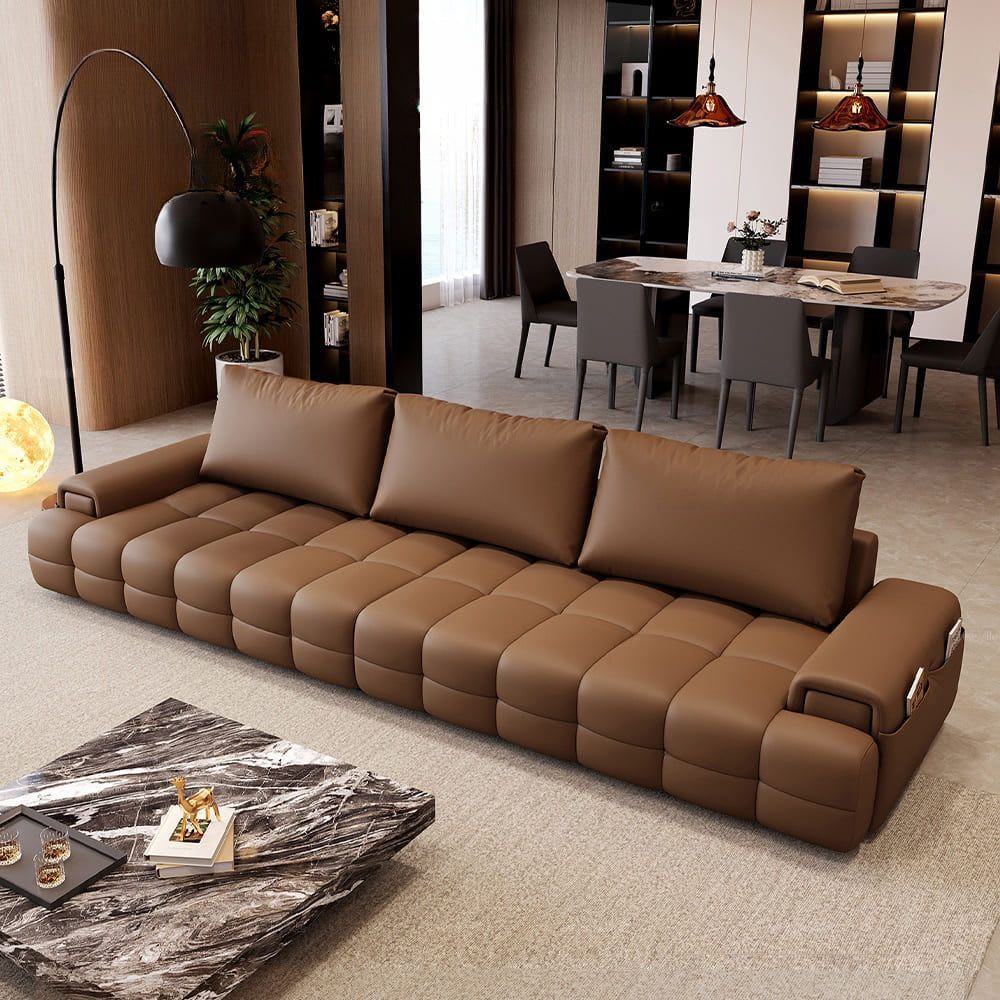
Photo by Pinterest
PU leather is a short-term compromise. It is the most affordable leather-look option at the time of purchase, but its polyurethane coating degrades in Malaysian humidity and AC cycling — typically peeling within 2–4 years without consistent climate control.
When PU leather is acceptable
PU leather is not the recommended long-term material choice for Malaysian conditions. There are two situations where it makes sense: short-term ownership (renting, expecting to replace within 3 years), or a room that is air-conditioned 24 hours a day at a stable temperature and humidity. Under those conditions, PU leather degrades more slowly — but still cannot match the durability of leathaire at the same price point.
FRWD carries leatherette sofas — including options like the Vogue and Sojourn — in the RM2,000–8,000 range. These are best suited to rooms with consistent AC or shorter-term ownership scenarios. Our team will always walk you through the tradeoffs at purchase.
4. Performance Fabric

Photo by Pinterest
Performance fabric is the recommended choice for households with children or pets. It is the only sofa material that combines stain resistance, easy cleaning, breathability, and durability in a single option at the mid-range price point.
How it performs in Malaysia
Performance fabric is a tightly woven synthetic fabric — typically polyester or a polyester-olefin blend — treated with a stain and liquid-repellent finish at the fibre level, not as a surface coating. Because the treatment is at the fibre level, it does not wear off with cleaning. Spills bead on the surface and can be wiped clean within the first 30–60 seconds.
In Malaysian conditions: performance fabric does not absorb ambient humidity, resists mould growth, and its tight weave does not trap pet hair the way velvet or bouclé do. It is not as cool to the touch as leathaire in a warm room, but its breathable weave prevents the sticky sensation that PU leather develops in heat.
The Marbelle: water-repellent performance fabric in action
The Marbelle Water Repellent is FRWD's clearest example of performance fabric in practice — its pet-friendly, stain-resistant fabric shields the high-density sponge core from everyday spills and contact, wipes clean easily, and is designed specifically for high-traffic social spaces. It's available as an accent chair, making it a lower-risk way to introduce performance fabric into your living room before committing to a full sofa in the same material type.
Performance fabric vs regular fabric
Regular fabric (linen, cotton, standard polyester blends) absorbs spills, requires spot-cleaning with specialist products, and may stain permanently. Performance fabric beads liquid on the surface — most spills wipe off with water. Claw-snag resistance is significantly better than velvet or bouclé.
Browse 3-seater sofas or explore the full living room furniture range — our fabric sofas use treated fibres suitable for Malaysian conditions.
See the Sofa Care & Maintenance Guide for cleaning instructions specific to performance fabric and stain treatment timelines.
FRWD fabric sofas are available in the RM3,000–10,000 range. First recommendation for households with children under 12 or pets.
5. Linen & Cotton
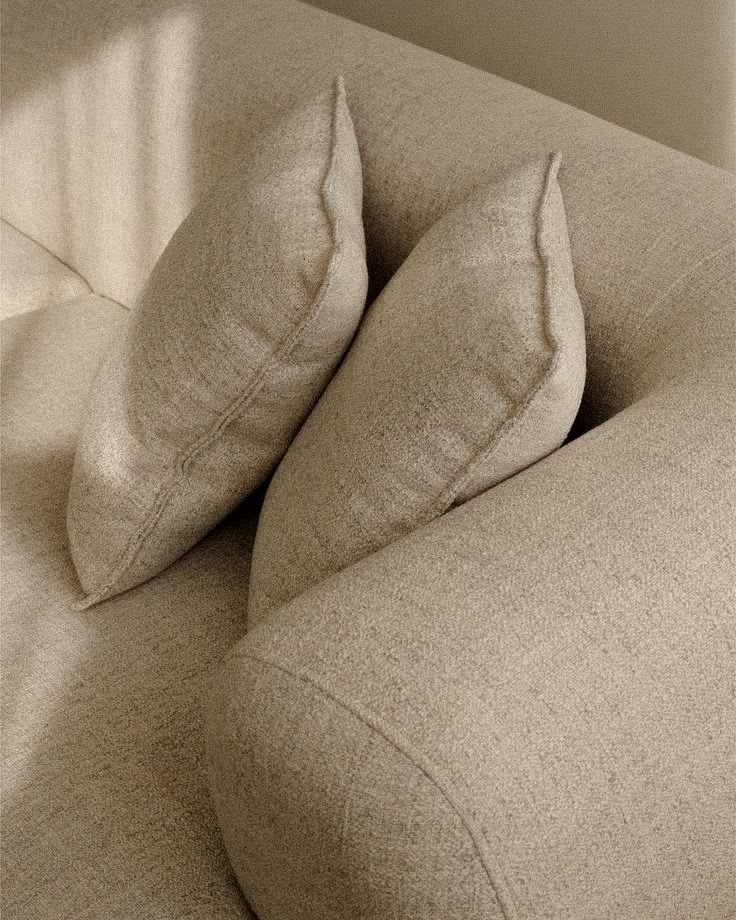
Photo by Pinterest
Natural linen and cotton are the most breathable sofa materials available — but their low humidity resistance and high maintenance requirements make them a poor choice for most Malaysian households outside of formal, consistently air-conditioned rooms.
How it performs in Malaysia
Linen and cotton are breathable, naturally temperature-regulating, and the coolest materials to sit on in warm conditions. In Malaysian conditions, their natural fibre structure absorbs ambient humidity — which can cause surface mould in non-AC rooms within a single wet season and fading from UV exposure near windows.
The suitable scenario is specific: a formal living room that is consistently air-conditioned, used primarily for adult seating, and away from direct sunlight. In these conditions, natural linen ages beautifully and can last 8–10 years with annual professional cleaning.
See the Sofa Care & Maintenance Guide for linen conditioning and mould prevention guidance specific to the Malaysian climate.
Not recommended for households with young children, pets, or rooms without consistent AC.
6. Velvet
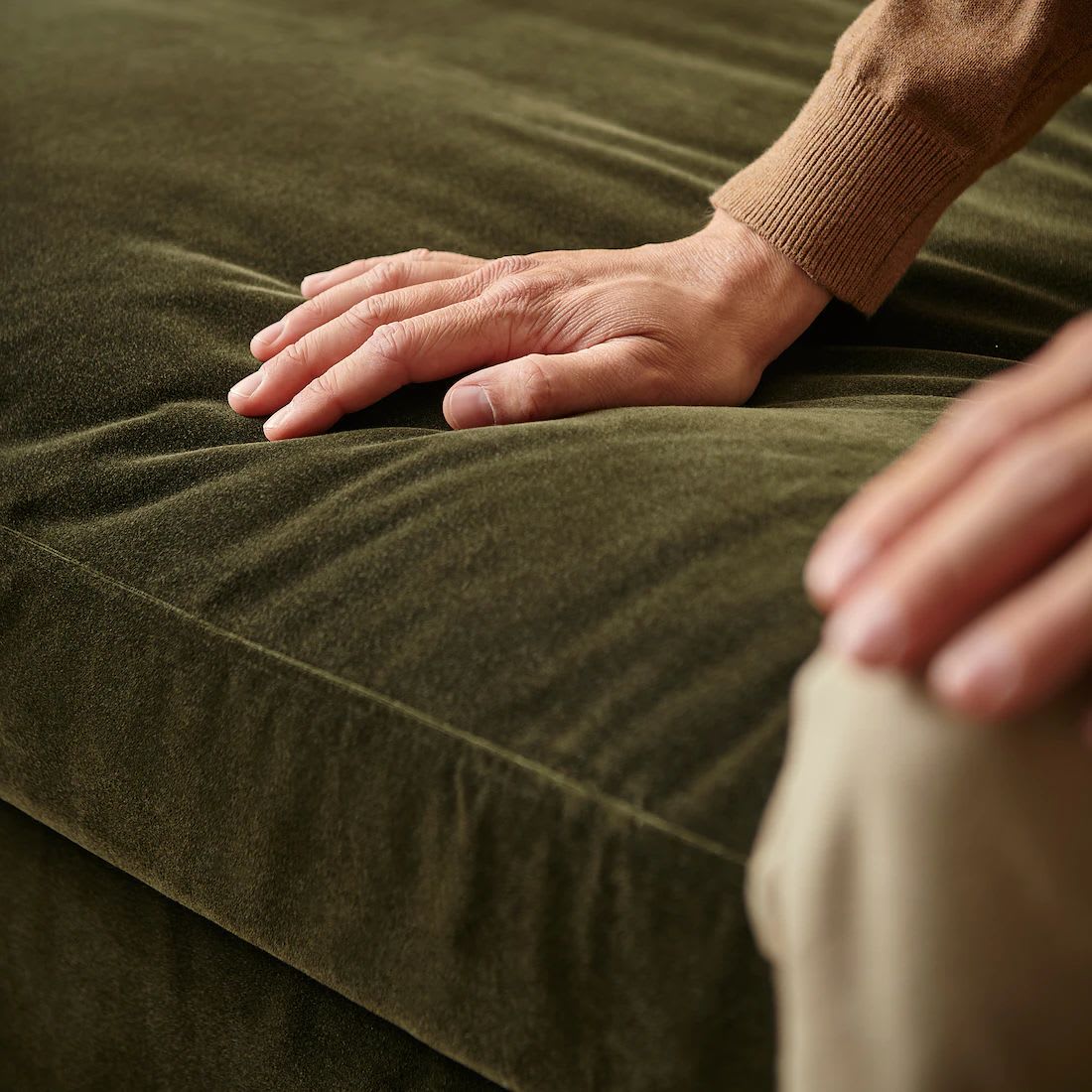
Photo by Pinterest
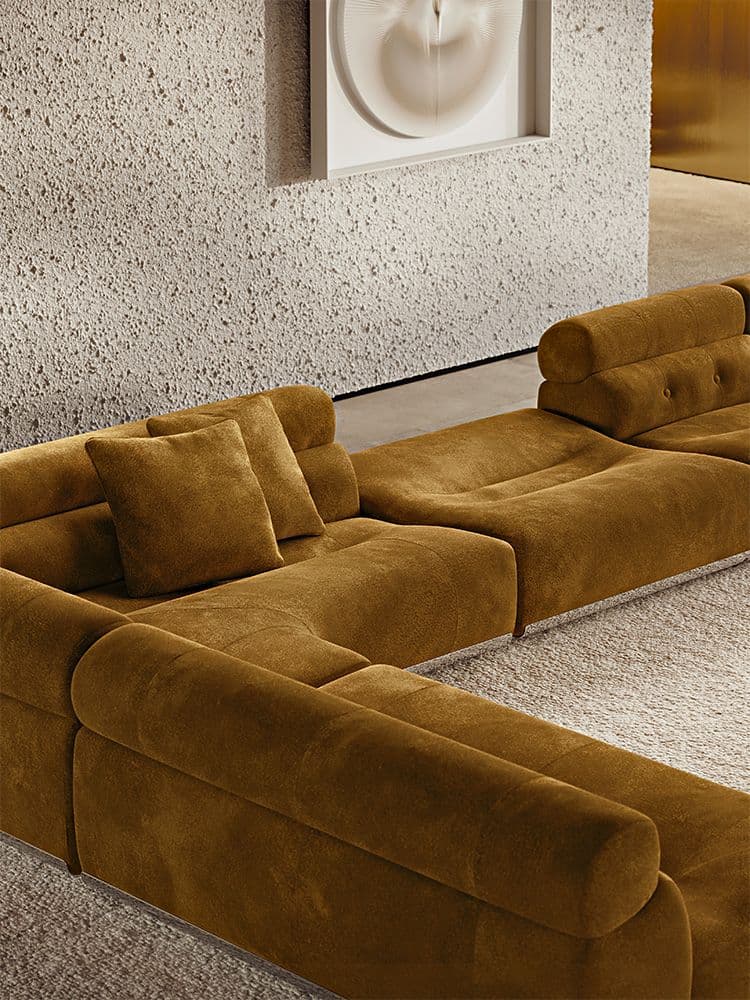
Velvet is an aesthetic-first material. Its rich colour saturation and soft pile make it one of the most visually striking sofa choices, but its pile structure traps dust, pet hair, and humidity — making maintenance intensive in Malaysian conditions.
How it performs in Malaysia
Velvet's cut pile creates a directional surface that reflects light differently depending on viewing angle — this is what gives it the distinctive colour depth that flat-weave fabrics cannot replicate. In a cool, dry, air-conditioned room with no pets and low-traffic use, velvet holds its appearance well with regular brushing.
In a Malaysian home with pets, high traffic, or without consistent AC: velvet traps pet hair in its pile that is difficult to remove without specialist tools, absorbs airborne dust at a higher rate than any other material, and can develop a moist odour in high-humidity conditions. Weekly brushing is the minimum maintenance requirement.
Performance velvet as a better alternative
Performance velvet — a synthetic velvet made from polyester or microfibre rather than natural fibre — offers a similar visual appearance with significantly better practical performance. It is more resistant to humidity, easier to clean, and more resistant to pile crushing under weight. If you want the velvet aesthetic, this is the version to ask for.
For the velvet look without the daily-use burden, a velvet accent chair in a lower-traffic space is a smarter entry point than a full sofa.
FRWD carries velvet sofas in performance and semi-performance grades, RM3,000–9,000. Recommended for: formal living rooms, AC-cooled rooms, households without pets.
7. Bouclé & Teddy
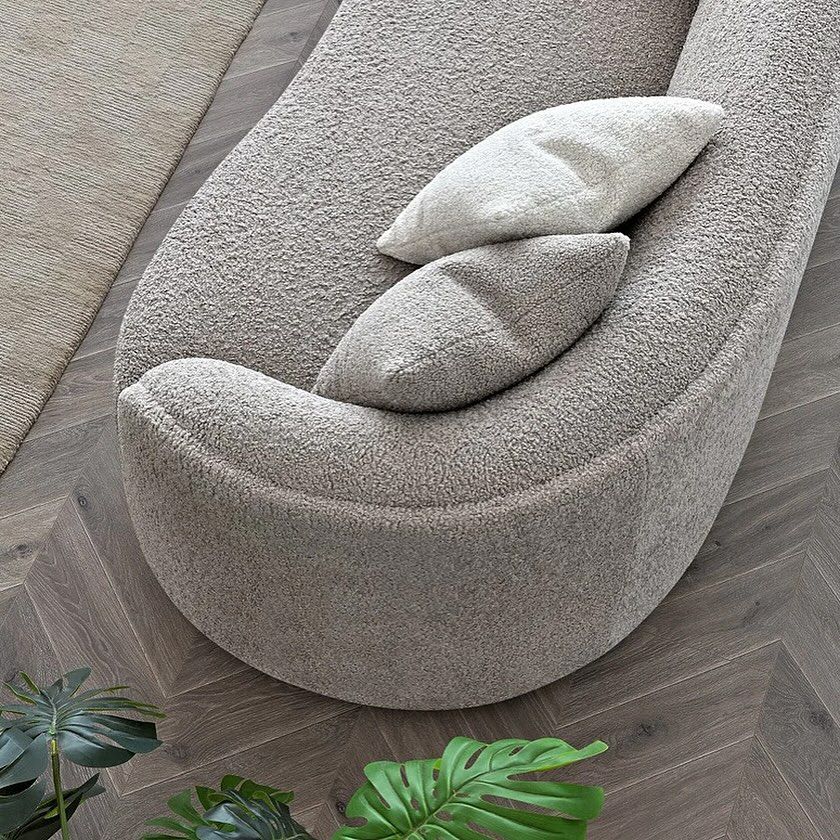
Photo by Pinterest
Bouclé and teddy are the strongest current aesthetic trend in Malaysian interior design — but their looped and textured pile structures make them the highest-maintenance sofa materials in the range, and the worst choice for homes with cats or without consistent AC.
How it performs in Malaysia
Bouclé is woven from looped yarn — the distinctive textured surface that defines its recognisable appearance. In an air-conditioned room without cats, it performs acceptably. In a home with cats, cat hair wraps around the looped yarn and cannot be removed with standard tools — it must be cut out. In a room without consistent AC, the loop structure traps moisture and is slower to dry than flat-weave fabrics.
Teddy fabric (sometimes called sherpa or bouclé-adjacent) has a shorter, denser pile — slightly easier to maintain, but with the same pet hair and humidity concerns.
When bouclé is the right choice
Bouclé is appropriate in one specific scenario: an air-conditioned room, no cats, low-traffic adult seating, where the aesthetic is the primary priority. In this configuration it holds its appearance for 5–7 years with regular brushing and professional cleaning every 12–18 months.
If you want the bouclé aesthetic in a lower-maintenance format, a bouclé accent chair carries the look without the daily-use demands of a full sofa.
FRWD carries bouclé and teddy sofas — including the Elsa and Camille — in cream, beige, and muted tones, RM3,500–10,000. Our team will always discuss your household conditions before recommending bouclé.
Which Material Is Right for Your Household?
Households with children: Performance fabric first — stain-resistant, survives spills and daily contact, cleanable with water. Leatherette second if you want the wipe-clean leather look. Avoid velvet, bouclé, and natural linen.
Households with cats or dogs: Performance fabric is the only material with reliable claw and snag resistance at the mid-range price point. Leatherette resists surface scratches better than bonded leather at the same price. Avoid bouclé and teddy entirely. See 5 Cara Elakkan Kucing Cakar Sofa for more on protecting your sofa from cat damage.
Homes without consistent AC: Performance fabric's breathable, treated weave resists mould. Leathaire (available through specialist retailers) is engineered for humidity cycling. Avoid PU leatherette — it peels within 2–3 years in high humidity without AC — and avoid genuine leather without a monthly conditioning routine.
Prioritising aesthetics and texture: Bouclé and teddy deliver the strongest aesthetic impact but only work reliably in AC rooms without cats. Velvet is the next-best texture choice for formal, low-traffic spaces. Genuine leather develops a patina over time that no synthetic can fully replicate — if you have consistent AC and are committed to maintenance, it remains the most character-rich long-term choice.
Prioritising long-term longevity: Genuine leather lasts 10–15+ years if properly maintained. Leathaire delivers 8–12 years with significantly less maintenance. Performance fabric and quality leatherette typically run 5–10 years depending on usage and climate control consistency.
Quick Reference: All 7 Materials
Material | Price Range (3-seater) | Best For | Avoid If |
|---|---|---|---|
Genuine Leather | RM8,000–25,000+ | Long-term ownership; prestige interiors | No AC; households with cats; budget-conscious buyers |
Leathaire | RM4,000–12,000 | High-rise condos; humid climates; easy-clean households | You want a natural material feel |
PU Leather / Leatherette | RM2,000–8,000 | Budget purchases; short-term ownership; AC rooms | No AC; hot rooms; expecting 5+ year use |
Performance Fabric | RM3,000–10,000 | Families with children or pets; renters | You prioritise luxury feel over practicality |
Linen & Cotton | RM2,500–7,000 | Formal or low-traffic rooms; natural aesthetic | Families with young children; homes without AC |
Velvet | RM3,000–9,000 | Aesthetic-first, low-traffic rooms; formal living rooms | Households with pets; high-humidity rooms without AC |
Bouclé & Teddy | RM3,500–10,000 | AC rooms; no pets; strong aesthetic preference for texture | Homes with cats; no AC; high-traffic family households |
Shop by Material
Browse the full sofa range at FRWD — or filter by what matters most for your home:
Living room furniture — full room sets including sofas, coffee tables, and storage
Modular sofas — configurable sectional layouts for Malaysian condo living (see also: Modular Sofa Malaysia: How to Configure the Right Layout)
3-seater sofas — the standard family living room configuration
Compressed sofas — delivered in a compressed box for tight stairwell and lift access in high-rise buildings
Accent chairs — including the Marbelle Water Repellent for a performance-fabric option, and bouclé and velvet choices for statement corners
Not sure what size fits your space? Read the Sofa Size Guide for Malaysian Homes. Planning a condo living room from scratch? See Living Room Layout Ideas for Malaysian Condos Under 700 sq ft.
Why FRWD Carries These Materials — and Not Others
FRWD's range is curated for Malaysian conditions. Each material has been selected because it performs reliably in high-humidity, AC-cycling environments, or fills a specific aesthetic need our customers consistently request.
The materials not in the range: bonded leather (peels within 2–4 years under any condition — no long-term value for the customer), standard microsuede without treatment (absorbs humidity in Malaysia and develops odour within 12–18 months without consistent AC), and untreated polyester blends (indistinguishable from performance fabric at point of purchase but degrades significantly faster). All FRWD fabric sofas use treated fibres — ask for the specification sheet at purchase.
See The Complete Malaysian Living Room Furniture Guide for the full room planning and furniture selection framework.
Interior Designer · FRWD Furniture
Laila is a furniture and interiors specialist at FRWD Furniture's Bangsar Experience Centre, with expertise in contemporary design trends, material finishes, and creating spaces that balance aesthetics with everyday function.
Frequently Asked Questions
1.What is the best sofa material for Malaysia's humid climate?
What is the best sofa material for Malaysia's humid climate?
For most Malaysian households, performance fabric and leathaire offer the best balance of humidity resistance, easy cleaning, and longevity. Performance fabric's stain-resistant weave handles spills and is mould-resistant. Leathaire (where available) resists humidity cycling without conditioning. If you prefer the leather look and are using a standard leatherette sofa, ensure your room has consistent AC to slow the degradation of the PU coating.
2.Is a bouclé sofa practical for Malaysian homes?
Is a bouclé sofa practical for Malaysian homes?
In an air-conditioned room without cats, bouclé performs well and holds its appearance for 5–7 years with proper care. In a home with cats or without consistent AC, the loop structure traps pet hair permanently and absorbs moisture. Velvet in a performance grade gives a visually similar warmth and texture with significantly better practical performance in Malaysian conditions.
3.What's the difference between leathaire and PU leather?
What's the difference between leathaire and PU leather?
Leathaire is a nanotech synthetic fabric engineered for breathability and flexibility — there is no separate coating layer. PU leather (leatherette) is a polyurethane coating applied over a woven fabric base — the coating is what fails. In Malaysian AC-cycling conditions, PU coatings crack and peel at fold lines within 2–4 years. Leathaire has no coating to delaminate, making it substantially more durable at a comparable price point.
4.How long does a sofa last in Malaysia?
How long does a sofa last in Malaysia?
Genuine leather: 12–15+ years with conditioning and consistent AC. Leathaire: 8–12 years. Performance fabric: 7–10 years. PU leatherette: 3–5 years in AC rooms; 2–3 years without AC. Velvet and bouclé: 5–8 years in low-traffic AC rooms with no pets. Natural linen: 8–10 years in formal, AC-cooled, low-traffic rooms.
5.Can I use a fabric sofa without AC in Malaysia?
Can I use a fabric sofa without AC in Malaysia?
Yes — with the right material. Performance fabric and leathaire are both suitable for non-AC conditions in Malaysia. Natural linen, cotton, velvet, and bouclé absorb ambient humidity and should only be used in consistently air-conditioned rooms. PU leatherette becomes sticky and begins peeling within 2–3 years without AC.
6.Which sofa material is easiest to clean?
Which sofa material is easiest to clean?
Performance fabric and leathaire are the easiest — most spills wipe off with a damp cloth within 60 seconds. Leatherette can also be wiped clean but degrades faster with repeated exposure to moisture. Velvet and bouclé require specialist brushing tools and are the most time-consuming to maintain. For a full cleaning guide, see the Sofa Care & Maintenance Guide.
7.What sofa fabric is best for homes with cats?
What sofa fabric is best for homes with cats?
Performance fabric is the only reliable answer. Its tight weave resists claw-snag damage better than velvet, bouclé, or loose-weave fabrics, and pet hair can be removed with a standard lint roller. Avoid bouclé entirely — cat hair wraps permanently around the looped yarn. See 5 Cara Elakkan Kucing Cakar Sofa for a full guide on cat-proofing your sofa.