INTRODUCTION
Japandi is the interior design style that has grown faster than any other in Malaysian homes over the past three years. It is also the one most frequently described but least precisely understood.
The word is a portmanteau of Japan and Scandinavia — two design cultures that share more than their geography suggests. Japanese wabi-sabi and Scandinavian hygge are both philosophies of the same essential thing: the beauty of simplicity, the comfort of natural materials, and the satisfaction of objects that function beautifully.
This guide explains what Japandi actually is, why it works especially well in Malaysian homes, and how to apply it practically — from furniture selection to material choice to the colour palette decisions that make the difference between Japandi that feels authentic and Japandi that feels imitated.
What Is Japandi? The Design Philosophy Behind the Style

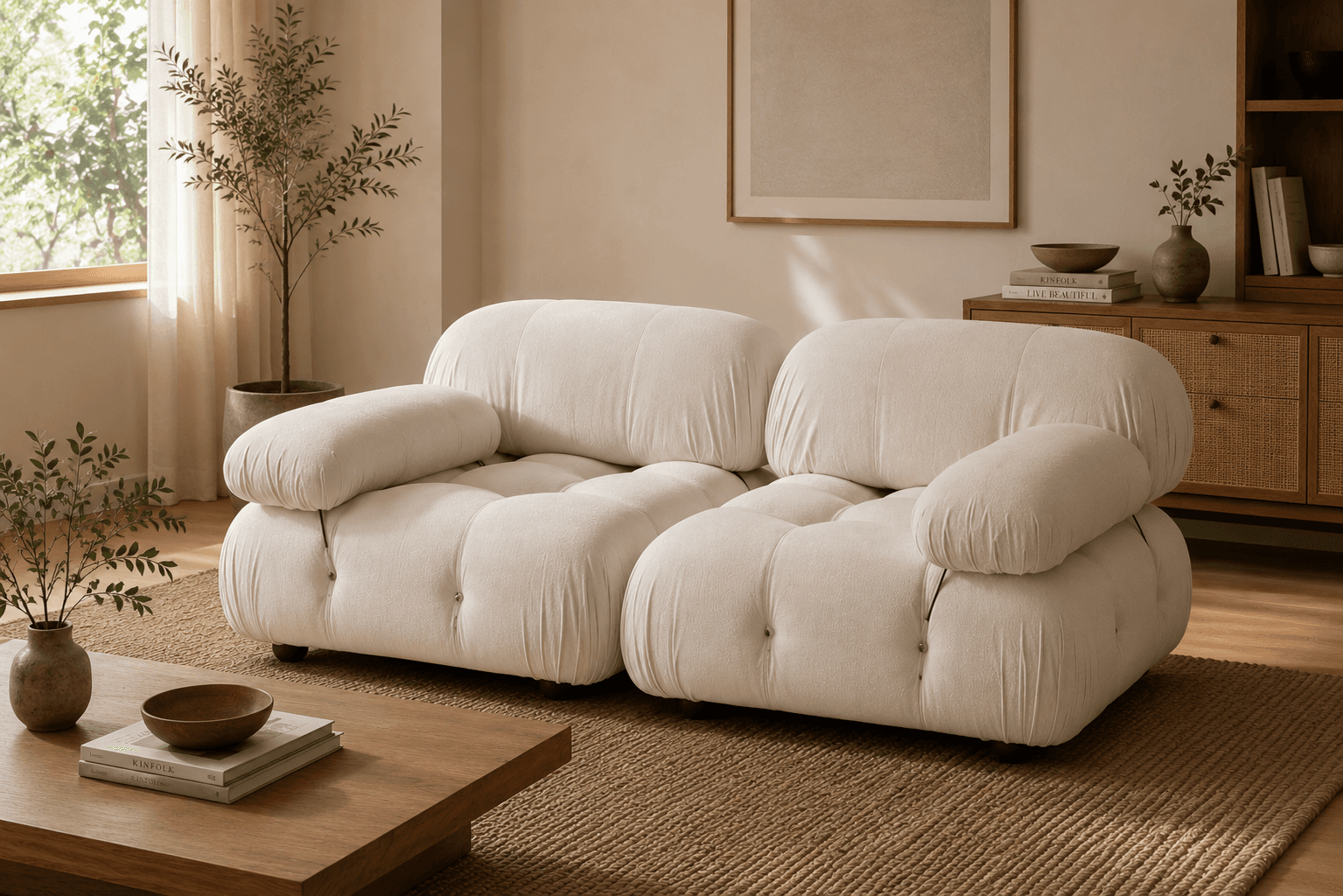
Photo by FRWD Furniture
Japanese Wabi-Sabi: Beauty in Imperfection
Wabi-sabi is the Japanese aesthetic philosophy that finds beauty in imperfection, impermanence, and incompleteness. A hand-thrown ceramic bowl with an uneven glaze. A timber surface with visible grain and slight colour variation. A linen cushion that creases naturally with use.
In design terms, wabi-sabi translates to: natural materials over synthetic, handcrafted over machine-perfect, visible material character over flawless surface uniformity.
Scandinavian Hygge: Warmth, Function, and Simplicity
Hygge (pronounced hoo-guh) is the Scandinavian concept of cosy wellbeing — the quality of a warm, functional, simply beautiful space that invites comfort without requiring effort. Scandinavian design achieves this through: clean functional forms, natural materials (light wood, wool, cotton), warm neutral palettes, and the elimination of everything that doesn't contribute to comfort or function.
In design terms, hygge translates to: furniture that does exactly what it needs to do with no excess, rooms that are warm and ordered, and materials that age gracefully rather than deteriorate.
What Japandi Is NOT
Japandi is not just 'wood and white'. It is not minimal in the sense of empty or bare. It is not exclusively beige. And it is not a Pinterest aesthetic — it is a coherent design philosophy with specific material, form, and colour principles.
The most common Japandi misexecution is white walls, a light wood floor, and a neutral sofa — without any of the craft sensibility, material specificity, or wabi-sabi texture that makes Japandi distinct. That combination is simply a contemporary interior with budget materials. Japandi requires more intentional selection.
Why Japandi Works Especially Well in Malaysian Homes

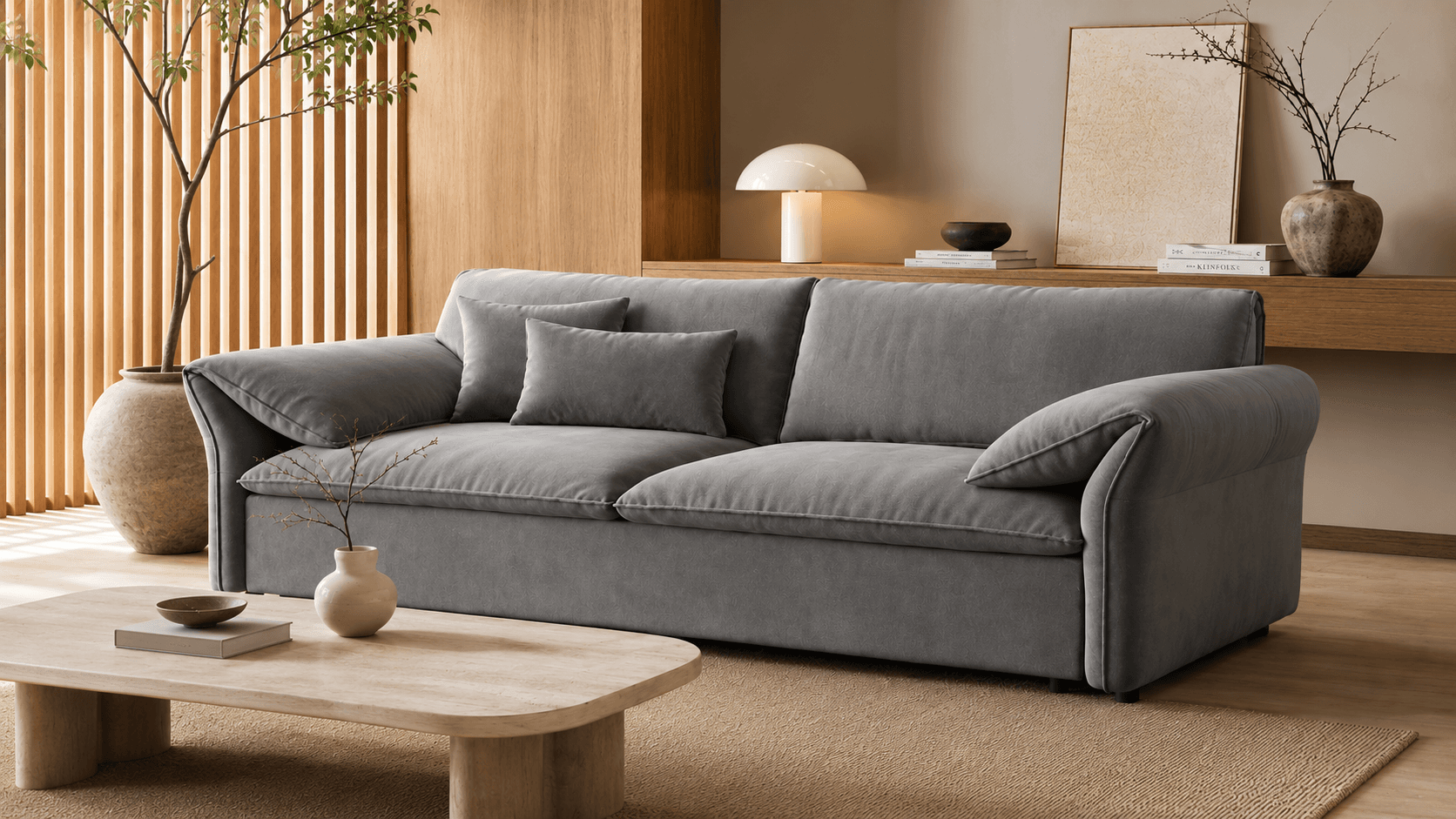
Photo by FRWD Furniture
Japandi's suitability for Malaysian homes is not coincidental. Several aspects of its core principles align with our climate, space constraints, and material availability.
Condo Scale: Japandi Thrives in Compact Spaces
Japandi furniture is characterised by low profiles, clean edges, and a restrained use of space. These qualities — born from the small-room traditions of both Japanese apartment design and Scandinavian efficiency — are directly applicable to Malaysian condo living.
A Japandi bedroom in a 10×12 foot condo room uses a low-profile bed frame, floating bedside shelves, and a single pendant light to create a complete design statement without requiring more floor area than the room has.
Natural Materials Suit Malaysian Conditions
Japandi's material palette — solid wood, rattan, linen, natural cotton, ceramic — is largely composed of materials that perform well in tropical conditions when properly treated and maintained. Solid rubberwood and acacia are locally available and climatically suited. Rattan accessories (baskets, trays, lamp shades) work well in Malaysian conditions, though rattan structural furniture frames require more care in our humidity cycle.
The Neutral Palette Handles Malaysian Light Well
The Japandi colour palette — warm white, natural wood tone, and one or two earth accent tones — reads well under the yellow-spectrum natural light that characterises Malaysian interiors. Unlike cool grey minimalism, which develops an unflattering cast in our light, Japandi's warm neutrals and natural wood tones become richer and warmer in Malaysian light rather than clinical.
The Japandi Colour Palette: How to Get It Right

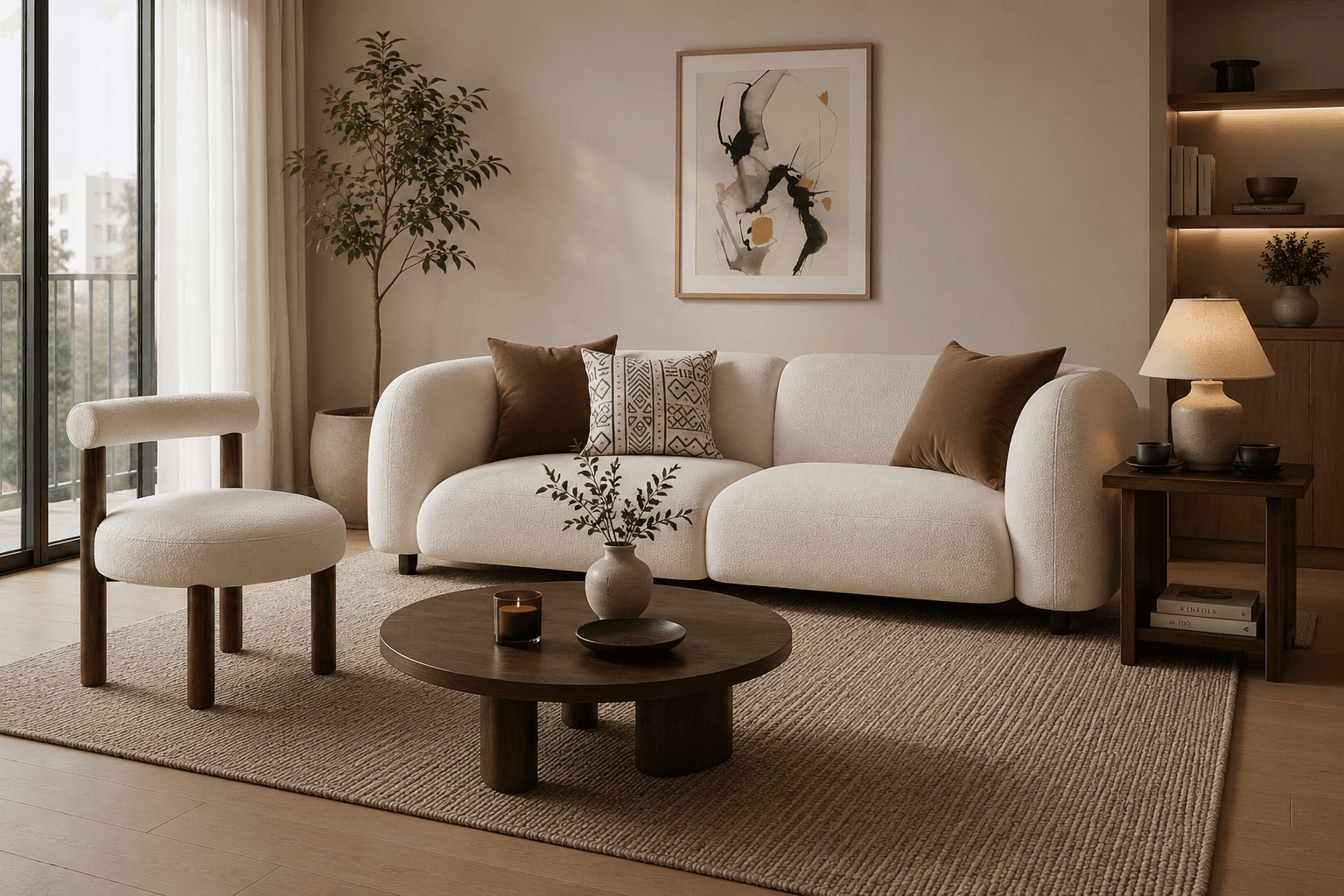
Photo by Pinterest
The Core Palette: Warm White, Natural Wood, and One Earth Tone
Start with: a warm white wall (off-white with a slight warm undertone — test in your actual light conditions), a natural wood furniture tone (light ash, medium oak, or rubberwood in a natural or light walnut finish), and one earth accent tone.
The earth accent is where most of the room's personality comes from: warm terracotta, dusty sage green, clay beige, or warm taupe. This tone appears in textiles (bedding, cushions, throw, rug), in one or two ceramic pieces, and in the colour of any fabric-upholstered elements.
Accent Colours: Muted, Never Saturated
Japandi accent colours are always desaturated. Sage green rather than vivid green. Dusty terracotta rather than orange-red. Warm stone rather than bright yellow. The palette is drawn from natural, weathered, aged versions of colours rather than the vivid primary versions.
A useful test: if the colour would look at home on a Japanese tea ceremony bowl or a Scandinavian hand-knit, it belongs in a Japandi interior. If it would look at home in a children's toy store, it does not.
Colours to Avoid
Avoid cool greys, stark whites, high-gloss surfaces that reflect cold light, bright saturated colours, and anything that reads as synthetically produced. Black can work as an accent in small doses (iron hardware, a black-framed window, a single black ceramic), but used extensively it shifts the palette toward industrial rather than Japandi.
Japandi Materials and Textures for Malaysian Conditions

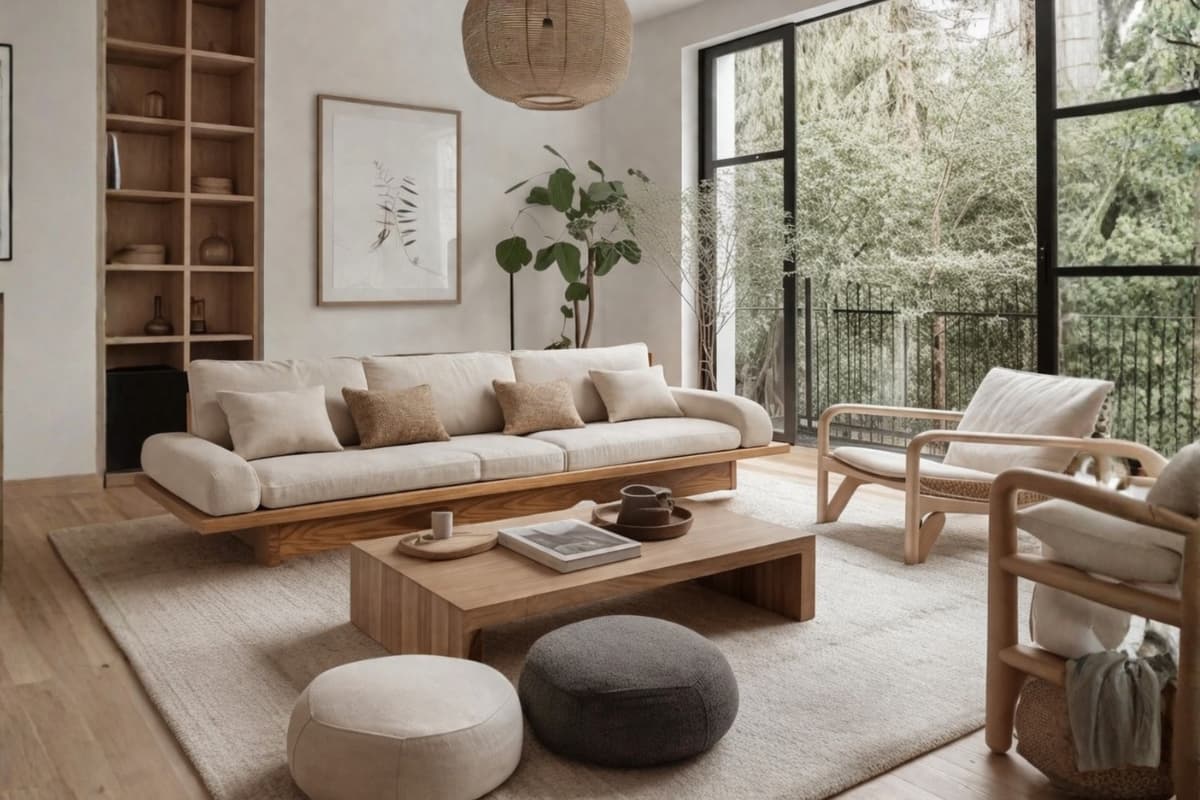
Photo by Pinterest
Wood: Ash, Oak, and Rubberwood in Malaysia
Ash and oak are the defining Japandi wood tones — both are light, grain-visible, and warm without being yellow. In Malaysia, both are available in engineered form (more dimensionally stable in our humidity) and occasionally in solid form (better character, requires more maintenance).
Rubberwood is the locally produced alternative that achieves a similar aesthetic at lower cost. Well-finished rubberwood in a natural or light walnut tone is a practical Japandi choice for the Malaysian market.
Avoid: high-gloss wood finishes, very dark espresso stains, and heavily knotted timber — all shift the aesthetic away from Japandi toward either contemporary or rustic.
Linen and Natural Fabric in Malaysian Humidity
Linen is the signature Japandi textile — its natural crease, visible weave, and muted tone are central to the aesthetic. In Malaysia, linen performs well in air-conditioned rooms and requires standard cotton care. In rooms that cycle frequently between air-conditioned and ambient humidity, linen absorbs moisture and can develop a musty quality if not aired regularly.
Performance-weave fabrics that mimic linen texture with synthetic durability are a practical Japandi alternative for Malaysian conditions — they achieve the aesthetic without the humidity-management demands.
Rattan and Woven Elements: The Tropical Japandi Bridge
Rattan is the point where Japandi and Malaysian tropical design naturally intersect. Woven rattan accessories — baskets, lamp shades, trays, small stools — suit both aesthetic traditions and perform well in Malaysian conditions. Rattan structural furniture (sofa frames, chair frames) is more demanding in our humidity cycle and benefits from regular maintenance.
Materials to Avoid
Avoid high-gloss acrylic and lacquer finishes, chrome and polished metal (use matte black or brushed brass instead), synthetic materials with no texture character, and any material whose primary visual quality is its perfect uniformity. Japandi is specifically not about perfection of surface — it is about the authenticity of natural material.
Japandi Furniture: What to Look For

Photo by FRWD Furniture
Bed Frames: Low Profile, Clean Lines, Natural Finish
The ideal Japandi bed frame is: low to the floor (platform or low-platform style), finished in natural or lightly stained solid wood, with clean edges and concealed or matte hardware, and either no headboard or a simple fabric headboard in a neutral linen or performance weave.
Avoid: carved or ornamental headboards, high-gloss lacquer finishes, upholstered frames in velvet or patterned fabric, and frames with visible metal structural elements.
Sofas: The Right Silhouette for Japandi
A Japandi sofa has: a low arm, a tight back (not loose cushion back), fabric in linen, textured cotton, or performance weave in a neutral earth tone, and wooden legs in a natural finish. The silhouette should be clean and horizontal — wide and low rather than tall and cushioned.
The sofa is often the piece where Japandi purchasers compromise most — accepting a curved contemporary sofa because it's available in a neutral fabric. Resist this: the sofa silhouette is as important as the fabric colour.
Coffee Tables and Side Tables
Simple forms in natural wood or a wood-and-metal combination (matte black frame, wood or stone top). Avoid: glass tops, chrome frames, complex leg forms, or decorative inlay. The coffee table in a Japandi interior is a functional surface that happens to be beautiful — not a decorative statement.
The Role of Negative Space
Japandi interiors specifically allocate space to emptiness. An empty wall section beside the sofa is not an opportunity to hang art — it is a breathing space that makes the sofa more visible and the room calmer. An empty corner is not wasted — it is the visual rest that makes the furnished areas more present.
This is perhaps the hardest principle for Malaysian buyers to apply, where the instinct is often to fill available space. Negative space in a Japandi interior is as deliberate as the furniture.
Japandi Living Room vs Japandi Bedroom

Photo by FRWD Furniture
Living Room: The Sofa as the Style Statement
In a Japandi living room, the sofa is the single design statement. The coffee table, side tables, rug, and lighting all serve to support the sofa's presence. The palette extends from the sofa fabric — if the sofa is warm stone linen, the rug is natural jute, the wall is warm white, and the single accent is dusty sage in a plant or ceramic.
Clutter — decorative objects, stacked books, accumulated accessories — is the primary enemy of a Japandi living room.
Bedroom: The Bed Frame as the Only Statement
In a Japandi bedroom, the bed frame is the room. The walls are warm white. The bedding is linen in natural or earth tones. The bedside surfaces are small and clear. The wardrobe is either built-in and invisible, or a simple open rack if the wardrobe contents are curated enough to display.
The bedroom is where Japandi principles are easiest to apply — because the room has one clear purpose and one clear anchor piece.
How to Transition Your Existing Interior to Japandi

Photo by FRWD Furniture
Most readers are not starting from a bare room. They are working with an existing interior and want to move it in a Japandi direction without a full renovation.
What to Remove First
Start with removal rather than purchase. Clear every surface of decorative objects that are not beautiful or useful. Remove patterned textiles and replace with solid colours in the Japandi palette. Take down art and photography that introduces colour or visual complexity inconsistent with the palette. Remove furniture pieces that have high-gloss finishes or chrome elements if alternatives are available.
What to Replace With Japandi Alternatives
The highest-impact single replacement is usually the sofa — changing from a contemporary fabric sofa in the wrong colour to one in linen or performance weave in a warm neutral. The second highest impact is bedding — replacing patterned or saturated bedding with linen or cotton in natural, stone, or warm grey tones. Both changes are achievable without renovation.
What to Keep and Style Differently
Existing natural wood furniture in the right tone range can stay — it may simply need to be the only wood tone in the room rather than one of several competing ones. Existing plants stay — they are Japandi's most accessible natural element. Existing ceramic objects in neutral tones stay and become the room's accent detail rather than competing with other decorative items.
Interior Designer · FRWD Furniture
Laila is a furniture and interiors specialist at FRWD Furniture's Bangsar Experience Centre, with expertise in contemporary design trends, material finishes, and creating spaces that balance aesthetics with everyday function.
Frequently Asked Questions
1.What is Japandi interior design?
What is Japandi interior design?
Japandi is a hybrid design style combining Japanese wabi-sabi (beauty in natural imperfection) and Scandinavian hygge (warm, functional simplicity). It is characterised by natural materials, low-profile furniture, a warm neutral palette, and a deliberate use of negative space. It is warmer and more textural than minimalism, with a stronger craft sensibility.
2.Is Japandi suitable for Malaysian homes?
Is Japandi suitable for Malaysian homes?
Very much so. Japandi's material palette — solid wood, rattan, linen, natural fibre — performs well in tropical conditions. Its low-profile furniture and uncluttered surfaces suit Malaysian condo scale. Its warm neutral colour palette reads well under Malaysian yellow-spectrum natural light.
3.What colours are used in Japandi design?
What colours are used in Japandi design?
Warm white walls, natural wood tones (ash, oak, rubberwood), and one or two muted earth accent tones — dusty sage green, warm terracotta, clay beige, warm taupe. All accent colours are desaturated rather than vivid. Avoid cool greys, stark whites, and bright saturated colours.
4.What is the difference between minimalist and Japandi?
What is the difference between minimalist and Japandi?
Minimalism is cooler, more abstract, and more concerned with removal. Japandi is warmer, more textural, and more connected to craft and natural material character. A minimalist room might have white walls and a white linen bed with one plant; a Japandi room has warm white walls, a natural wood bed frame, linen bedding in an earth tone, a woven rattan basket, and a ceramic piece with visible glaze texture.
5.How do I start decorating in Japandi style without buying everything new?
How do I start decorating in Japandi style without buying everything new?
Start with removal — clear surfaces, remove patterned textiles, take down art that introduces inconsistent colour or complexity. Then replace bedding with linen or cotton in a neutral earth tone. If budget allows, the sofa fabric is the highest-impact single change in a living room. Natural wood furniture you already own in the right tone range can stay