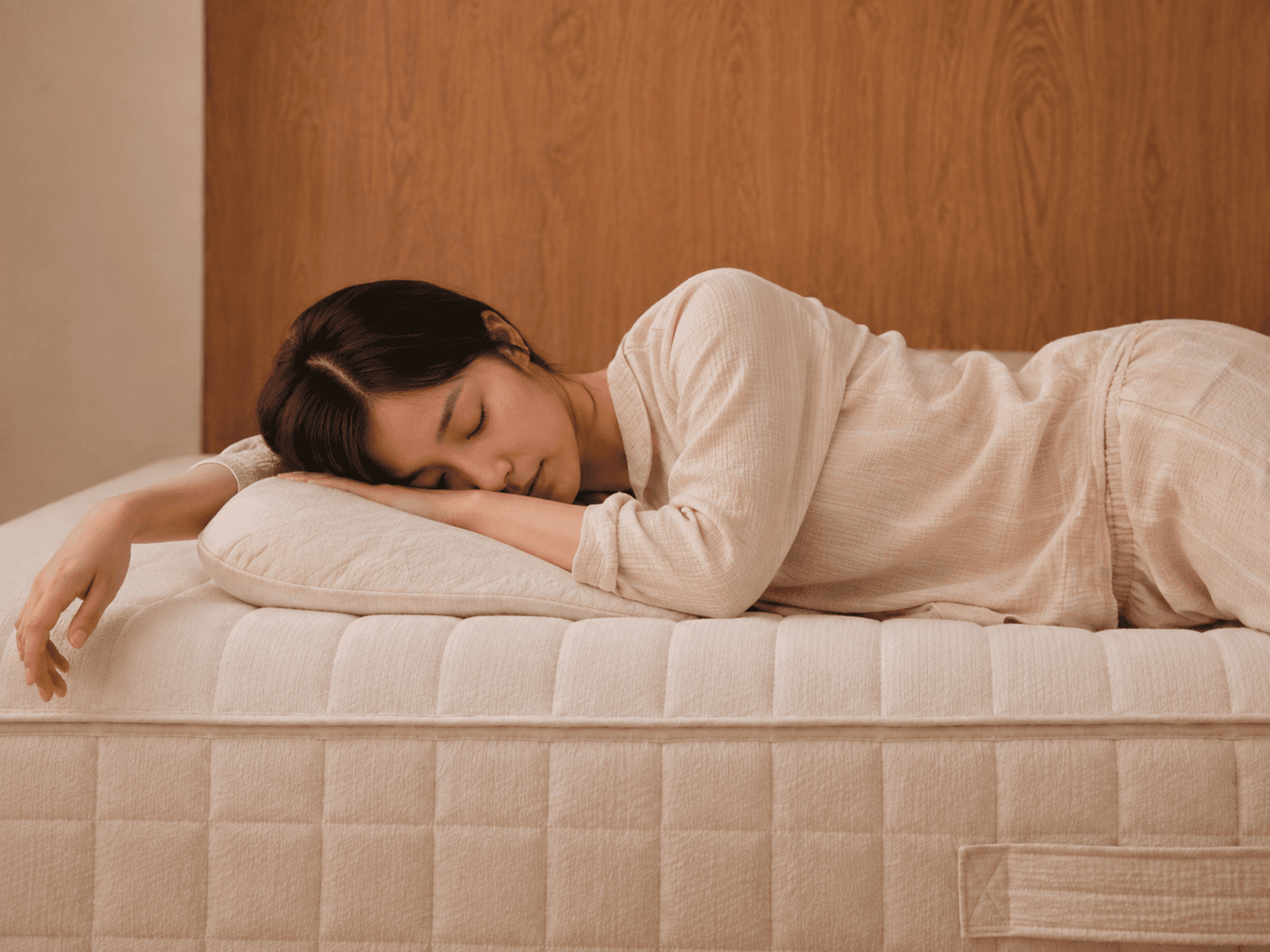
The short answer: decades of sleep research converge on medium-firm — supportive enough to keep your spine aligned, forgiving enough to let shoulders and hips settle. In practice that means: latex or high-density foam (28+ kg/m³) on a proper slatted base, matched to your sleeping position — side sleepers slightly softer, back and stomach sleepers slightly firmer. And one honest caveat most mattress guides skip: if your pain persists beyond two weeks, radiates down a leg, or comes with numbness — see a doctor first. A mattress fixes mattress-caused pain, nothing else.
First: Is Your Mattress Actually the Problem? (5 signs)
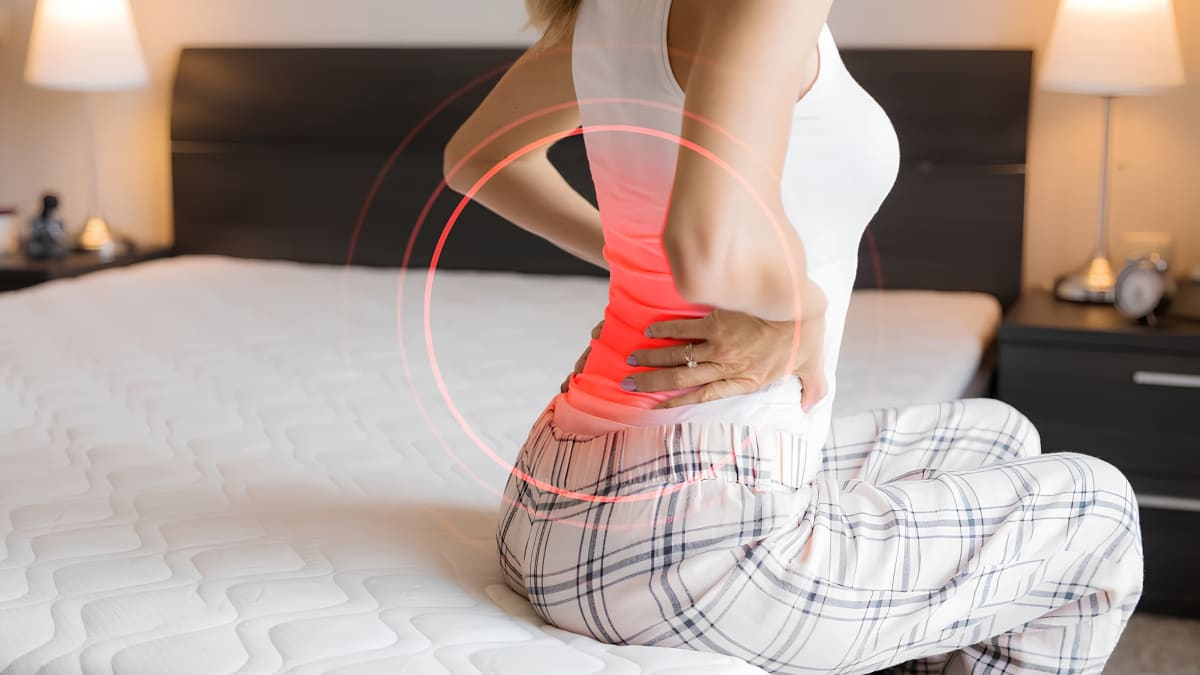
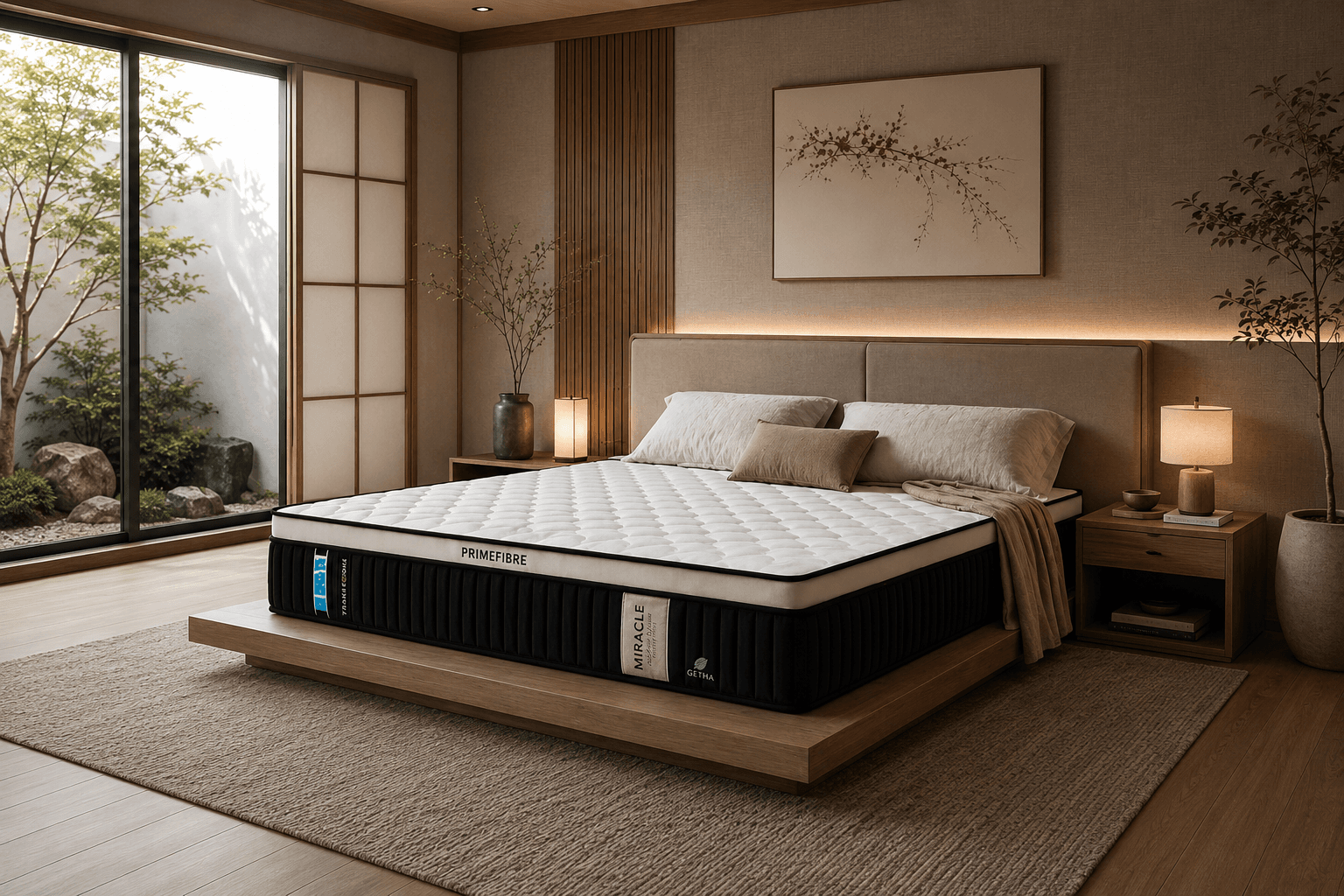
Photo by GadgetReviewers
Pain that's worst in the morning and eases within 30 minutes of being up — the classic mattress signature. (Pain that builds during the day points elsewhere — posture, desk, lifting.)
Visible sagging or body impressions — lie a broom handle across the mattress; a gap under it at your hip zone means the support layer is done.
You sleep better elsewhere — hotels, the guest room. Your body is running the experiment for you.
The mattress is 7–10+ years old — foam fatigue is gradual and invisible until it isn't.
You wake repeatedly repositioning — your body hunting for support that's no longer there.
Two or more? Keep reading. None? A new mattress probably won't fix it — start with the doctor's visit, your chair, or your pillow (our neck-pain guide covers that half).
What to Look For: The 7 Factors, With Numbers
Factor | What back pain needs | The number to check |
|---|---|---|
Firmness | Medium-firm — the research consensus | ~6–7 on the 10-scale; softer (5–6) if you're a side sleeper or under ~55 kg |
Core foam density | Support that lasts years, not months | 28+ kg/m³ (entry foams at 18–22 sag first at the hips — where back pain starts) |
Latex layer | Responsive support that keeps the spine neutral | 100% natural latex resists body impressions and stays cooler in Malaysian heat |
Memory foam | Pressure relief at shoulders/hips | Best as a layer over firmer support, not the whole mattress — pure memory foam can hammock the lower back |
Zoned/dual firmness | Different support at hips vs shoulders | Dual-firmness designs let you flip or choose sides |
Motion isolation | Undisturbed recovery sleep with a partner | Latex + foam layers beat old spring-only builds |
The base | The mattress can't out-support a sagging frame | Solid slats at 70–80 mm spacing (bed frames guide); a worn divan base transfers its sag upward |
Firmness by Sleeping Position (the part most guides skip)
Side sleepers (most people): medium, not hard — the shoulder and hip must sink slightly or the spine bows upward. Pair with the right pillow loft (10–15 cm — pillow guide).
Back sleepers: true medium-firm; the lumbar curve needs contact, not a hammock.
Stomach sleepers: the firmest of the three — a soft mattress hyperextends the lower back all night. (Honestly: if you have back pain, training out of stomach sleeping helps more than any mattress.)
Combination sleepers: latex responds fastest to position changes — memory foam's slow rebound can "trap" you.
What FRWD Actually Offers for Back Pain (verified, priced)

Photo by FRWD Furniture featuring Kuro Queen Bedframe and Sommni Orthopaedic Choice
Sommni Orthopaedic Choice — from RM1,250. The range's dedicated back-care build: firmer support tuned for spinal alignment. The honest entry point.
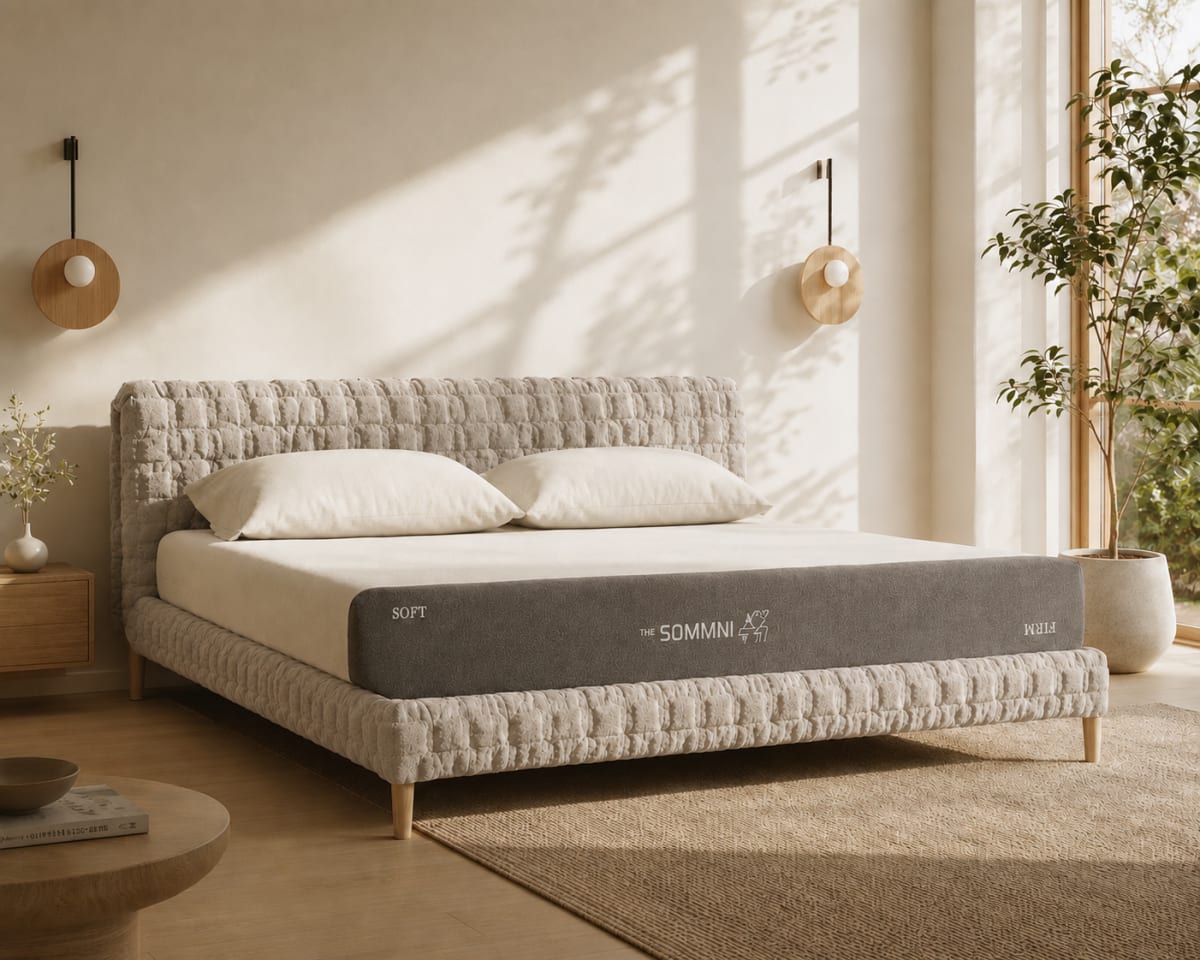
Photo by FRWD Furniture featuring Leighton King Bed Frame and The Sommni
The Sommni — Queen RM2,499. Dual-firmness natural latex — choose the side that matches your position and weight; 150×190 cm and every other Malaysian size.
Browse the full mattress range — Sommni mattresses carry a 10-year limited warranty (manufacturing defects, original owner), and The Sommni line offers the Sleep Experience Trial: up to 150 nights depending on the tier chosen at checkout (minimum 50 nights before return; RM100 return fee; website purchases — trial availability per product page).
Test it the right way: 10 minutes lying in your sleeping position at the Bangsar Experience Centre — not sitting on the edge. Bring your own pillow if you're serious.
When the Mattress Is NOT the Answer — See a Doctor If:
Pain persists beyond two weeks despite a supportive sleeping surface
Pain radiates down a leg, or you have numbness or tingling
It started after a fall or injury, or comes with fever or unexplained weight loss
It's worse at night rather than on waking
These patterns point to causes no mattress addresses — a GP or physiotherapist first, mattress shopping second. (A good mattress retailer should tell you this; now you've read one that did.)
This article is general guidance, not medical advice. Persistent or severe back pain should be assessed by a doctor or physiotherapist.
Related: How to Choose a Mattress · Most Comfortable Sofas (foam density explained) · Neck pain & pillows · Bed frames
Interior Designer · FRWD Furniture
Laila is a furniture and interiors specialist at FRWD Furniture's Bangsar Experience Centre, with expertise in contemporary design trends, material finishes, and creating spaces that balance aesthetics with everyday function.
Frequently Asked Questions
1.Can a mattress cause back pain?
Can a mattress cause back pain?
Yes — a sagging or unsupportive mattress lets the spine rest out of alignment for 7–8 hours a night. The signature: pain worst on waking, easing within about 30 minutes of being upright.
2.Is a firm mattress better for back pain?
Is a firm mattress better for back pain?
Firmer isn't better — medium-firm is the research consensus. A too-hard mattress creates pressure points at the shoulders and hips and bridges the lumbar curve instead of supporting it.
3.Are memory foam mattresses good for back pain?
Are memory foam mattresses good for back pain?
As a comfort layer over dense support, yes — pure memory-foam builds can hammock the lower back. Latex-plus-foam hybrids give the pressure relief without the sink.
4.How often should I replace a mattress?
How often should I replace a mattress?
Every 7–10 years for quality builds — sooner if you see sagging or wake with pain that eases once you're up. Higher-density cores (28+ kg/m³) sit at the long end of that range.
5.What's the best mattress type for back pain in Malaysia's climate?
What's the best mattress type for back pain in Malaysia's climate?
Natural latex — supportive, resilient, and it sleeps cooler than memory foam in tropical heat. Malaysian humidity also argues for breathable covers and a slatted base with airflow.