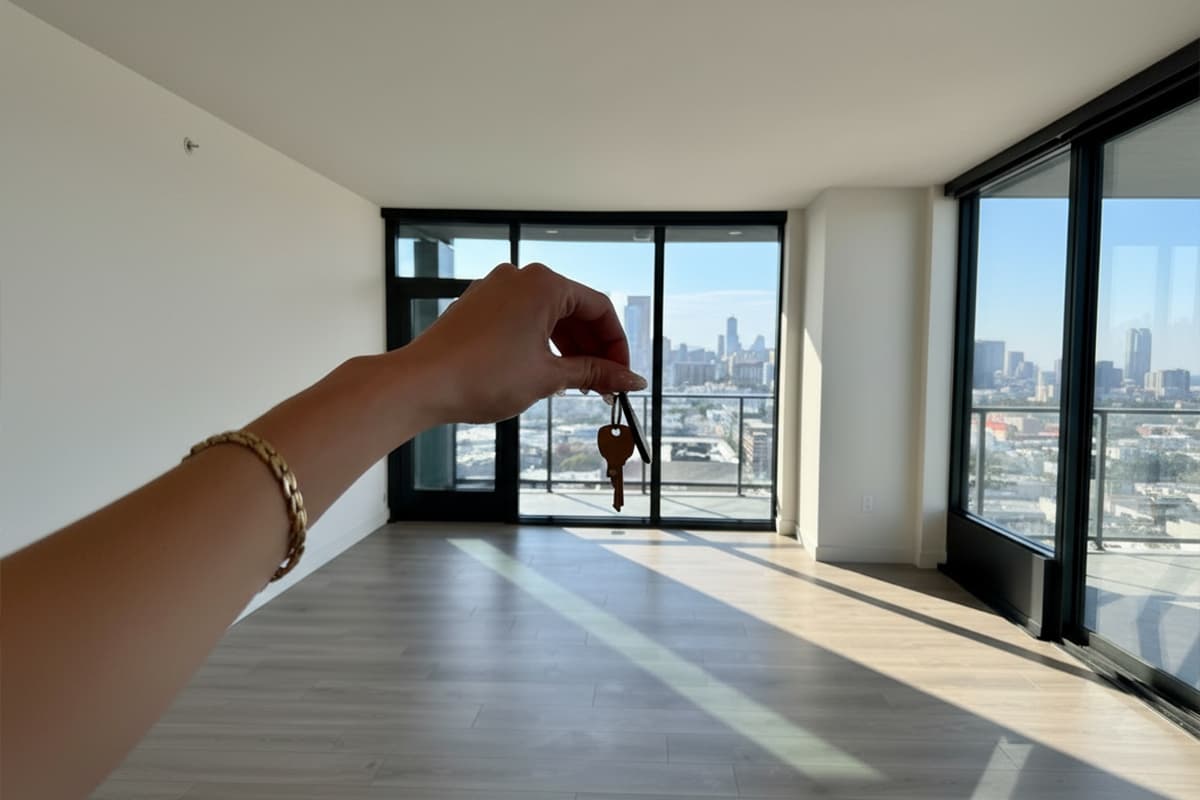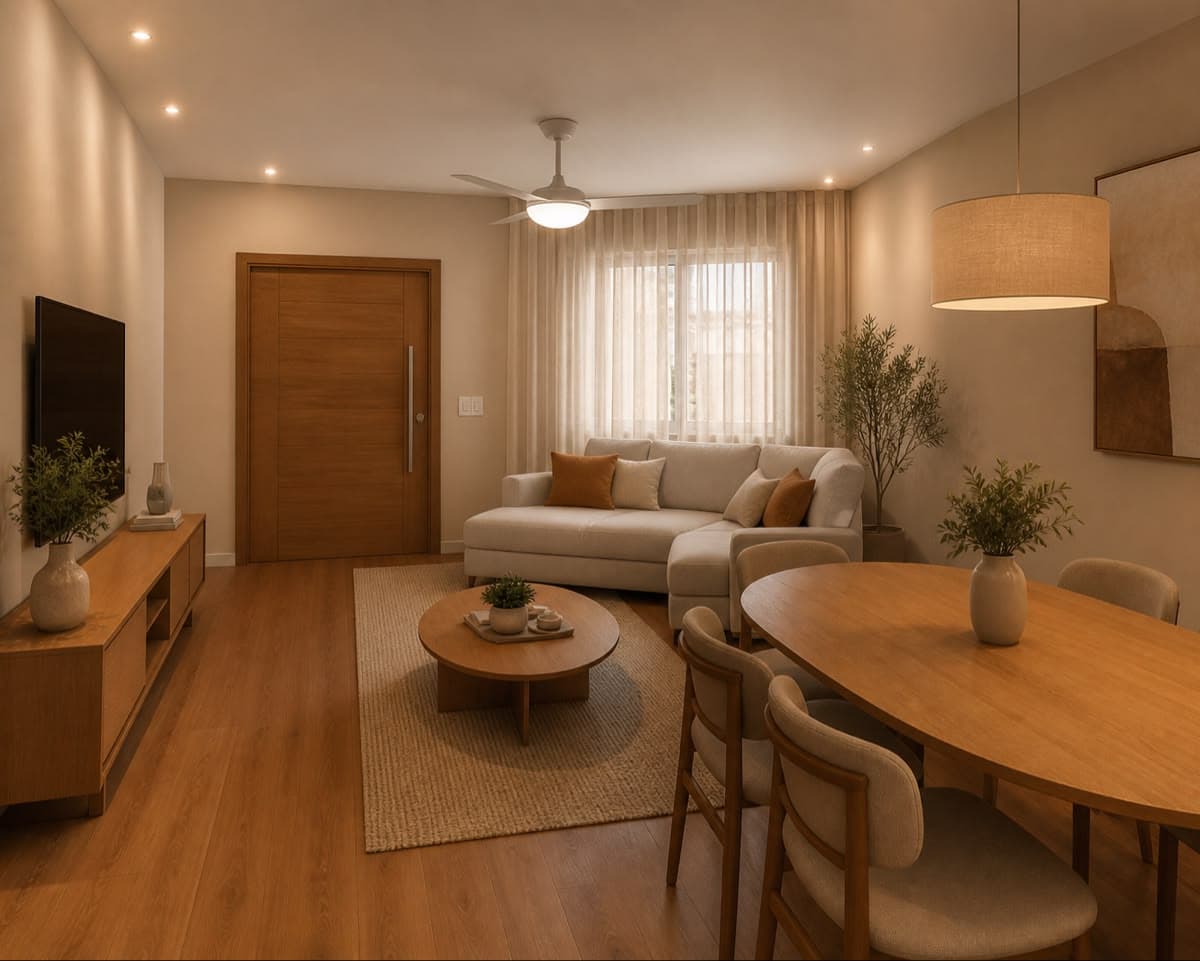
Malaysian homes — particularly condos — rarely come with rooms that are perfectly rectangular, proportionally balanced, and free of structural intrusions. Exposed columns cut across corners. Beam drops reduce ceiling height over specific zones. Developer-optimised floor plans produce living rooms that are slightly too narrow for a standard sofa arrangement, or master bedrooms where the built-in wardrobe door swings into the walking path.
The good news is that there are no genuinely unsolvable rooms — only rooms whose constraints have not yet been understood and worked with. This guide covers the five most common awkward room scenarios in Malaysian homes and gives you practical arrangement strategies for each.
For a broader guide to how design style affects furniture choices in Malaysian homes, see our Interior Design Styles for Malaysian Homes guide.
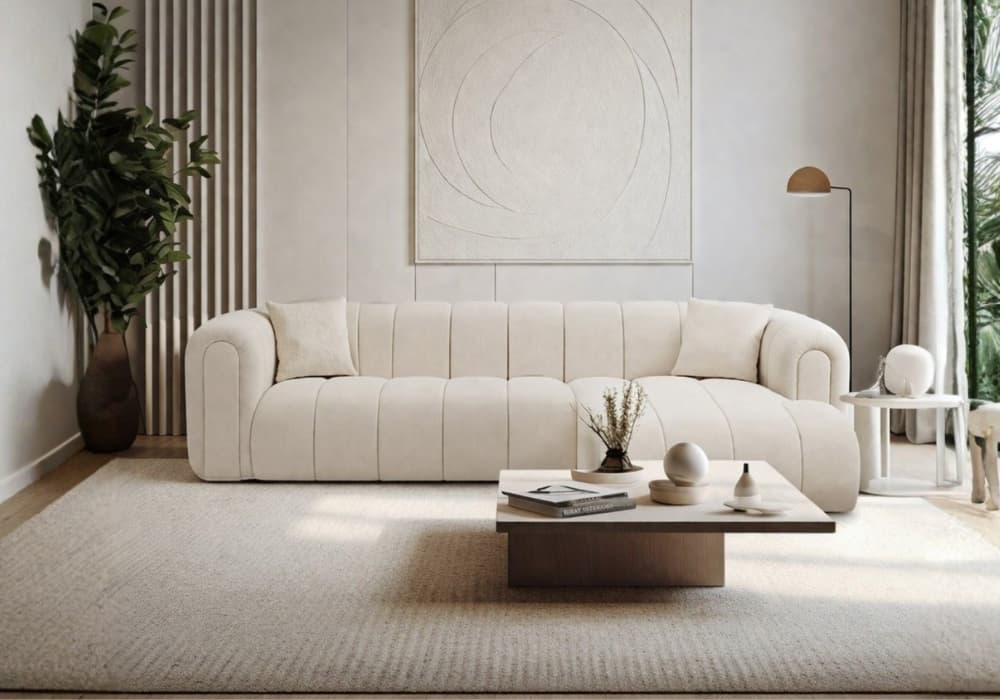
Photo by Pinterest
Why So Many Malaysian Homes Have Awkward Rooms
The Exposed Structural Column Problem
Structural columns are a feature of reinforced concrete construction — the dominant building method for Malaysian condos and most commercial developments converted to residential use. In residential units, columns typically appear at corners or, more challengingly, mid-wall or in open areas where the structural grid intersects with the unit layout.
A column mid-wall in a living room creates an irregular surface that prevents a sofa from sitting flush. A column in the corner of a master bedroom creates a dead zone that is neither accessible for storage nor visually integrated. Neither situation is difficult to work with once the design response is clear.
The Beam Drop
A beam drop is a reduction in ceiling height along the line of a structural beam — usually 15–30cm below the main ceiling plane. In Malaysian condos with standard 2.7m ceilings, a beam drop to 2.4m creates a distinct lower zone that affects how furniture reads under it and where pendant lights can be hung. The practical response is to align zone boundaries with beam drop lines — position the beam drop at the edge of the living zone (where the sofa back sits), making it a zone divider rather than a ceiling interruption mid-zone.
L-Shaped and Non-Rectangular Rooms
L-shaped rooms are common in Malaysian terrace house ground floors and in some condo units where the living room extends around a service area or utility corridor. The L creates a primary zone (the larger rectangle) and a secondary zone (the shorter arm) — two distinct spaces that can be designed as separate functional areas rather than as one confused large room.
The Long Narrow Room
The corridor living room — long and narrow, with a width of 3m or less — is the most common awkward room type in older Malaysian condos and walk-up apartments. Its primary challenge is that standard sofa widths (190–220cm) are close to the room's full width, leaving insufficient circulation clearance. Every furniture choice must be made with the width constraint as the primary filter.
Ground Rule: Work With the Architecture, Not Against It
The single most valuable shift in how to approach an awkward room: stop treating the architectural constraint as a problem to be hidden, and start treating it as a feature to be designed around — or into. A column that is awkwardly positioned mid-wall can be lit from below and become the room's focal point. A beam drop that interrupts a living room can become the defined edge of a dining zone. An alcove that seems too small for useful furniture can become the most characterful reading corner in the home. The constraint does not disappear — but its function in the room changes from obstacle to opportunity.

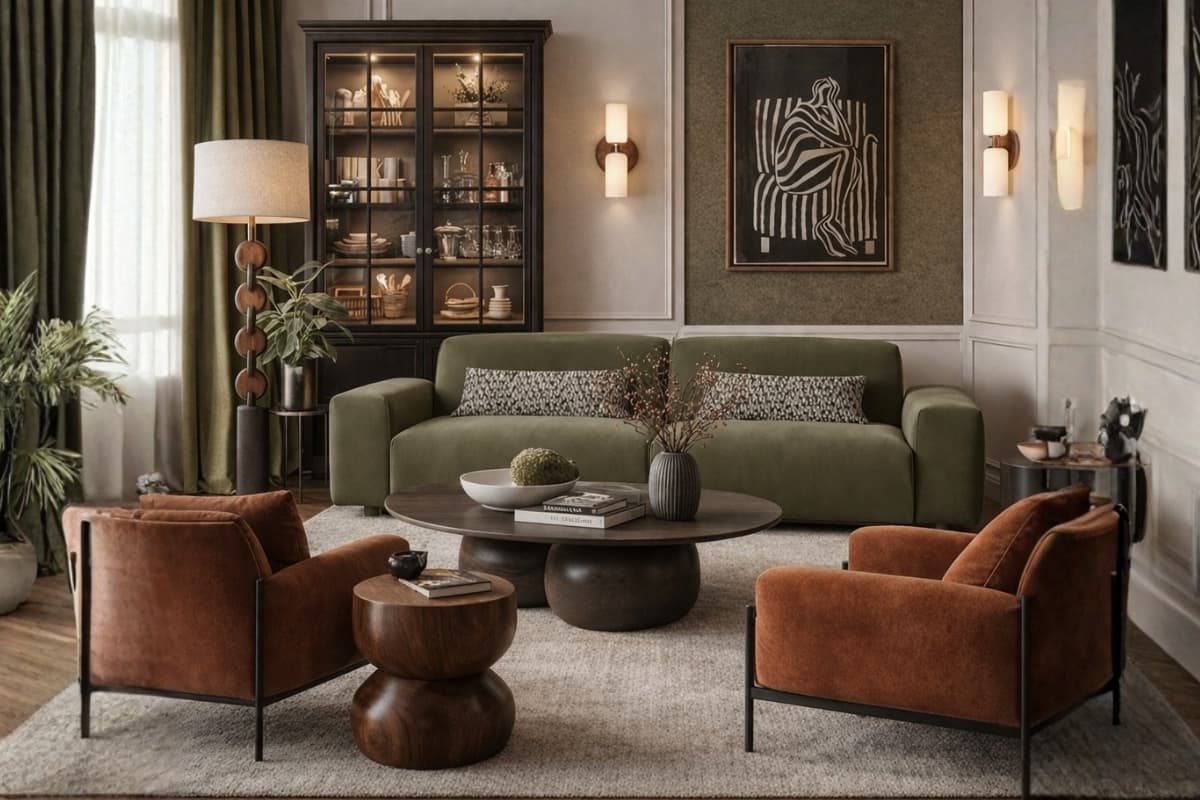
Photo by Pinterest
How to Arrange Furniture Around a Structural Column
Making the Column a Design Feature
The most successful column responses treat the column as an element to be expressed rather than disguised. Options include: cladding with timber panelling or textured tile; directing a floor lamp at the column to create a lit focal point; or building a floating shelf unit around the column that turns dead space into functional storage and display.
Layout Strategies That Place the Column at a Zone Boundary
The most practical layout response to a mid-room column is to position the zone boundary at the column line. If the column sits 3m from the window wall in a 5m deep living room, position the sofa back at the column — the column falls at the rear edge of the living zone and the front edge of the dining zone. It is no longer mid-zone; it is the divider between zones.
For help planning the living room zone layout around structural constraints, see our Living Room Layout Malaysia guide.
What Never to Do With a Central Column
Do not position the TV on the face of the column — it makes the column the visual centre of the room and everything else peripheral. Do not place the sofa with the column at its midpoint — the asymmetry is immediately visible and cannot be resolved with accessories. Do not apply adhesive tile or wallpaper to a structural column without professional assessment — moisture behind cladding on concrete causes persistent problems. Do not ignore it — a column that has not been designed around reads as an oversight, not a neutral feature.
Furniture Arrangement for L-Shaped Rooms
Identifying the Primary and Secondary Zone
Every L-shaped room has a longer arm and a shorter arm. The primary activity — living room seating, dining — goes in the longer arm where it has the most floor area to resolve correctly. The secondary arm becomes a distinct secondary function: a reading corner, a home office zone, a dining alcove, or a plant and display area. The critical error in L-shaped rooms is attempting to run a single furniture arrangement across both arms — the result is a layout that fits neither the long arm nor the short arm properly.
Positioning the Sofa in an L-Shaped Living Room
Place the sofa in the primary (longer) arm, oriented to face the TV wall or the room's primary focus. Leave the entry point to the secondary arm clear — this is the circulation path between zones. The secondary arm can then be furnished independently: a two-seater sofa, a reading chair, a desk, or simply a rug and some plants if the arm is too small for functional furniture.
Using the Corner as an Opportunity
The internal corner of an L-shaped room — where the two arms meet — is often treated as dead space. Options that work well in this zone: a reading nook with a single armchair, floor lamp, and small side table (requires only 120×120cm); a plant cluster of three to five plants of varying height; or a tall floor vase or sculptural object that transforms the corner into the room's visual punctuation point.

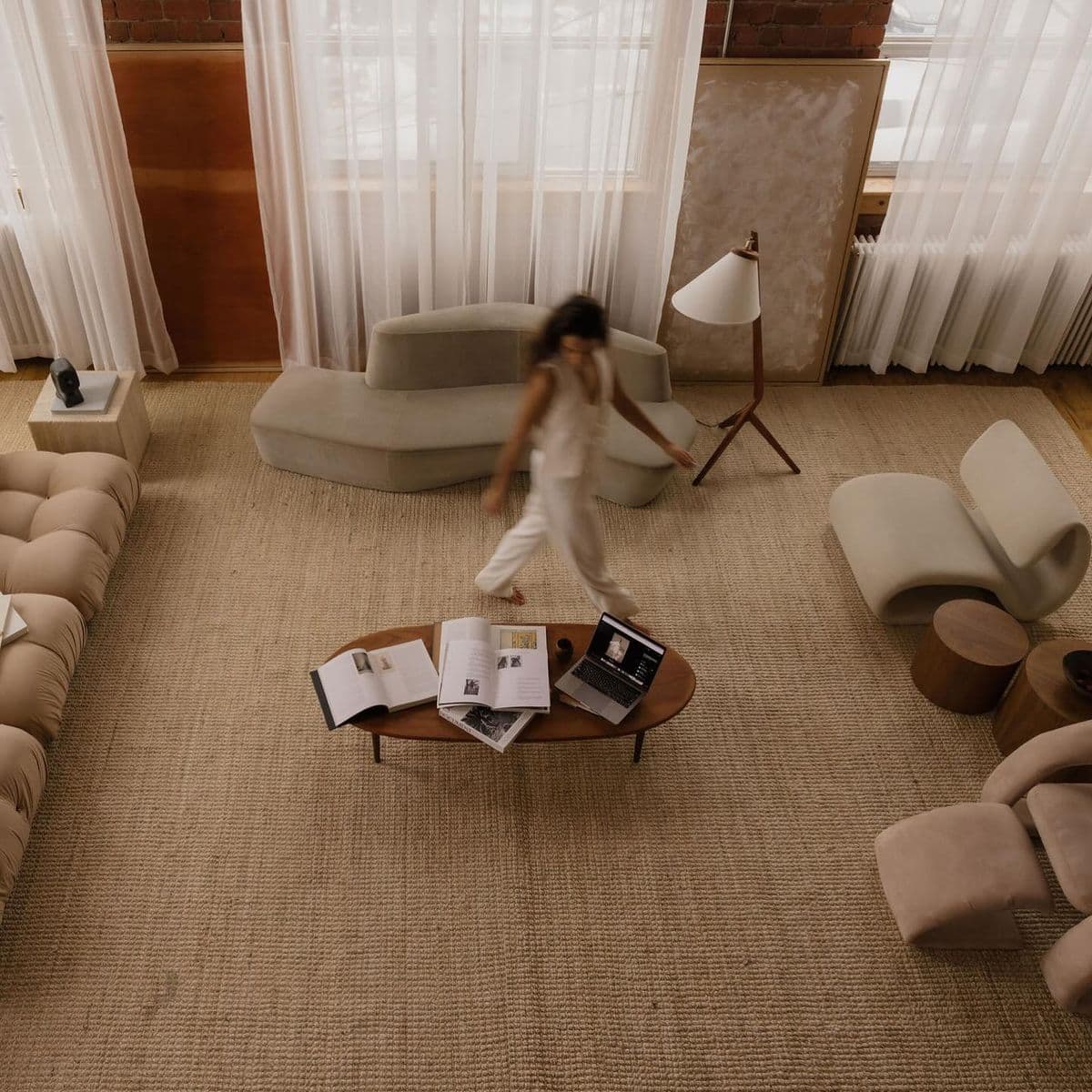
Photo by Pinterest
The Long Narrow Room: Furniture Layout Strategies
Dividing a Long Room Into Two Functional Zones
In a room of 3m width and 6m+ length, the most effective arrangement is two distinct zones along the length — a living zone in the outer half (window end) and a transitional zone in the inner half (door end). The sofa back defines the boundary between them. This arrangement requires a sofa no deeper than 85–90cm and a coffee table no wider than 120cm to maintain 90cm walkways on both sides of the room.
Furniture Scale in a Narrow Room
In a room 3m or less wide, standard furniture dimensions can use the entire width. A 3-seater sofa (210cm wide) in a 300cm room leaves 45cm on each side — insufficient for comfortable circulation. Solutions: a 2-seater sofa (145–160cm wide) with a large accent chair, giving 70cm each side; or a 3-seater pushed to one side wall to create one clear 90cm walkway on the opposite side. The asymmetric layout feels counterintuitive but is functionally and visually superior to a centred arrangement with inadequate walkways.
Mirrors and Light to Counter the Tunnel Effect
A long narrow room creates a tunnel perspective. A full-width mirror on one short end wall reflects the room and creates the impression of a second room beyond — most effective on the wall opposite the main window. Vertical elements — tall plants, floor-to-ceiling curtains, tall pendant lights — draw the eye up and interrupt the horizontal tunnel reading.
Rooms With Low Ceilings
Low-Profile Furniture as the Primary Tool
Furniture that sits lower to the floor — platform beds, low-arm sofas, low coffee tables, and consoles below 50cm — visually increases the distance between the furniture plane and the ceiling. In a room with a 2.4m ceiling, a platform bed at 30cm floor height creates 2.1m of clear wall above the bedding — significantly more space than a standard bed frame at 50cm.
Vertical Elements That Draw the Eye Up
Floor-to-ceiling curtains hung from the highest possible point draw the eye vertically and make the ceiling appear higher than it is. Tall, slender plants (Monstera, Ficus Lyrata, Bamboo Palm) create a vertical interruption that the eye follows upward. Vertical artwork — tall narrow canvases or prints — reinforces the upward visual movement.
What to Avoid in a Low-Ceiling Room
Avoid oversized pendant lights that hang low — they emphasise the ceiling's proximity. Avoid horizontal artwork wider than it is tall. Avoid high-back furniture — sofas and armchairs with backs above 85cm feel proportionally too tall. Avoid dark ceiling paint, which increases the perceived heaviness of the ceiling plane.
Alcoves, Niches, and Recessed Areas
Built-In Shelving: The Natural Solution
An alcove of 40–60cm depth is the ideal depth for a built-in bookshelf unit. Custom-fitted shelving fills the alcove completely and — when painted the wall colour — recedes visually while providing substantial storage and display capacity.
The Reading Nook Alcove
An alcove of 90×90cm or larger can hold a single armchair with a floor lamp positioned beside it. This creates a reading nook — a contained, characterful space within the room that functions independently from the main seating arrangement. In Malaysian homes where dedicated study rooms are not common, a well-designed reading nook alcove provides a functional equivalent.
General Rules for Any Awkward Room
Protect the Primary Circulation Path First
Before any aesthetic decision, identify the path that people use to move through the room most frequently and ensure it maintains 90cm minimum clear width throughout. No furniture arrangement that compromises this path functions well in daily use, regardless of how good it looks in a floor plan.
Measure and Mark With Tape Before Buying
Use masking tape on the floor to mark the footprint of any furniture you are considering before ordering it. Live with the tape outline for a day — walk around it, notice whether it interrupts natural movement, observe whether it creates the proportional relationship with surrounding pieces that you expected. This five-minute step prevents the most common furniture arrangement mistakes. For exact measuring steps, see our How to Measure Your Room Before Buying Furniture guide.
Consult a Floor Plan Before Ordering
For rooms with multiple constraints — a column, an irregular wall, and a limited sofa wall — a professional perspective on the floor plan before ordering furniture can prevent a sequence of poor decisions. FRWD's complimentary design consultation includes a floor plan review and furniture recommendation for your specific room constraints. Contact us before your next major furniture purchase.
Interior Designer · FRWD Furniture
Laila is a furniture and interiors specialist at FRWD Furniture's Bangsar Experience Centre, with expertise in contemporary design trends, material finishes, and creating spaces that balance aesthetics with everyday function.
Frequently Asked Questions
1.How do I arrange furniture in a living room with a structural column?
How do I arrange furniture in a living room with a structural column?
The most effective approach is to position the column at a zone boundary — for example, with the sofa back against the column, making it the divider between the living and dining zones. Alternatively, make the column a design feature by cladding it, lighting it, or building shelving around it. Do not ignore it — a column that has not been designed around reads as an oversight.
2.What is the best furniture arrangement for a long narrow Malaysian living room?
What is the best furniture arrangement for a long narrow Malaysian living room?
Divide the room into two zones along its length rather than trying to fit a standard arrangement across the width. Use a 2-seater sofa (145–160cm wide) rather than a 3-seater to maintain walkway clearance. A full-width mirror on one short wall and floor-to-ceiling curtains counter the tunnel effect visually.
3.How do I make a low-ceiling Malaysian condo room feel taller?
How do I make a low-ceiling Malaysian condo room feel taller?
Use low-profile furniture — platform beds, low-arm sofas, consoles below 50cm. Hang curtains from the highest possible point to draw the eye up. Use tall, slender plants. Avoid high-back furniture, dark ceiling paint, and low-hanging pendant lights, which all emphasise the ceiling's proximity.
4.What can I do with an awkward alcove in my Malaysian home?
What can I do with an awkward alcove in my Malaysian home?
Alcoves of 40–60cm depth are ideal for built-in shelving. Alcoves of 90×90cm or larger can hold a reading chair and floor lamp, creating a contained reading nook. Paint built-in shelving the wall colour to make the shelving recede visually while providing substantial storage.
5.Can FRWD help with furniture arrangement in an awkward room?
Can FRWD help with furniture arrangement in an awkward room?
Yes — FRWD's complimentary design consultation includes a floor plan review and furniture recommendation for your specific room constraints. A 30-minute consultation typically prevents months of arrangement regret.