INTRODUCTION
Interior design is not decoration. It is the set of decisions — about proportion, material, colour, and furniture — that determines whether a room feels considered or chaotic, calm or restless, like a home or like a showroom.
For Malaysian homeowners, the challenge is that most interior design content online is written for homes in Europe, the US, or East Asia — climates, spaces, and cultural contexts that are not quite our own. A minimalist interior styled for a grey Stockholm winter reads differently under the yellow-spectrum light of a Klang Valley afternoon. A Japandi bedroom photographed in a Tokyo apartment may be gorgeous and impractical in a Malaysian condo with no airflow.
This guide is written for Malaysian homes specifically. It covers the six design styles most relevant to Malaysian buyers in 2026, how to identify which one suits you and your space, and how to apply it practically — with furniture choices, material guidance, and honest notes on what works here and what doesn't.
Why Malaysian Homes Need Their Own Design Framework
Global interior design content is almost entirely produced for temperate-climate homes in relatively large spaces. Before applying any of it to a Malaysian home, it helps to understand the three ways our context differs.
The Tropical Climate Factor
Malaysia's year-round heat, high humidity, and intense natural light affect almost every material and colour choice in a home. Pale colours look different under yellow-spectrum tropical light than under the cool grey light of a European winter. Natural fabrics like linen and cotton absorb moisture differently here. Solid hardwood moves more in our humidity than in a drier climate. Dark colours absorb heat in rooms with significant direct sun exposure.
Every design decision in a Malaysian home has a climate dimension that most online inspiration does not account for.
Condo-Scale Constraints
The majority of new Malaysian homes are condominiums between 600 and 1,200 square feet. This is a fraction of the floor area in the homes that appear in most international design publications. A layout that works in a 2,000 sqft Brooklyn loft or a 180 sqm Tokyo apartment does not transfer directly.
In a Malaysian condo, every piece of furniture must earn its place. Scale, circulation clearance, and zoning without walls are the primary design challenges — not aesthetic expression.
Multi-Cultural Aesthetic Influences
Malaysian homes reflect the country's multicultural identity. Malay, Chinese, Indian, and Western design vocabularies are all present in how Malaysians furnish and decorate their homes — often within a single household. The result is a design sensibility that is selective and layered rather than stylistically pure, which is actually a significant advantage: Malaysian interiors can absorb elements from multiple traditions without looking confused, provided the underlying structure is sound.
The 6 Interior Design Styles Most Popular in Malaysia Right Now
These are the six styles that appear most consistently in Malaysian home renovations, interior design consultations, and furniture purchases in 2026. Each has a brief overview here; dedicated guides for Minimalist and Japandi are available as full articles.
1. Minimalist

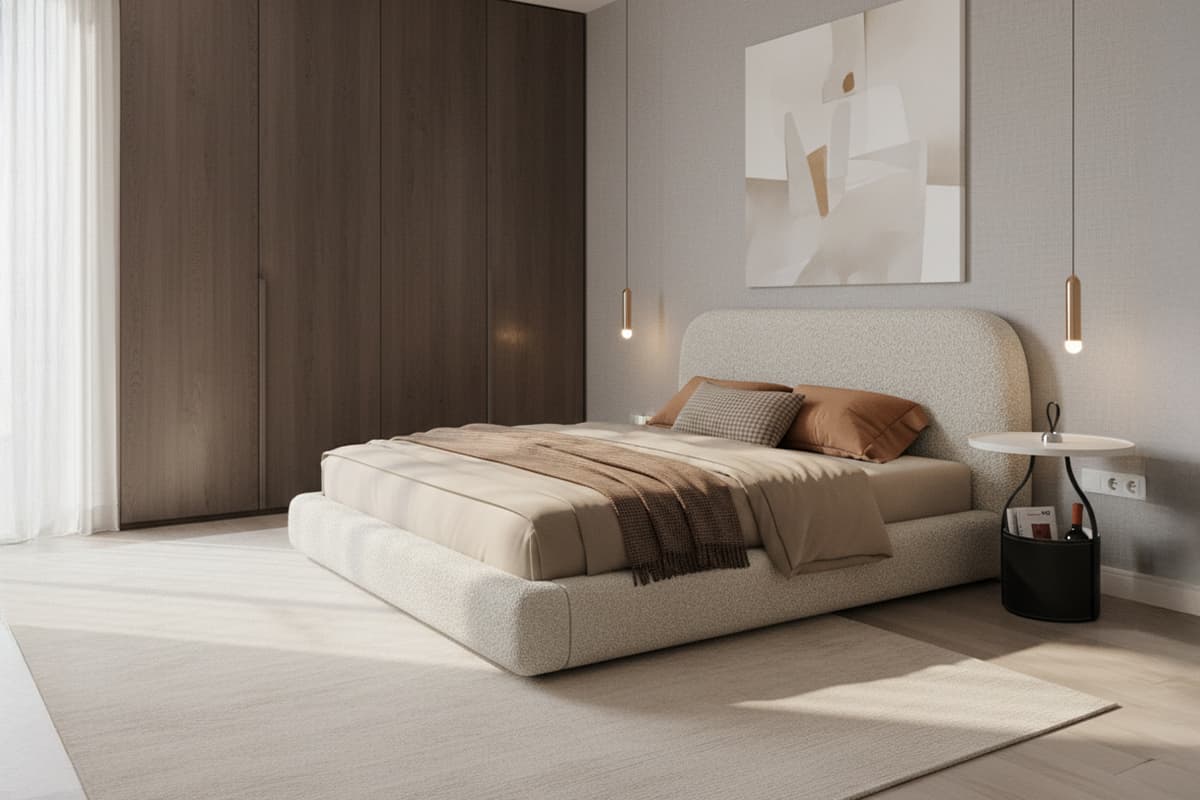
Photo by FRWD Furniture
The dominant style in new Malaysian condos. Minimalist interiors are defined not by emptiness but by intention — every piece earns its place, nothing is purely decorative, and the visual result is calm and ordered.
In a Malaysian context, minimalism is most successful when it uses warm neutrals rather than stark white, natural wood rather than laminate, and sufficient texture to prevent the space from feeling cold. The minimalist bedroom, in particular, is one of the most searched design topics in Malaysia.
For a full guide: Minimalist Bedroom Malaysia — How to Actually Achieve the Look.
2. Japandi

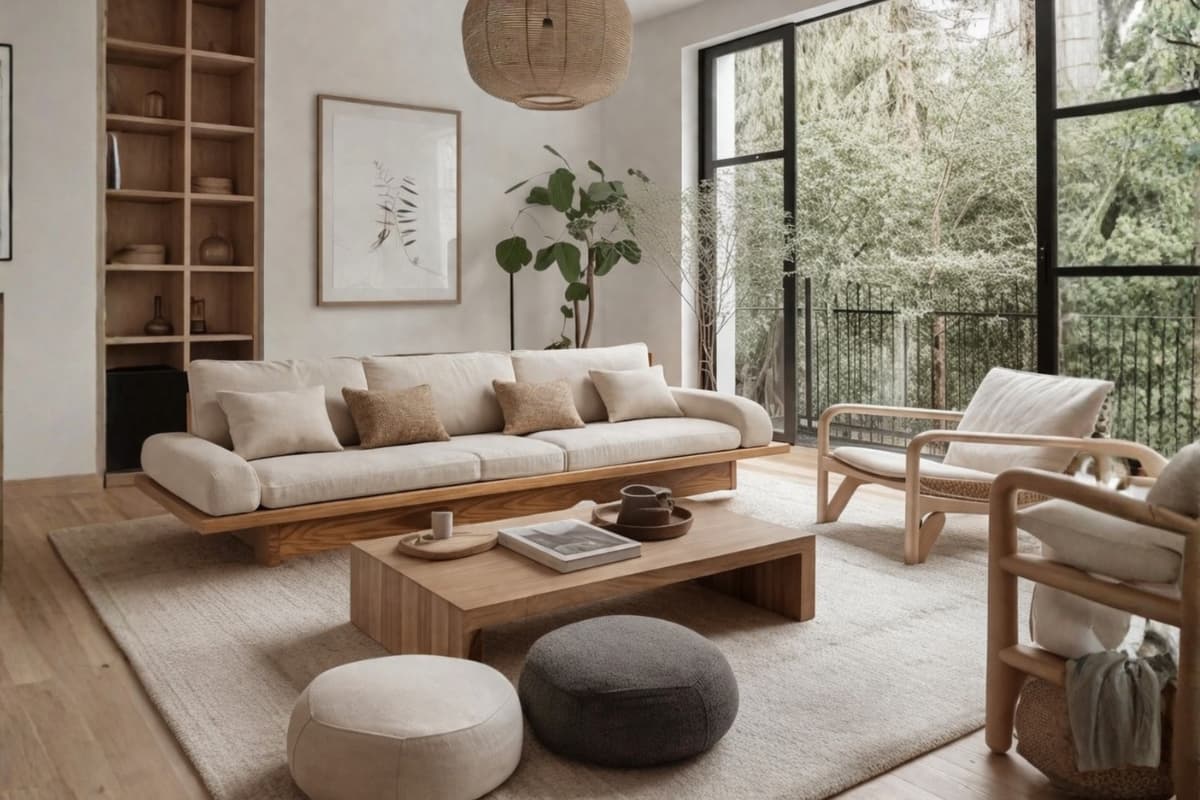
Photo by FRWD Furniture
The fastest-growing design style in Malaysia over the past three years. Japandi blends Japanese wabi-sabi (the beauty of imperfection and natural materials) with Scandinavian hygge (warmth, function, simplicity). The result is warmer and more textural than minimalism, with a stronger craft sensibility and a deliberate connection to natural materials.
Japandi works well in Malaysian homes because its material palette — solid wood, rattan, linen, natural fibre — suits tropical conditions, and its low-profile furniture and uncluttered surfaces suit condo scale.
For a full guide: Japandi Interior Design Malaysia — A Complete Guide for Malaysian Homes.
3. Contemporary

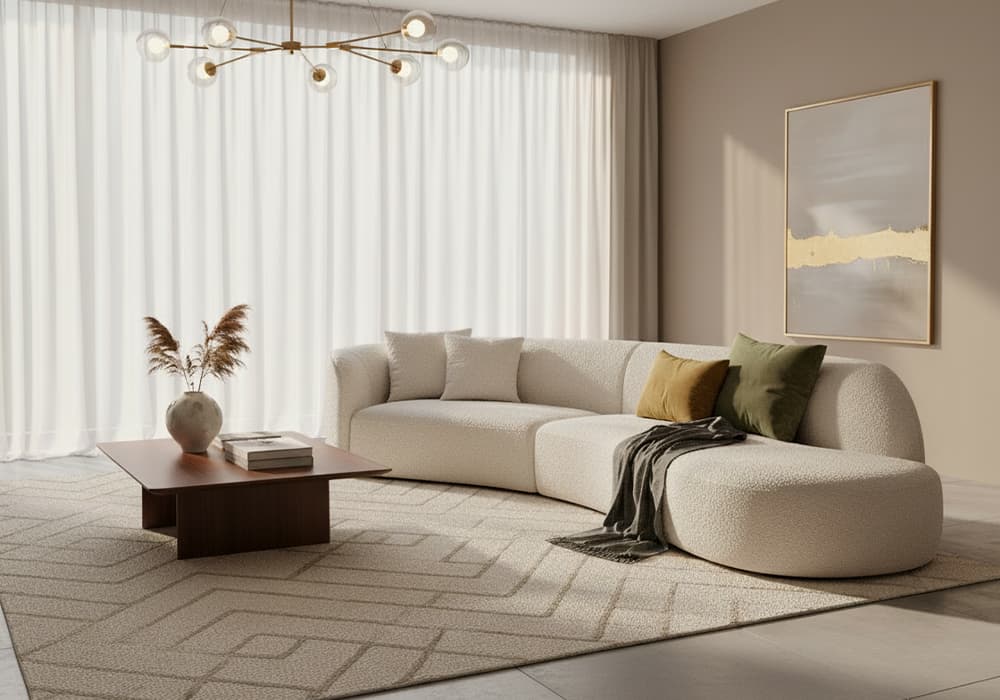
Photo by FRWD Furniture
Contemporary design is not a fixed style — it describes what is current, and it shifts every decade. In 2026, contemporary Malaysian interiors are characterised by curved furniture forms, warm neutral palettes, mixed materials (wood with metal, fabric with stone), and tactile textures that invite touch.
The most accessible and widely executed style in Malaysian homes, contemporary works in condos and landed properties equally. Its main risk is blandness — without a clear palette and material discipline, contemporary becomes merely 'whatever was in stock'.
For a full comparison: Modern vs Contemporary Furniture Malaysia — What's the Actual Difference?
4. Industrial

Photo by FRWD Furniture
Industrial interiors draw from warehouse and factory aesthetics: exposed structural elements, raw materials, metal accents, and a deliberately unfinished quality. In Malaysia, this style is most common in Klang Valley properties with existing architectural character — older terrace houses, loft-style condos, and commercial-to-residential conversions.
In a standard new condo, industrial elements work best as accents (a metal-frame coffee table, a concrete-look feature wall) rather than as the dominant scheme. Full industrial in a developer-finish condo tends to read as a set rather than a home.
5. Tropical / Biophilic

Photo by FRWD Furniture
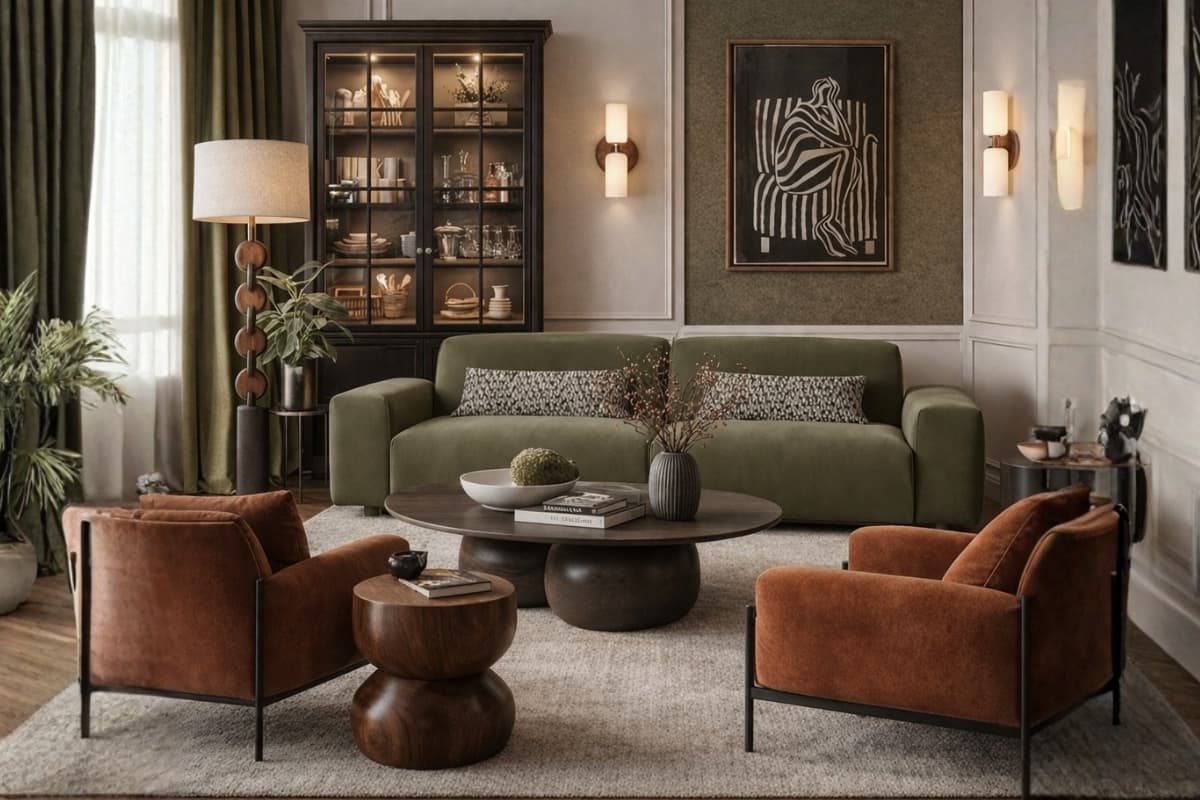
The most Malaysian of all the styles. Tropical biophilic design brings the natural environment inside — through natural materials (rattan, bamboo, timber), indoor plants, woven textures, and a palette drawn from the Malaysian landscape: terracotta, clay, olive, stone.
This style has the advantage of being climatically congruent — the materials that define it are also the ones best suited to Malaysian conditions. Its risk is decorative excess: a few well-placed natural elements read as biophilic design; too many look like a plant nursery with a sofa.
6. Transitional

Photo by FRWD Furniture
Not one style but a deliberate blend — typically modern structure with traditional warmth. Transitional interiors use contemporary furniture forms alongside heritage-influenced textiles, or streamlined layouts with warmly detailed finishing pieces. It is the most common style in Malaysian landed properties, where larger rooms allow for more layering.
Transitional is the honest description of how most Malaysian interiors actually look when styled thoughtfully, as opposed to how they are photographed for design publications.
How to Identify Your Personal Interior Design Style
Most people arrive at interior design decisions through a combination of instinct and budget. But taking 20 minutes to identify your genuine aesthetic preferences before you buy anything saves significant money and reduces the risk of a home that looks accumulated rather than designed.
Start With Furniture Silhouettes, Not Colours
Colour preferences change. The shape of furniture you are consistently drawn to is a more reliable indicator of style. Do you prefer straight lines and 90-degree angles, or curved forms and organic shapes? Low profiles close to the floor, or standard height pieces with visible legs? Heavy and grounded, or light and floating?
Straight lines and low profiles point toward minimalist and Japandi. Curves and mixed heights point toward contemporary and transitional. Heavy and grounded points toward industrial or classic. Natural forms and visible grain point toward tropical and biophilic.
The Three-Material Rule
A useful test for whether a room is working: count the number of distinct material types present. One dominant material, one secondary material, and one accent material — this combination reads as intentional. Four or more materials in a room typically reads as unsettled, regardless of how individually attractive each one is.
This rule applies within a room, not across the entire home. Different rooms can have different material palettes — consistency within each room is the goal.
Matching Interior Style to Property Type
Some styles suit certain property types better than others. This is not a rigid rule — but it is a useful starting point.
Condo (Under 1,000 sqft): Styles That Work Best
Minimalist, Japandi, and Contemporary are the three styles most successful in Malaysian condo scale. All three prioritise function, work with low-profile furniture that maximises perceived ceiling height, and maintain a calm visual environment in a constrained space.
Industrial and Transitional are harder to execute well in a small condo — both require more floor area for their characteristic layering to read correctly rather than as clutter.
Terrace and Semi-D: Where Style Has More Room
Larger floor areas and separate rooms allow more stylistic freedom. Transitional and Tropical styles in particular benefit from the layering space that a landed property provides. Industrial elements read more authentically in older terrace houses with existing textural architecture.
Open-Plan Layouts: Keeping Zones Coherent
An open-plan living-dining space presents a specific design challenge: maintaining a coherent style across two functional zones that have no wall between them. The most reliable approach is to establish a single dominant material and colour palette that runs through both zones, then differentiate them through furniture form and lighting rather than colour and material.
Choosing Furniture That Matches Your Style
Once your style direction is clear, furniture selection becomes significantly easier. Below is a brief guide to what to look for — and what to avoid — for each major style.
Minimalist and Japandi: What to Look For
Look for: clean lines, visible natural wood grain, low profiles, concealed hardware, natural fabric upholstery (linen, cotton, performance weave), and forms that are quiet rather than decorative.
Avoid: ornamental headboards, chrome and high-gloss finishes, patterned upholstery, furniture that uses multiple materials in a single piece.
See our full bedroom furniture range and living room furniture range for pieces that fit this profile.
Contemporary and Transitional: How to Mix Old and New
Contemporary furniture is defined by its current relevance rather than a fixed aesthetic — which means mixing contemporary pieces with older or heritage items is entirely appropriate, provided the visual weight of each piece is compatible. A heavy antique cabinet can sit with a contemporary sofa if both share a similar colour value; the contrast in material and period becomes intentional rather than accidental.
Tropical: Natural Materials That Hold Up in Malaysian Conditions
For tropical biophilic interiors, prioritise materials that are climatically suited to Malaysia: solid rubberwood and acacia for furniture, polypropylene or natural fibre rugs (with proper humidity management), rattan accessories over rattan furniture frames (which deteriorate faster in AC-on/AC-off humidity cycles).
Avoid untreated or poorly sealed natural wood in rooms that cycle frequently between air-conditioned and ambient humidity — the movement causes splitting and joint failure within a few years.
The Most Common Interior Design Mistakes in Malaysian Homes
These are the errors that appear most consistently in Malaysian home interiors — and they are almost always recoverable with targeted changes.
Copying an Aesthetic Without Adapting It to the Space
A Japandi living room photographed in a 1,000 sqft Singapore apartment with floor-to-ceiling windows on two sides will not transfer directly to a 650 sqft Malaysian condo with one window and no balcony. The aesthetic principle transfers; the specific furniture arrangement, lighting choices, and material palette require adaptation.
The adaptation step is where most inspiration-to-execution failures occur.
Mixing Too Many Styles in One Room
Every furniture piece has a style heritage. A mid-century modern sideboard, a contemporary sofa, an industrial coffee table, and a traditional rattan accent chair in the same room produces a room that reads as a furniture showroom floor rather than a home. Two styles, intentionally mixed, can be sophisticated. Four styles in one room, regardless of individual quality, read as unresolved.
Prioritising Looks Over Malaysian Climate Practicality
The velvet sofa that photographs beautifully degrades quickly in a high-humidity room that is not consistently air-conditioned. The untreated rattan coffee table splits along the seams within two rainy seasons. The linen curtains in a west-facing room fade unevenly within the first year.
Every material choice should be evaluated for how it behaves in Malaysian conditions, not only how it looks in a reference photograph taken in a different climate.
Interior Designer · FRWD Furniture
Laila is a furniture and interiors specialist at FRWD Furniture's Bangsar Experience Centre, with expertise in contemporary design trends, material finishes, and creating spaces that balance aesthetics with everyday function.
Frequently Asked Questions
1.What is the most popular interior design style in Malaysia in 2026?
What is the most popular interior design style in Malaysia in 2026?
Minimalist and Japandi are the two most searched and most executed styles in Malaysian homes in 2026, particularly in condos. Japandi has seen the fastest growth over the past three years. Contemporary remains the most broadly applied style across all property types.
2.What interior design style works best for a small Malaysian condo?
What interior design style works best for a small Malaysian condo?
Minimalist and Japandi both perform well in small Malaysian condos. Both prioritise low-profile furniture, uncluttered surfaces, and a restrained material palette — all of which make a constrained space feel more considered and more livable. Contemporary also works well when furniture is sized appropriately for the room.
3.How do I choose an interior design style for my home?
How do I choose an interior design style for my home?
Start with furniture silhouettes rather than colours — the shapes you're consistently drawn to reveal your style preference more reliably than colour choices alone. Then apply the three-material rule: one dominant material, one secondary, one accent. If a room uses more than three material types, it usually reads as unsettled.
4.Does interior design style affect which furniture I should buy?
Does interior design style affect which furniture I should buy?
Yes, significantly. Each style has a preferred furniture silhouette, material palette, and scale. Minimalist and Japandi suit low-profile pieces with natural wood finishes. Contemporary works with curved forms and mixed materials. Industrial needs metal and raw textures. Buying furniture before deciding on a style direction often results in pieces that don't reinforce each other.
5.Can I mix different interior design styles in one home?
Can I mix different interior design styles in one home?
Yes — and most well-designed Malaysian homes do. The practical rule is to keep each room to a maximum of two coherent style references, and to ensure one dominant style runs through the whole home for visual continuity between rooms. Mixing within a room works; mixing without a clear hierarchy in a room typically doesn't.