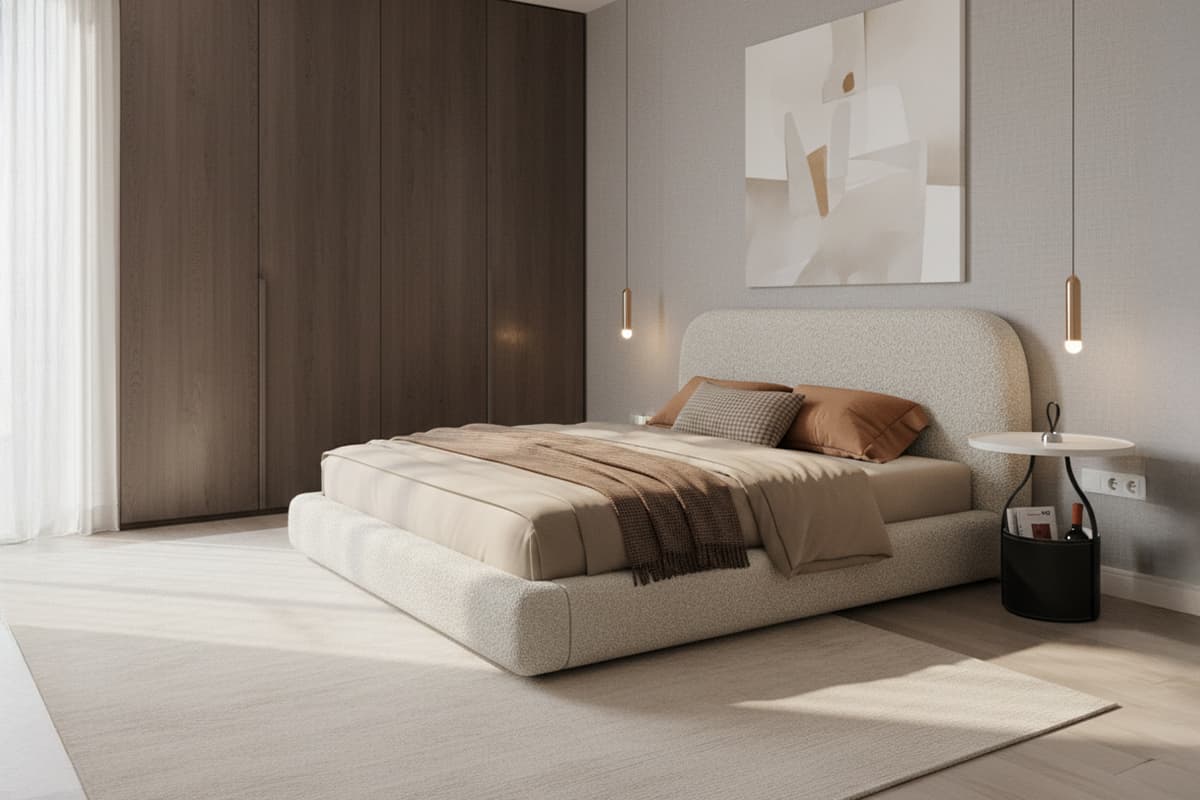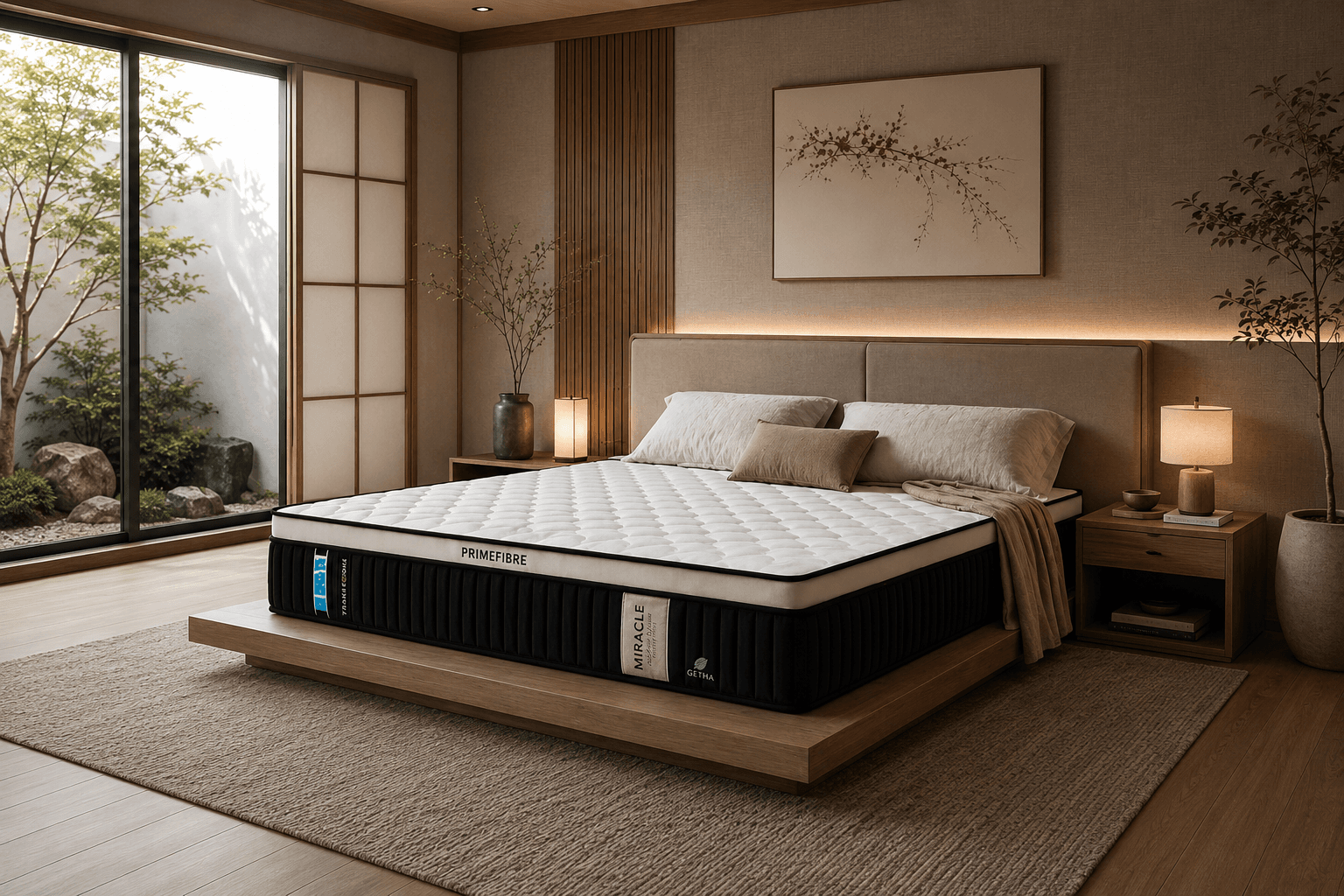
The short version: match the mattress to four things — your size (Queen 152 × 190 cm is the Malaysian standard for couples), your sleeping position (side sleepers go softer, back and stomach sleepers go firmer), your climate reality (Malaysia's ~81% average humidity favours latex and pocket-spring builds that breathe), and your budget (a quality Queen runs RM1,500–RM4,000; replace every 7–10 years). This guide covers every mattress type sold in Malaysia, the firmness decision, exact sizes, what to test in a showroom or during a sleep trial, and what to do with the old mattress when the new one arrives.
Start with size: Malaysian mattress dimensions
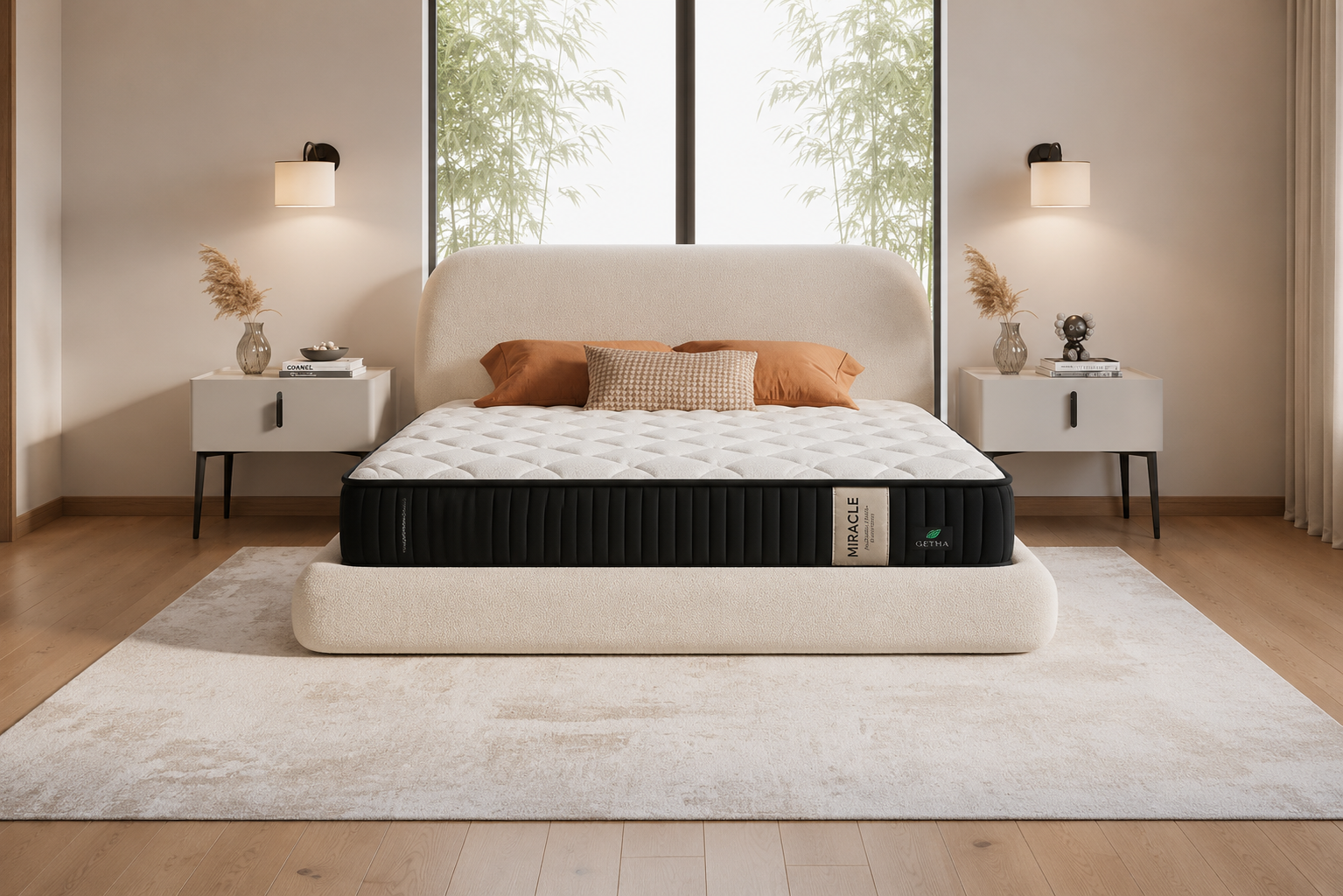
Photo by FRWD Furniture
A mattress must match your bed frame size exactly — Malaysian, UK and US "queen" and "king" are all different dimensions, so always match centimetres, not names. If you haven't chosen a bed frame yet, start with our bed size guide to plan your room layout before committing to a mattress.
Malaysian mattress sizes at a glance:
Single (91 × 190 cm) — best for children, guest rooms, and compact studios. Browse single mattresses.
Super Single (107 × 190 cm) — the solo adult sweet spot; fits a Super Single bed frame with room to spread out. Browse Super Single mattresses.
Queen (152 × 190 cm) — the Malaysian default for couples; pairs well with a Queen bed frame and fits most master bedrooms. Browse Queen mattresses.
King (183 × 190 cm) — maximum space for couples or families who co-sleep; requires a room of at least 12 × 12 ft. Browse King mattresses.
Room fit is decided by the bed frame (9–12 cm wider than the mattress), not the mattress itself. Measure your room and shortlist a bed frame first, then choose the mattress to match.
The four mattress types — and which suits Malaysian sleep
Four main types are sold in Malaysia, and the climate tilts the decision. Memory foam is the global bestseller but runs warm; pocket spring and latex both allow airflow, which matters when you sleep at 27–32°C year-round.
Memory foam
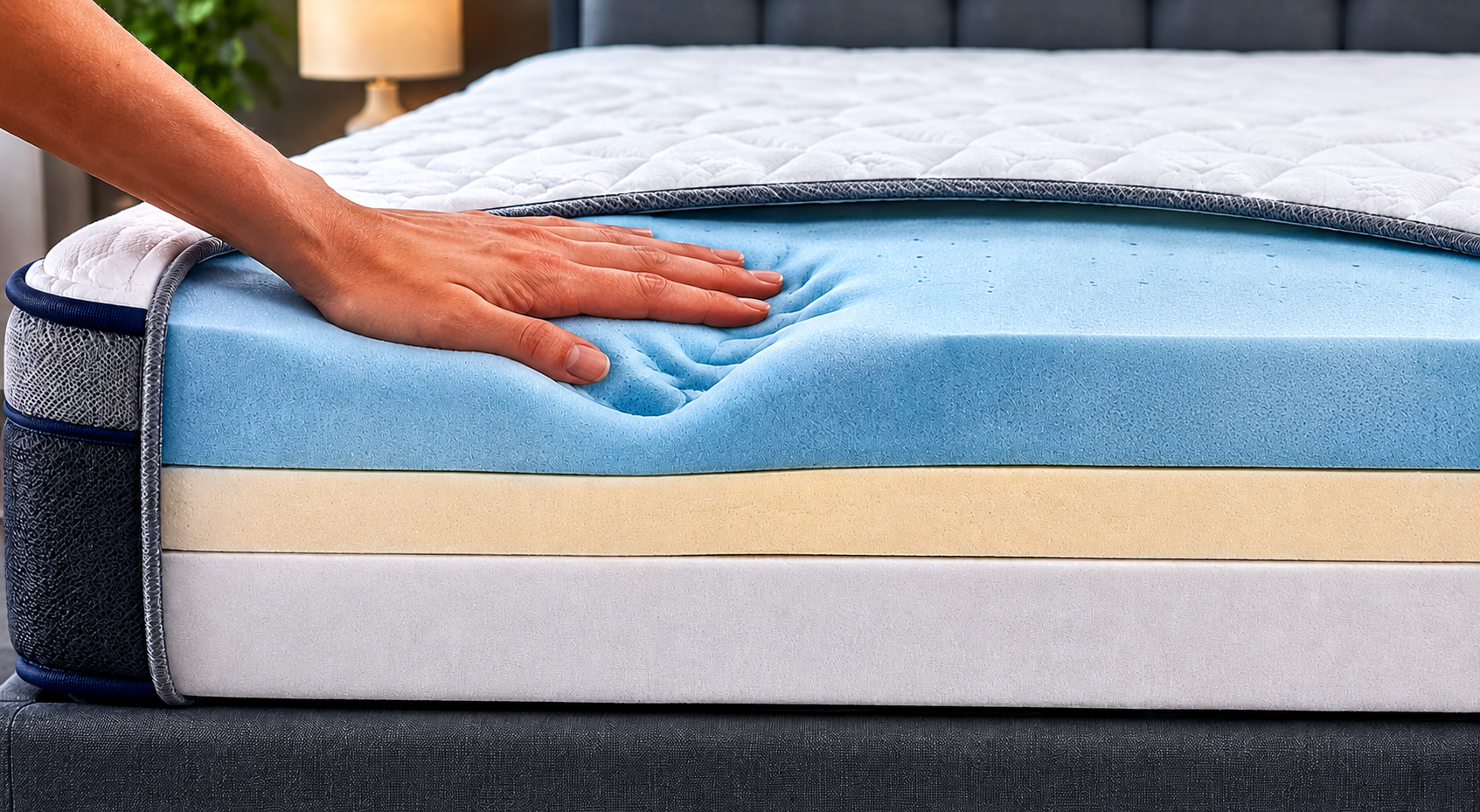
Photo by FRWD Furniture
Memory foam contours to your body, absorbs movement (ideal if your partner shifts around at night) and offers excellent pressure relief for side sleepers. The trade-off in a hot climate: standard memory foam traps heat. If you sleep without air-conditioning, look for gel-infused memory foam or an open-cell construction — these run noticeably cooler. Budget memory foam Queens start around RM500; a gel-infused model typically begins at RM1,800. Browse memory foam mattresses.
Natural latex

Photo by FRWD Furniture
Natural latex (tapped from rubber-tree sap — Malaysia is a major global producer) is responsive and buoyant rather than contouring, making it easier to move on. It is inherently cooler than memory foam, naturally hypoallergenic, and resistant to dust mites — a genuine advantage in our humidity. Quality natural latex lasts 10–15 years, roughly 40% longer than the average foam mattress. The premium is real: natural latex Queens start at RM1,800 and reach RM6,000 for thick, certified builds. Always check the label: look for 100% natural latex or certifications such as LGA or ECO — "latex feel" without these markers usually means synthetic SBR blend. Compare memory foam vs latex for a deeper look.
Pocket spring

Photo by FRWD Furniture
Pocket springs are individually wrapped coils that move independently, so a partner rolling over does not send a wave across the bed. The open coil structure circulates air far better than solid foam — pocket spring mattresses are one of the best choices if you run hot or sleep without AC. They also suit back and stomach sleepers who prefer a firmer, more supportive feel. Spring Queens typically range from RM1,200 to RM3,500. For the best of both worlds, pair a pocket spring core with a comfort foam or latex top layer. Browse pocket spring mattresses.
Hybrid mattress

Photo by FRWD Furniture
A hybrid combines a pocket spring support core with one or more foam or latex comfort layers. You get the airflow of springs, the contouring of foam, and (in premium builds) the durability of latex — all in one mattress. Hybrids are the most versatile option for couples with different sleep preferences. Expect to pay RM2,000–RM5,000 for a well-built Queen. Browse hybrid mattresses.
Firmness: decide by sleeping position and body weight
Firmness is rated on a 1–10 scale. Most sleepers fall into the 4–7 range; only stomach sleepers and heavier builds routinely need 7+. Two factors predict the right firmness better than any other: your primary sleeping position and your body weight.
Side sleeper: Soft to medium (4–6/10). Shoulders and hips need to sink in for straight spine alignment. Too firm and you wake with shoulder or hip pain.
Back sleeper: Medium to medium-firm (5–7/10). Lumbar support without pushing hips up. The lower back should feel cradled, not arched.
Stomach sleeper: Firm (7–8/10). Prevents the pelvis from sinking and arching the lower back — the most common cause of morning back pain in stomach sleepers.
Couples with mixed positions: Medium (5–6/10) or a dual-comfort mattress. Some ranges offer split-firmness kings for couples who cannot agree.
Heavier build (90 kg+): Go one step firmer than your position suggests. More body mass compresses the foam faster, so a medium for a lighter sleeper feels like a soft for a heavier one.
Lighter build (under 55 kg): Go one step softer. You may not compress the mattress enough to reach the support layer on a firm mattress.
If you wake with lower-back ache, firmness is usually the culprit — our mattress for back pain guide covers the health angle in depth.
Built for Malaysia: heat, humidity and airflow
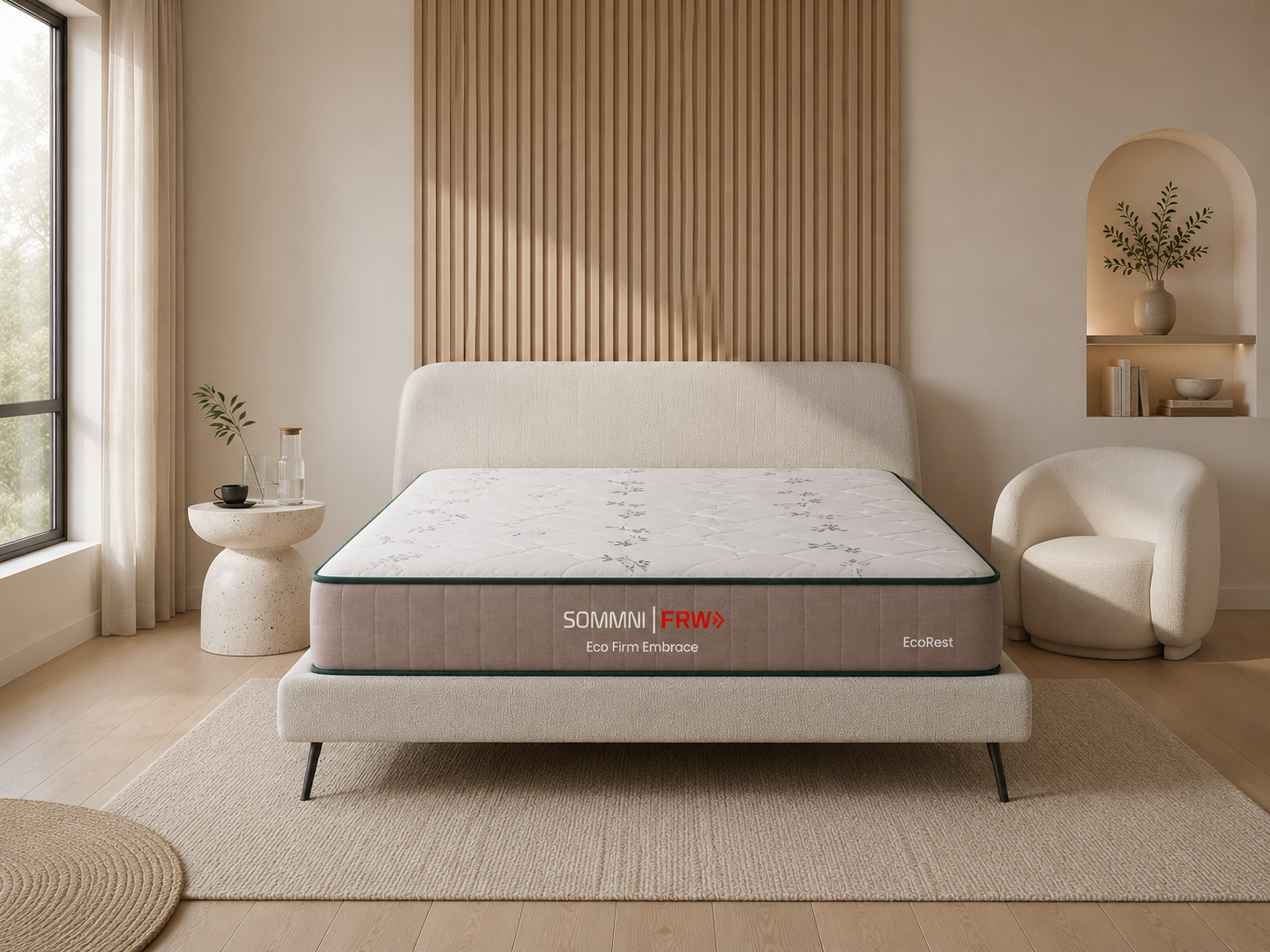
Photo by FRWD Furniture
Malaysia's ~81% average humidity changes the ranking of mattress features in ways most foreign buying guides ignore. Keep three things in mind:
Breathability beats plushness. Pocket-spring and latex builds allow air to move through the mattress. Dense memory foam without cooling technology traps body heat. If you sleep without air-conditioning, prioritise spring or latex.
Cooling layers are worth paying for here. Gel-infused foam, pinhole-ventilated latex, and breathable knit covers genuinely matter in this climate. In temperate markets they are a luxury; in Malaysia they are practical.
Hypoallergenic matters more in the tropics. Dust mites thrive in humidity. Natural latex resists them inherently, and removable washable covers help any build.
Pair the mattress with a breathing base. A slatted platform bed frame (FRWD frames use 70–80 mm slat spacing) lets the mattress breathe underneath and needs no box spring. Solid bases trap moisture under the mattress. Slatted bed frames support foam, latex, and hybrid mattresses equally well.
How to test a mattress (in a showroom or with a sleep trial)
A five-minute lie-down in a showroom is better than nothing, but a 100-night sleep trial is the real test. Here is how to make the most of both:
In a showroom: Lie in your actual sleep position for at least 10 minutes — not on your back if you sleep on your side. Check that your spine is in a neutral line from shoulder to hip. Bring your partner. Press your hand flat against the mattress next to your hip — if there is a large gap, the mattress is too firm for you; if your hand is squeezed, it may be too soft.
Testing for motion transfer: Sit on one edge and watch a glass of water in the centre. Little ripple means good motion isolation.
With a sleep trial: If the retailer offers a trial period (Sommni offers 100 nights), sleep on the mattress for at least three weeks before judging. Your body needs time to adjust from your old mattress. Keep the mattress on a compatible slat base — most trial policies are void if you use it on a solid platform or on the floor.
Visit the FRWD Bangsar Experience Centre, 51 Jalan Penaga, KL, to try the full Sommni range alongside every FRWD bed frame before you commit.
Budget honestly: what each price tier buys
All prices are approximate Queen size (152 × 190 cm) retail in Malaysia, 2026.
Under RM1,000: Entry-level foam or basic spring. Expect a lifespan of 3–5 years. Suitable for guest rooms or short-term use.
RM1,000–RM2,000: Mid-range pocket spring or basic memory foam. Respectable durability (5–7 years), decent motion isolation, and usually better edge support. Good value for a secondary bedroom.
RM2,000–RM4,000: Quality range — this is where most FRWD and Sommni models sit. Natural or blended latex, premium pocket springs, hybrid constructions. Expect 7–10 years of consistent support. Worth spending here for a master bedroom.
Above RM4,000: Premium and specialist — 100% natural latex, zoned pocket spring hybrids, certified organic materials. 10–15-year lifespans are realistic. Worth it if you have back issues, sleep very hot, or simply want the best.
Quick maths: a RM3,000 Queen used for 10 years costs RM300 per year, or RM0.82 per night. A RM800 mattress replaced after three years costs RM267 per year. The better mattress frequently costs less per night.
Caring for the mattress you choose
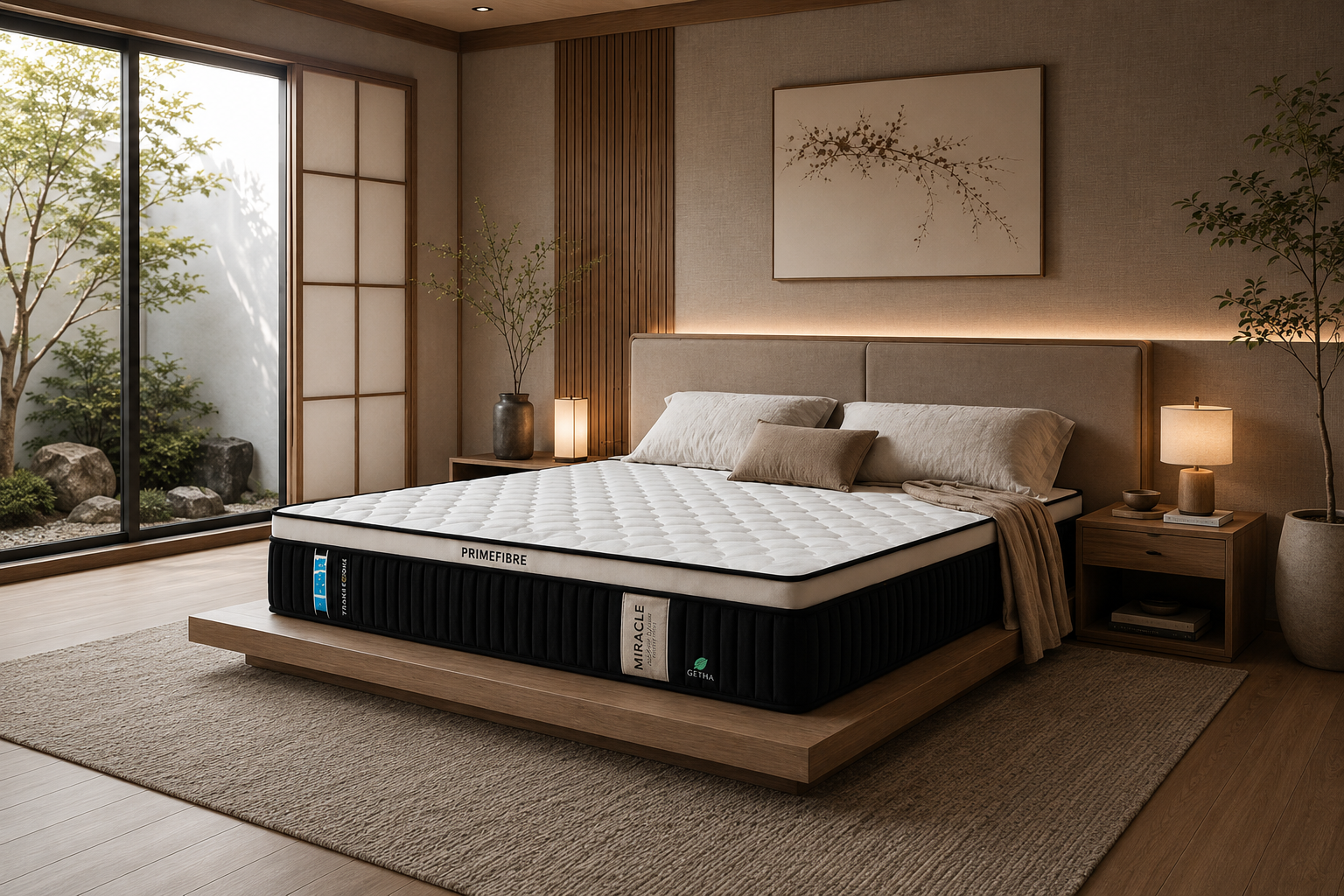
Photo by FRWD Furniture
Three habits cover 90% of mattress care in Malaysia:
Use a washable mattress protector from day one. It blocks sweat and humidity from reaching the foam, and it is the difference between a 7-year and a 10-year mattress. Wash it monthly.
Rotate head-to-foot every 3 months. This evens out body impressions. Do not flip one-sided pillow-top builds; do flip dual-sided ones.
Spot-clean fast and dry thoroughly. For most stains, blot (never rub) with a mild detergent solution. For blood, use cold water — heat sets the protein. Always air-dry fully with a fan or AC before re-making the bed — trapped moisture is how mould starts in this climate. Our guide to how to clean a mattress covers every stain type in detail, including how to remove blood stains from a mattress without damaging the fabric.
Vacuum the surface monthly with the upholstery attachment to keep dust mites down. In our humidity, this habit matters.
When to replace — and how to dispose of the old one
Replace your mattress when you notice sagging you can see, springs you can feel, or mornings where you wake more tired or sore than when you went to bed — regardless of the age of the mattress. As a general rule, budget mattresses typically need replacing after 3–5 years, while quality pocket spring and latex builds can last 7–10 years or more with proper care.
Signs it is time to replace:
Visible sag or body impression deeper than 2.5 cm. A quick test: place a straight ruler across the mattress surface.
You wake with stiffness or pain that eases after 20–30 minutes of moving around.
You sleep better in hotels or on other people's mattresses.
Noticeable springs or lumps through the surface.
Disposing of the old mattress in Malaysia:
Most local councils do not collect large bulky items on a standard schedule. Options include contacting your municipality for a special collection, using a licensed waste hauler, or donating a clean mattress in good condition to organisations such as Pertiwi Soup Kitchen or local shelters. Some retailers (including FRWD) offer old-mattress removal when they deliver your new one — confirm this at checkout. Read our full guide to responsible mattress disposal in Malaysia for step-by-step options.
Try the Sommni range and every FRWD bed frame at the Bangsar Experience Centre, 51 Jalan Penaga, KL — or browse mattresses online with free Peninsular Malaysia delivery and 0% instalment plans. Unsure what fits your frame and room? Book a free styling consultation.
Interior Designer · FRWD Furniture
Malique is an interiors and lifestyle specialist at FRWD Furniture's Bangsar Experience Centre, offering practical perspective on furniture selection, room styling, and the design principles that make a home feel intentional.
Frequently Asked Questions
1.What is the best mattress type for Malaysia's climate?
What is the best mattress type for Malaysia's climate?
Natural latex or pocket spring — both allow air to circulate through the mattress, which matters in Malaysia's ~81% average humidity. Memory foam is comfortable but traps heat; if you choose memory foam, spend the extra on a gel-infused or open-cell version and pair it with a slatted bed frame for underside airflow.
2.What size mattress should a couple buy?
What size mattress should a couple buy?
Queen (152 × 190 cm) is the Malaysian default — it fits most master bedrooms and gives each partner roughly 76 cm of space. If the room is 12 × 12 ft or larger and budget allows, a King (183 × 190 cm) is noticeably more comfortable for couples who move in their sleep or co-sleep with young children.
3.Memory foam or latex — which lasts longer?
Memory foam or latex — which lasts longer?
Natural latex, comfortably. A quality natural latex mattress typically lasts 10–15 years; a comparable memory foam mattress 6–10 years. The higher upfront cost of latex usually works out to a lower cost per year of use. Synthetic latex (SBR) is cheaper but softens faster than either — check the label. See our natural vs synthetic latex comparison for the full breakdown.
4.Do I need a box spring?
Do I need a box spring?
No — not with a modern slatted bed frame. Box springs were designed for older open-coil innerspring mattresses that needed the extra cushioning layer beneath them. Today's pocket spring, foam, latex, and hybrid mattresses all work best on a solid or slatted platform frame with slats no more than 7–8 cm apart. A slatted base also allows the mattress to breathe, which is particularly important in Malaysia's climate.
5.How firm should my mattress be for back pain?
How firm should my mattress be for back pain?
Medium to medium-firm (5–7/10) works for most people with lower-back pain, because it supports the lumbar curve without pushing the hips out of alignment. Very firm mattresses often worsen back pain by forcing an unnatural arch. If you sleep on your side and have back pain, lean softer (4–5/10) to allow the shoulders and hips to sink in and keep the spine neutral. Read our dedicated mattress for back pain guide for a deeper look at the research.
6.How often should I replace my mattress?
How often should I replace my mattress?
Every 7–10 years for quality builds; 3–5 years for budget ones. Sagging you can see, springs you can feel, or mornings that hurt are the replacement signals regardless of age. Using a washable mattress protector and rotating every three months will extend the useful life of any mattress.