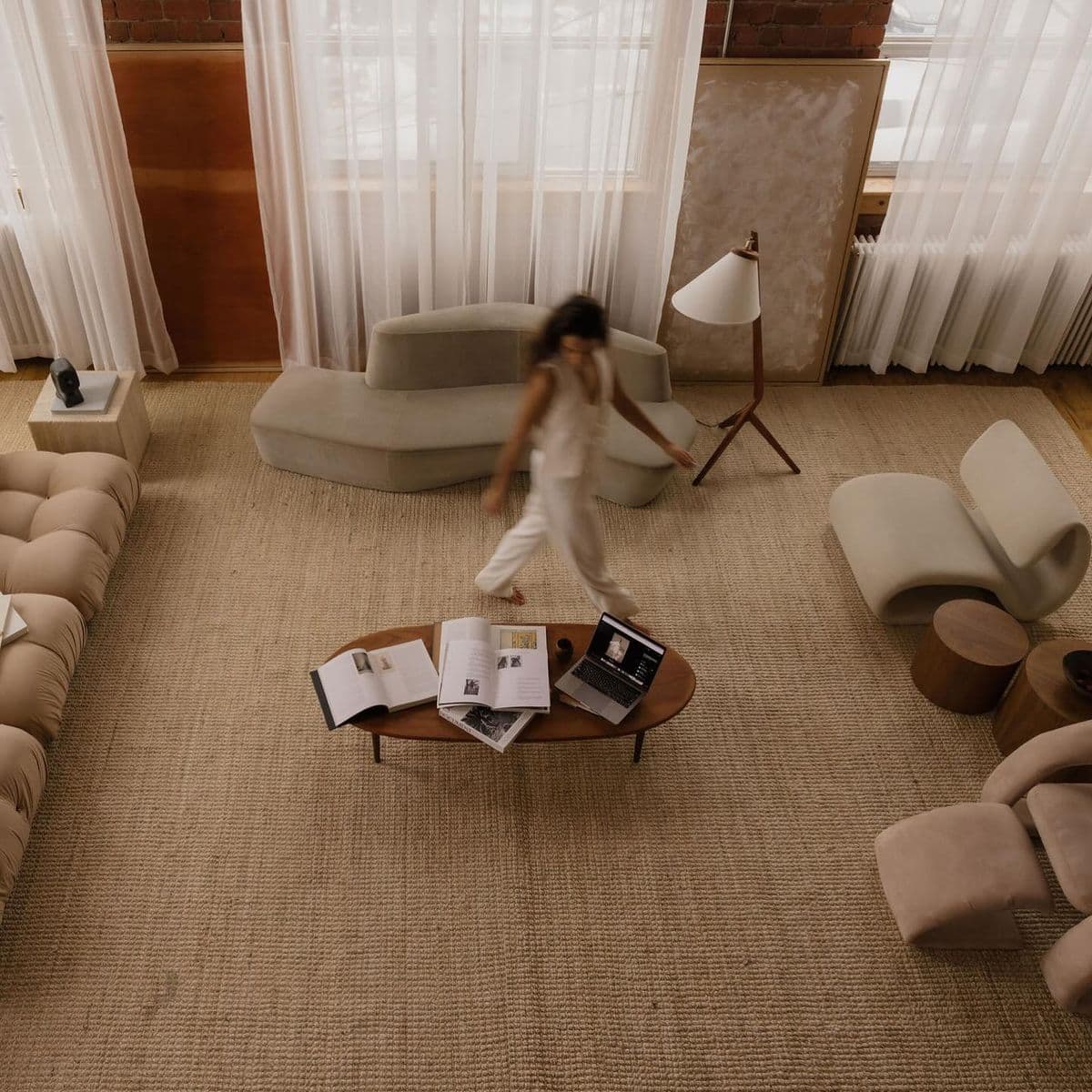
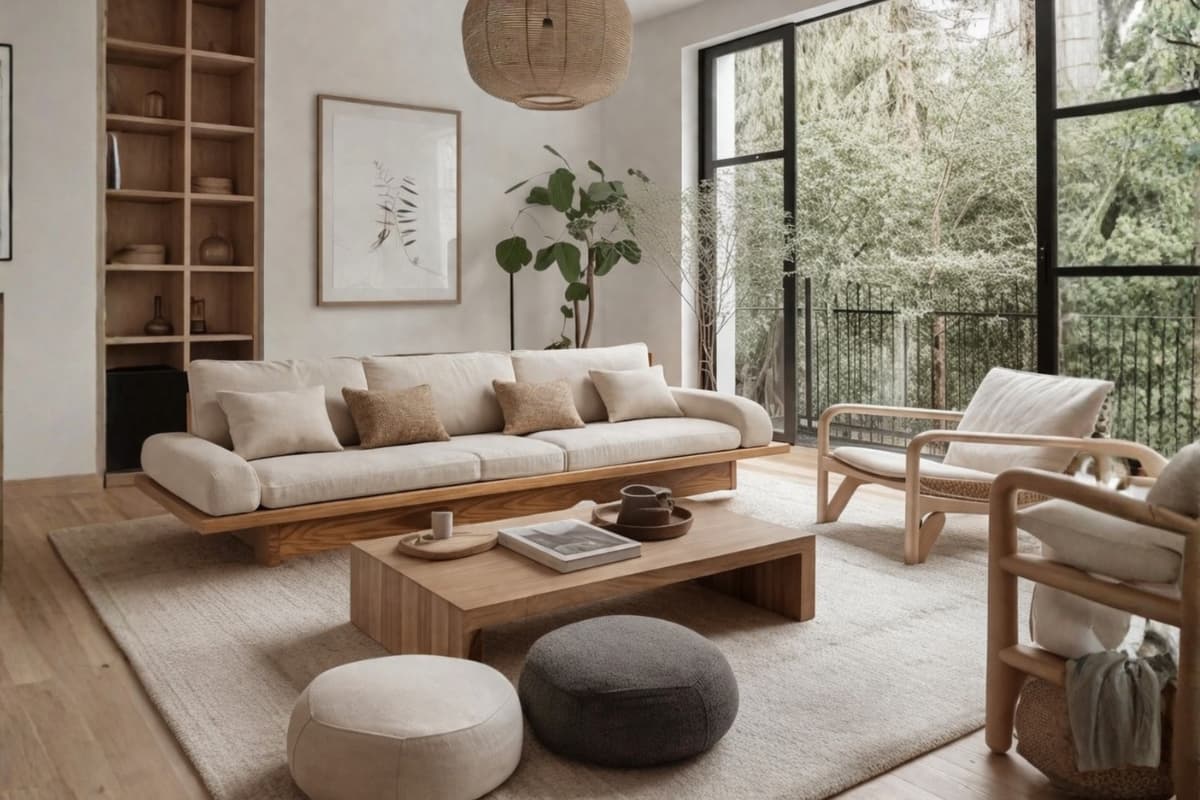
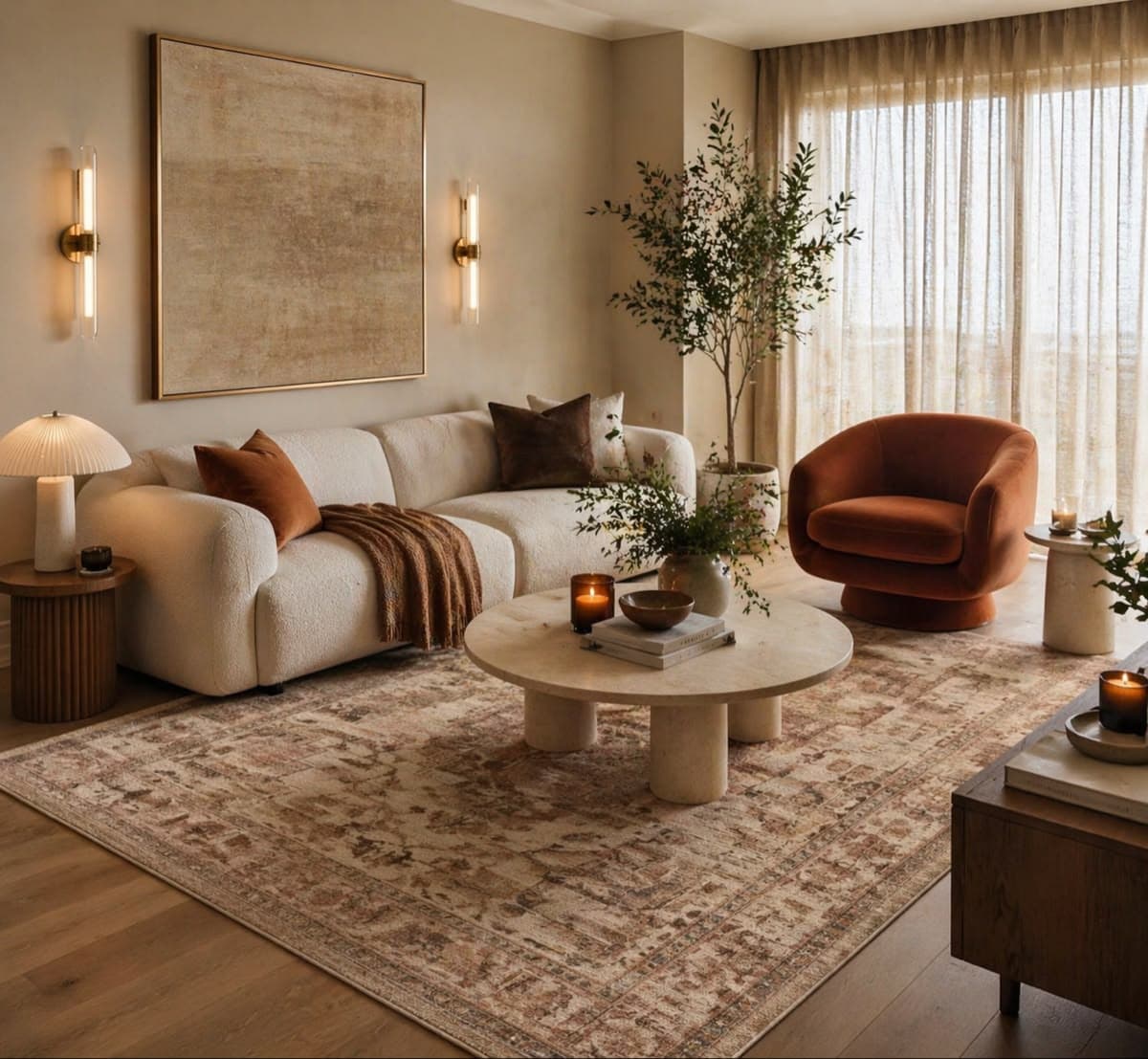
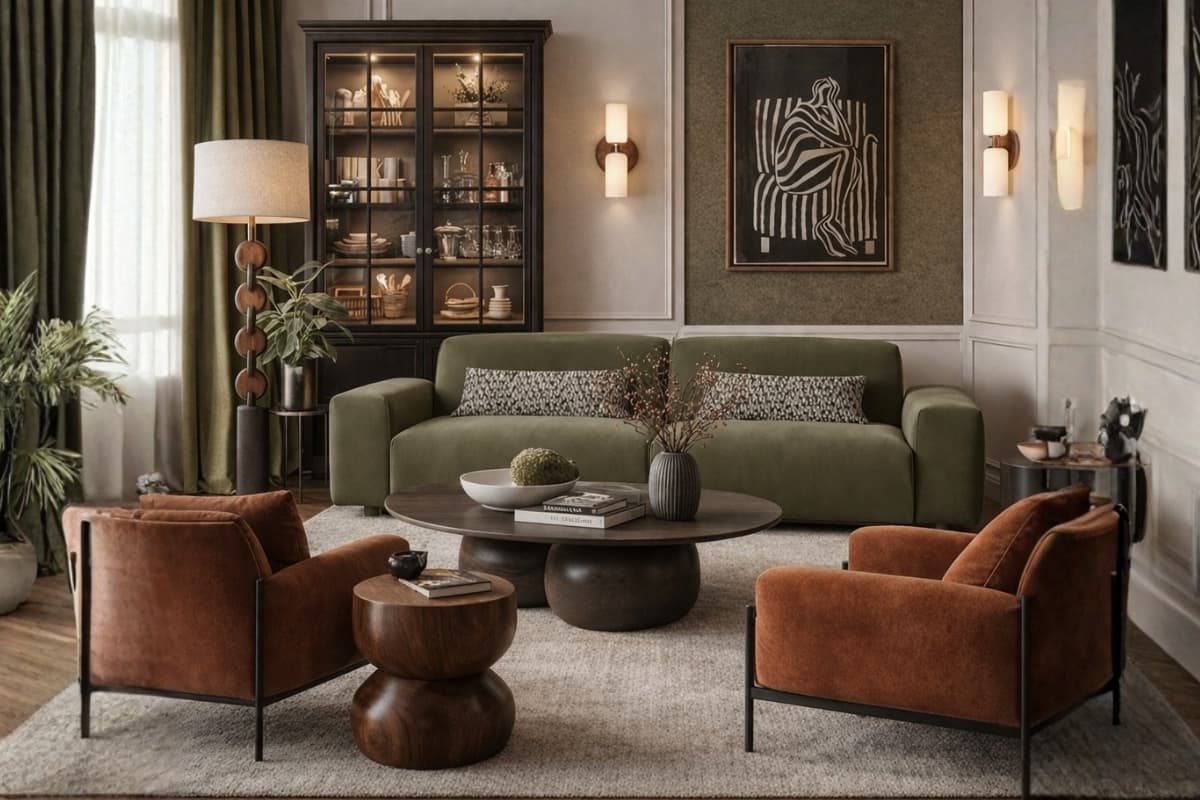
Scandinavian furniture won Malaysian homes because it solves four problems at once — it makes small rooms feel bigger, it survives the climate when you pick the right materials, it's calmer to look at than the maximalist styles of the 2010s, and it doesn't require a designer's eye to put together. This guide tells you what genuinely qualifies as Scandinavian (versus what's just marketed that way), what holds up in Malaysian humidity, what it should actually cost in RM, and how to style it room by room — with picks from the FRWD catalogue you can see in our Bangsar Experience Centre.
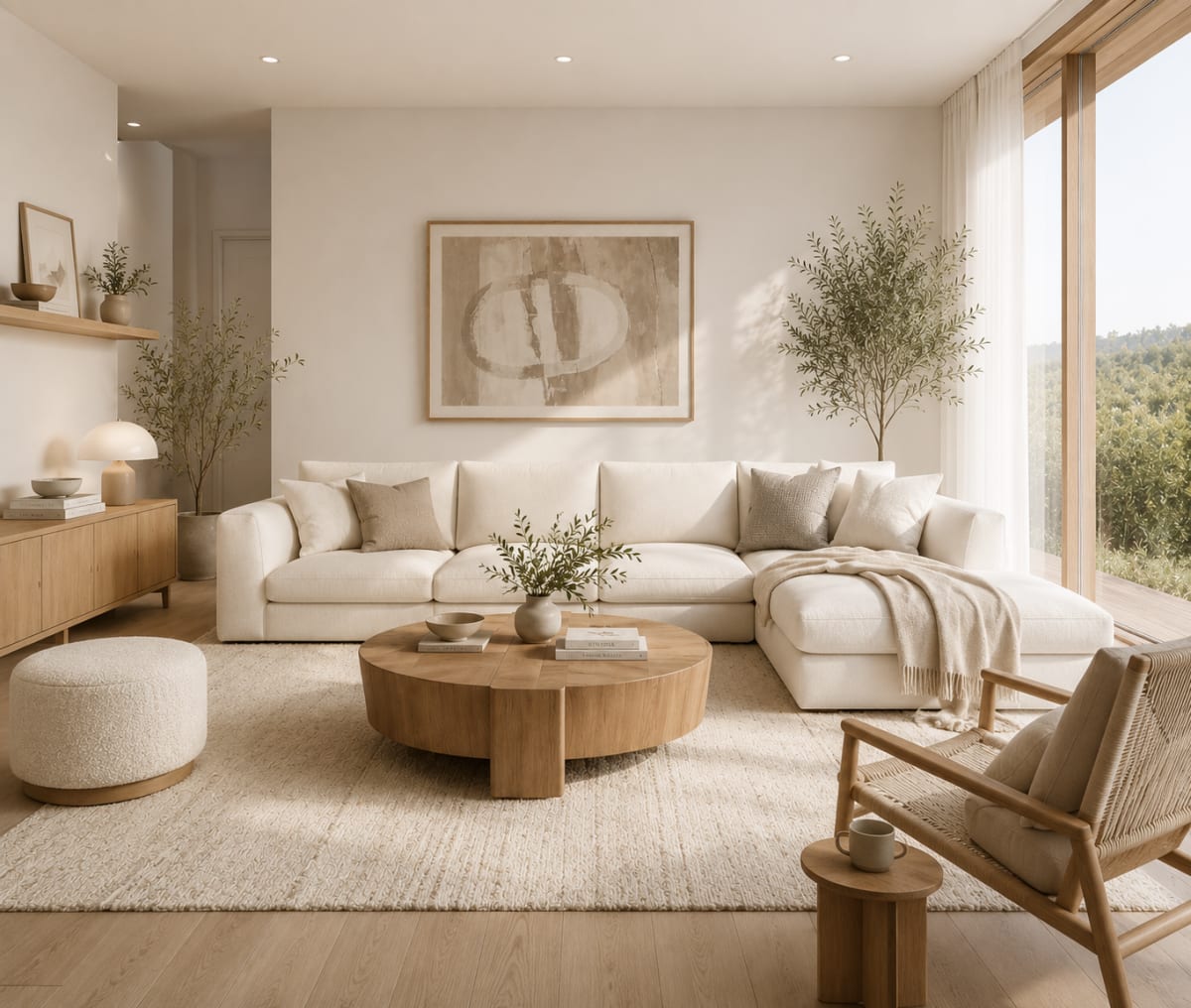
Photo by FRWD Furniture
What is Scandinavian furniture, really?
Scandinavian furniture is a design tradition from Denmark, Sweden, and Norway that prizes function, simplicity, light materials, and quiet colour. It's not a single style — it's a set of principles.
The tradition took shape between the 1930s and 1950s, when designers like Arne Jacobsen, Hans Wegner, Alvar Aalto, and Greta Magnusson Grossman were responding to two pressures: long, dark winters with limited daylight, and a cultural commitment to democratic design — furniture that ordinary families could afford and live with for decades. The answer was light woods, pale fabrics, gentle curves, and pieces that did their job without showing off.
Almost a century later, those constraints still produce furniture that translates surprisingly well to Malaysian apartments. Where European homes needed to bounce scarce winter light around a room, Malaysian condos need to keep narrow living spaces from feeling cramped. The Scandi solution — pale palettes, low-profile pieces, visible legs that let light pass under furniture — works for both.
What it isn't: it isn't IKEA's flat-pack budget tier (though IKEA's heritage is genuinely Swedish), and it isn't every white-and-oak product marketed as "Scandi" on Shopee. Real Scandinavian design is recognisable by restraint — pieces feel resolved, not decorated.
Nordic vs Scandinavian vs Japandi: which one are you actually looking at?
In Malaysia these three terms are used loosely, but they're not the same. Most readers searching for "Scandinavian" today actually want Japandi — the warmer, slightly darker hybrid that's dominated Malaysian interior trends since 2023.
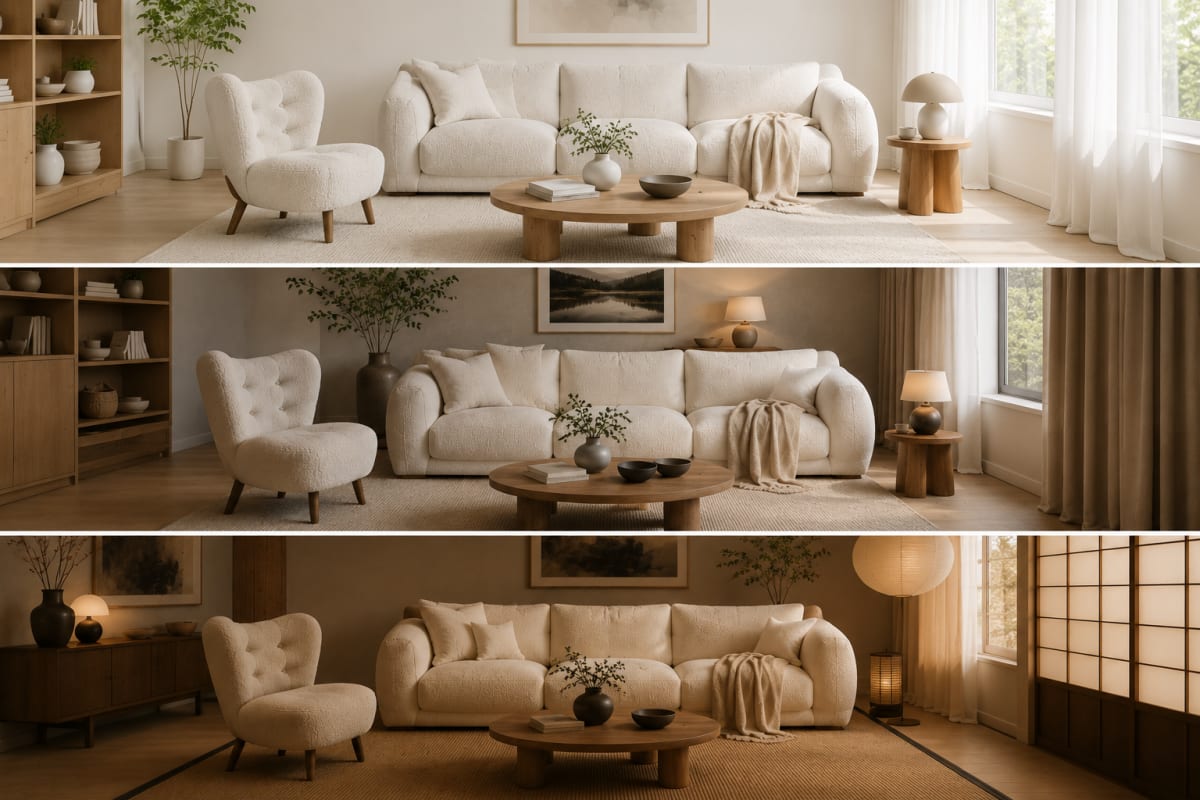
Photo by FRWD Furniture
Style | Origin | Palette | Materials | Feel |
|---|---|---|---|---|
Scandinavian | Denmark, Sweden, Norway | White, cream, pale grey, soft pastel accents | Light oak, ash, birch, linen, wool | Bright, airy, slightly playful |
Nordic | Adds Finland and Iceland | Same as Scandi, with more stone & dark wood accents | Often a little weightier — birch, pine, soapstone | Quieter, more rustic |
Japandi | Japanese + Scandinavian hybrid | Warmer neutrals: oat, taupe, charcoal, deep brown | Walnut, smoked oak, rattan, bouclé, linen | Calm, considered, more grounded |
Why this matters for Malaysian buyers: the all-white Scandi look from 2018-2020 ages quickly in tropical light and shows every coffee splash. Japandi keeps the Scandinavian framework — clean lines, function-first, natural materials — but adds darker timbers and warmer textiles that hide wear and feel more residential in a climate where you live with the windows open. If you're starting a room from scratch in 2026, default to Japandi-leaning Scandinavian unless you're committed to the maintenance.
The five hallmarks of authentic Scandinavian furniture
If a piece is missing two or more of these, it's "Scandi-styled" rather than Scandinavian.
1. Clean, intentional lines
Scandinavian pieces have visible geometry — a sofa is a clearly resolved rectangle with cushions; a chair shows its frame; a table reveals how the top meets the legs. There are no carved details, no skirts hiding the construction, no decorative trim. If you can't sketch the silhouette in five lines, it isn't Scandinavian.
2. Natural, honest materials
Solid wood (usually oak, ash, or walnut), wool, linen, cotton, leather, rattan, and stone. Materials are left visible — wood grain is shown, not painted over; fabric is woven, not embossed; metal is brushed or matte. Plastic appears, but only in pieces designed to be plastic from the start (Verner Panton's chair, Eero Saarinen's Tulip).
3. A restrained colour palette
White, cream, oat, soft grey, sand, dusty pastel, and one or two natural wood tones per room — usually no more. Accent colours, when they appear, are confident but small: a mustard cushion, a forest-green throw, a single brass lamp. Multi-colour rooms are not Scandinavian.
4. Function visibly comes first
A Scandinavian shelf will tell you exactly how it carries weight. A Scandinavian dining table will be the right height for eating and working at, not a sculpture you eat off. A Scandinavian sofa will be deep enough to relax in, not just look at. The design rule from the 1950s — "form follows function" — still holds.
5. A connection to daylight
Pieces are usually low-profile (you can see the wall and floor around them), legs are visible (light passes under), and the palette reflects daylight rather than absorbing it. Tropical Malaysian light is harsher than Scandinavian winter light, but the principle still helps: in our climate, choosing light-reflecting furniture keeps living areas from feeling oppressive at 2pm.
The Scandinavian colour palette in 2026
The pure-white look has aged. Today's Scandinavian palette in Malaysia leans warmer, with oat, taupe, and smoked oak as the new baseline.
The 2018-vintage all-white-and-light-ash Scandi look still photographs beautifully, but it's harder to live with than design magazines admit. In Malaysian conditions specifically:
All-white upholstery shows everything — KL's PM2.5 settles on pale fabric within weeks, and any iced kopi spill is visible forever
Pale ash and birch can yellow under direct sun through unblocked windows
High-contrast rooms (pure white walls + black furniture) feel stark under midday tropical light
The 2026 update keeps the structure but warms the tones:
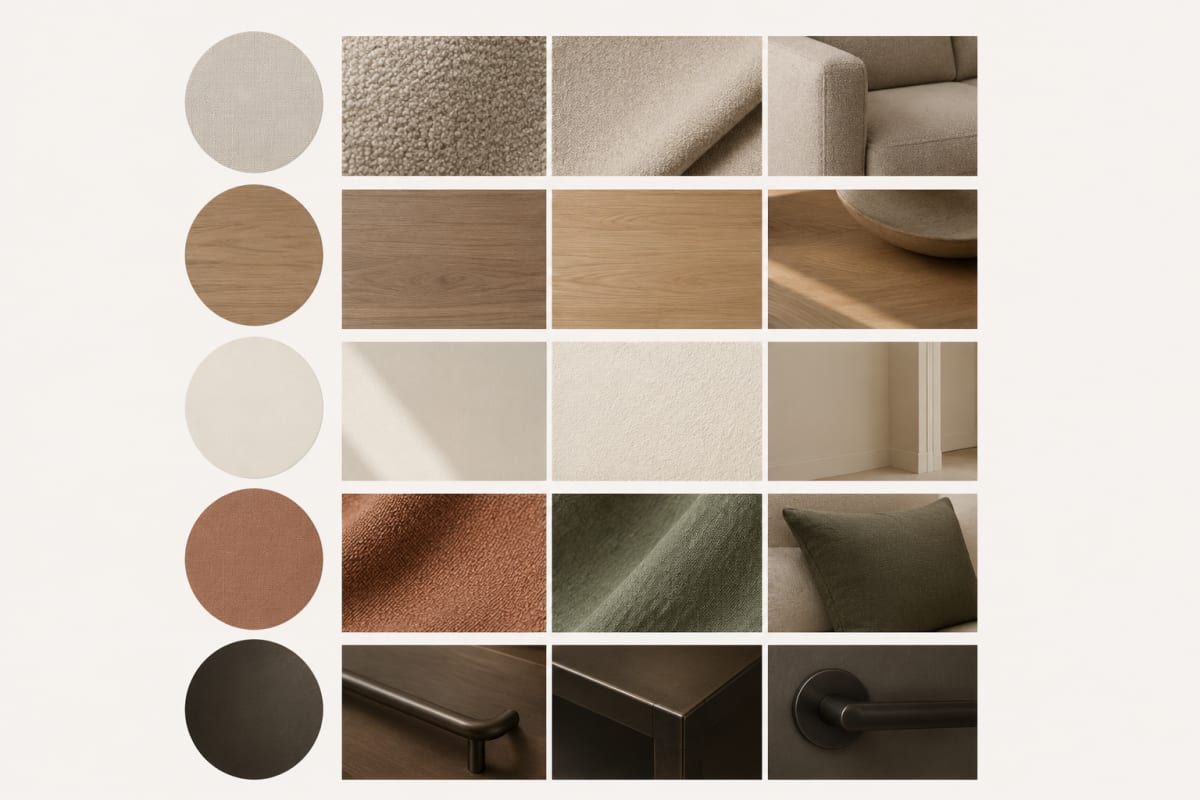
Photo by FRWD Furniture
Surface | 2020 default | 2026 default |
|---|---|---|
Sofa | White or pale grey linen | Oat, taupe, or warm grey bouclé |
Wood tones | Pale ash, white-washed oak | Smoked oak, light walnut, natural oak |
Walls | Pure white | Warm white, off-white, cream |
Accent textiles | Mustard, dusty pink | Terracotta, forest, deep oat |
Metals | Brushed brass | Bronze, blackened steel, matte black |
The result reads as Scandinavian — same silhouettes, same restraint — but ages better in Malaysian homes.
Materials that actually survive the Malaysian climate
Solid oak, walnut, rattan, and synthetic-fibre or performance-weave fabrics survive Malaysian humidity well. Avoid MDF without proper sealing, untreated softwoods, and pure cotton or linen if you have direct sun exposure.
This is where most online guides — including the original 2024 version of this article — let buyers down. Scandinavian furniture was designed for cold, dry interiors. Some of it adapts brilliantly to Malaysian conditions; some of it does not.
Materials that work

Photo by FRWD Furniture
Solid oak and walnut — naturally stable in humidity, ages beautifully, dents are characterful rather than damaging. The standard for serious furniture.
Rattan and cane — historically Asian, adopted by Scandi designers in the 1960s. Tropical-adapted by design.
Wool and bouclé — naturally moisture-regulating, hides minor stains, ages well. Bouclé in particular has the texture and the durability for family living.
Performance polyester weaves — modern fabrics rated for 30,000+ Martindale cycles handle pets, kids, and humidity. Most FRWD sofas use these blends by default.
Powder-coated steel and matte aluminium — won't rust, easy to wipe.
Tempered glass — humidity-neutral, easy to clean.
Materials that struggle
MDF or particle board with thin veneer — swells along edges where humidity penetrates the unsealed surface, especially in older condos with limited air conditioning. Acceptable for occasional pieces, risky for daily-use bed frames or dining tables.
Untreated softwoods (pine, fir) — can warp or split as humidity cycles. Most Scandinavian pine furniture sold cheaply is fine for one home but won't survive two moves.
Pure linen and pure cotton in direct sun — fade fast through unblocked west-facing windows.
Iron with painted finish (not powder-coated) — rust shows within 12-18 months in coastal areas like Penang or Johor.
Untreated leather — needs more conditioning than most owners give it; cracks if left near AC units.
If you take one rule from this section: check the warranty against the climate. A 3-year warranty against manufacturing defects (the standard at FRWD) tells you the manufacturer believes the piece survives normal Malaysian conditions. A 90-day warranty is telling you the opposite.
Scandinavian style room by room
The principles stay constant; the specific pieces and proportions change with how each room is actually used in a Malaysian home.
Living room
The Malaysian living room is usually open-plan, faces a TV, and seats four to six people. The Scandinavian approach: one statement sofa, a coffee table that doesn't fight it, a single accent chair, and one source of soft light.
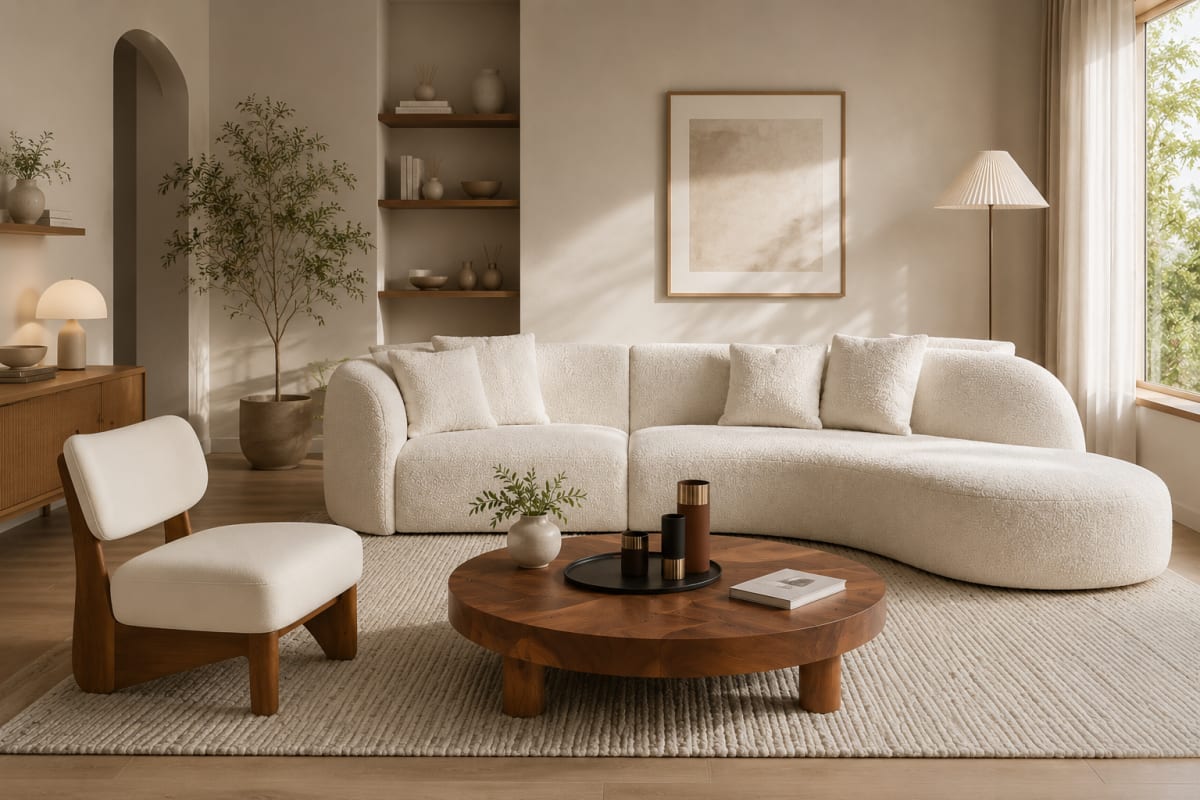
Photo by FRWD Furniture
Sofa choices depend on size:
Condo (under 900 sqft): A compact 2-seater or short L-shape. The Abaco 2-seater and Camille bouclé are sized for apartments.
Mid-size home (900–1,300 sqft): A 3-seater with clean lines. The Elsa (3-seater fabric, deep seat) and Lucietta (curved silhouette) are the everyday Scandi-Japandi defaults.
Larger family home: A modular sectional. The Calabasas is the most flexible, the Malibu the most generous.
Coffee table: Round, solid wood, no more than knee height. The Newton round coffee table follows the rule almost literally.
Accent chair: One, not two. The Thierry armchair and the Sabrina curved lounge are the safest picks under different proportions.
Lighting: One floor lamp at the corner of the sofa, not overhead. Scandinavian living rooms are deliberately under-lit by Malaysian standards — that's the point. Browse floor lamps before you buy more downlights.
Full category: Sofas · Coffee tables · Accent chairs
Bedroom
Scandinavian bedrooms are quiet rooms. The bed dominates; everything else stays low, light, and out of the way.
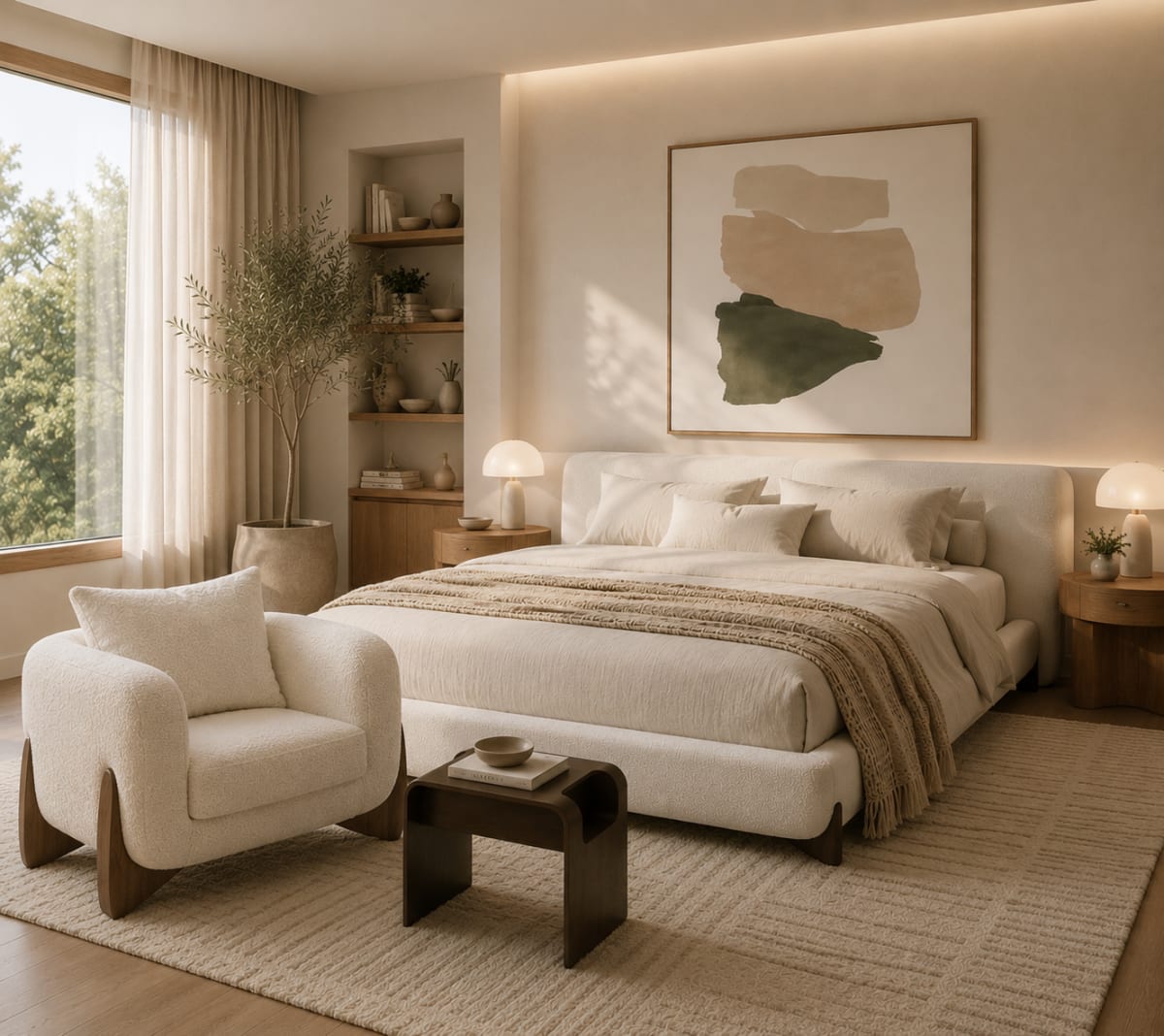
Photo by FRWD Furniture
Bed frame: Upholstered headboards in oat, taupe, or charcoal bouclé read more Japandi-Scandi than a hard wooden frame. The Yale, Abater and Nyx all sit in this register, with king and queen options to match Malaysian standard mattress sizes.
Bedside table: Small, round or square, with one drawer. The Nico in Light Oak is the textbook Scandi side table — and pairs equally well as a small bedside.
Wardrobe and storage: Open shelving is not Scandinavian — it's mid-century-modern dressed as Scandi. Real Scandinavian bedrooms hide laundry behind closed doors. Use wardrobes & storage rather than open racks.
Mattress: This isn't about style — it's about your back. The bedding & mattress range at FRWD includes pocket-spring, memory foam, and latex options sized for Malaysian bed frames.
Full categories: Bed frames · Bedside tables · Mattresses
Dining room
The Scandinavian dining table is the longest-lived piece in the home — it gets used three times a day for 15 years if you choose right.

Photo by FRWD Furniture
Dining table: Solid wood, rectangular for 4-6 seaters, round for 4-6 in tighter rooms, oval if your space is between sizes. The Verona is the FRWD anchor here — solid wood, black finish, sculpted legs. For lighter Scandi palettes, look at the dining table category for natural and oak finishes.
Dining chairs: Matched, not mixed, in Scandinavian rooms. Upholstered seats survive Malaysian dining better than caned ones (rice and oily food are unkind to cane). The Adrien upholstered dining chair is the safe default in oat or charcoal.
Bench: A bench on one side seats two extra people in the same footprint as one chair and is a hallmark Scandi move. See the dining benches.
Lighting: One pendant directly above the table, hung 75–85 cm from the tabletop. This is the single most impactful Scandinavian lighting rule. Browse pendant lights.
Full category: Dining room furniture
Home office
Working from home is now permanent for many KL professionals, and the Scandinavian home office is the room where the style pays off hardest — a calm, uncluttered desk environment measurably reduces fatigue across long work days.
Desk: Solid wood, simple silhouette, drawer optional. See office tables.
Chair: Ergonomic first, Scandinavian second — sit before you buy. See office chairs.
Lighting: A table lamp on the desk and one floor lamp behind the chair beats any overhead light. Browse table lamps.
Full category: Home office furniture
What Scandinavian furniture should actually cost in Malaysia (2026)
A well-made Scandinavian living-room setup in Malaysia in 2026 costs between RM6,000 and RM18,000 depending on size. Be sceptical of anything below RM2,000 for a 3-seater sofa — the materials won't survive the climate.
Here are honest 2026 price bands for FRWD-quality designer furniture, before promotions:
Piece | Budget end | Mid-range | Premium |
|---|---|---|---|
2-seater sofa | RM1,400 | RM2,500 | RM4,500 |
3-seater fabric sofa | RM2,400 | RM3,800 | RM6,500 |
L-shape sofa | RM3,500 | RM5,500 | RM9,500 |
Queen bed frame | RM1,600 | RM2,800 | RM4,800 |
King bed frame | RM2,000 | RM3,500 | RM5,800 |
Solid wood dining table (6-seater) | RM2,000 | RM3,500 | RM5,800 |
Dining chair (each) | RM350 | RM650 | RM1,200 |
Coffee table | RM800 | RM1,600 | RM2,800 |
Accent chair | RM1,000 | RM1,800 | RM3,200 |
Bedside table | RM450 | RM800 | RM1,400 |
A pragmatic full-room Scandinavian setup at FRWD's mid-range pricing:
Living room (3-seater sofa + coffee table + accent chair + floor lamp): ~RM7,500
Bedroom (queen bed + 2 bedside tables + table lamp): ~RM4,800
Dining room (6-seater table + 6 chairs + pendant): ~RM7,500
Most FRWD orders qualify for 0% interest installment through Atome, GrabPay Later, or SPayLater, splitting larger orders into 3-12 monthly payments. The Promo page lists current bundle discounts.
How to style Scandinavian furniture in a Malaysian home
Six rules cover 80% of the styling work. Follow them and a room reads Scandinavian even if no single piece is expensive.
One sofa, one accent chair, never two of each. Symmetry is mid-century-modern; asymmetry with restraint is Scandinavian.
Wood tones, not wood matching. Mix two — say smoked oak and natural rattan — but not three.
Layer textiles, not colours. A bouclé throw on a linen sofa on a wool rug reads richer than three patterned cushions.
Lighting is layered and low. One floor lamp, one table lamp, one pendant — never just an overhead light.
Negative space is a feature. Don't fill every wall. Scandinavian rooms can feel under-furnished by Malaysian standards — that's correct.
Add one organic shape. A round mirror, a curved sofa, a sculpted lamp. One curve breaks the rectangles and the room comes alive.
If you're unsure how to apply these to your specific floor plan, FRWD's free Interior Styling Service puts you on a call with one of our designers (Laila, Malique, and team) who'll walk through your space and put together a moodboard before you buy anything.
Common Scandinavian furniture mistakes Malaysian buyers make
Most "Scandinavian rooms that didn't work" fail for the same five reasons.
Buying all-white upholstery without thinking about life. A white linen sofa with a toddler, a curry-eating household, or a balcony cat is a maintenance project, not a sofa. Choose oat, taupe, or warm grey instead.
Pairing too many wood tones. Pale oak floor + walnut dining table + rattan chairs + teak side table reads as confusion, not warmth. Pick two woods. Live with it.
Buying flat-pack as the only style decision. Real Scandinavian rooms mix one or two flat-pack basics with two or three properly-built pieces (sofa, dining table, bed frame). Saving money on the sofa is where the room dies.
Forgetting the lighting plan. Scandinavian rooms live or die on layered lamps. The room will feel cold and clinical under overhead lights only.
Treating it as a colour-by-numbers exercise. Scandinavian is a philosophy of restraint, not a paint chart. If the room feels staged, you've decorated it. If it feels lived-in and calm, you've designed it.
Where to see and buy Scandinavian furniture in Malaysia
Visit a showroom before you commit to your sofa and dining table. Photos and even VR can't tell you how a fabric weave or wood finish reads in person.
A few options worth your time:
FRWD Bangsar Experience Centre — 51 Jalan Penaga, Bangsar, KL. Walk-ins welcome, free interior styling consultations with our in-house designers, all FRWD pieces on display.
IKEA Damansara / Cheras / Tebrau — strongest for genuinely Swedish flat-pack and budget basics.
MUMU Living, Cellini, MoreDesign — established Malaysian designer furniture retailers with showrooms.
Buying entirely online is workable for repeat purchases and accessories. For your first major Scandinavian piece — usually the sofa — sit on it first. The depth of a Scandinavian sofa varies more than photos reveal, and the comfort/aesthetic trade-off is personal.
The full FRWD range is at frwdfurniture.com with new arrivals updated weekly and ready stocks for delivery within the week.
Where to start
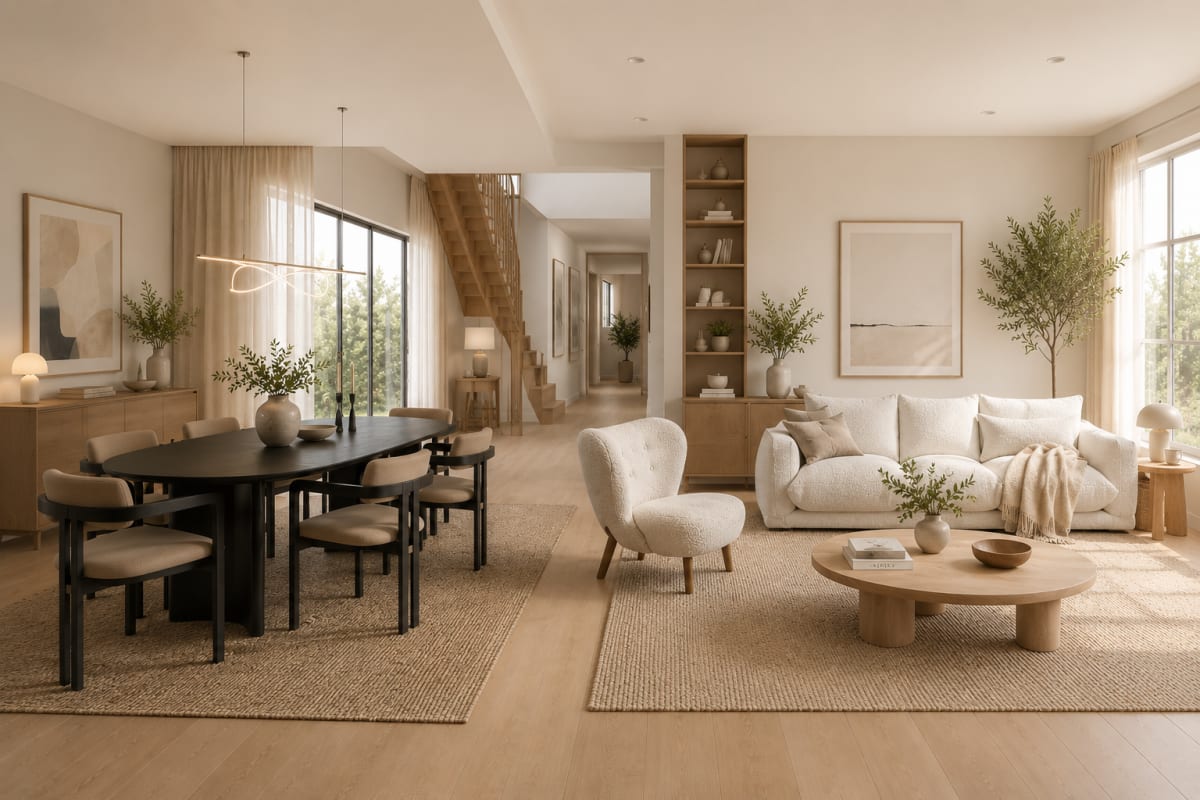
Photo by FRWD Furniture
If you're building a Scandinavian-style room in Malaysia in 2026, the order of decisions that produces the best result is:
Pick your sofa first. It anchors palette, scale, and mood. Browse FRWD sofas →
Then the dining table. Solid wood, the right seating count for your household. Browse dining tables →
Then the bed frame. The most-used piece in the house deserves to be the third decision, not the last. Browse bed frames →
Then everything else. Side tables, lamps, rugs, art — these are the easy decisions once the three big pieces are right.
If you'd rather not do this alone, the FRWD designers (free Interior Styling Service) will plan the whole room with you before you commit to a single piece.
Interior Designer · FRWD Furniture
Laila is a furniture and interiors specialist at FRWD Furniture's Bangsar Experience Centre, with expertise in contemporary design trends, material finishes, and creating spaces that balance aesthetics with everyday function.
Frequently Asked Questions
1.What is Scandinavian furniture?
What is Scandinavian furniture?
Scandinavian furniture is a design tradition from Denmark, Sweden, and Norway built on five principles: clean intentional lines, natural honest materials, a restrained colour palette, function-first design, and a connection to daylight. It originated in the 1930s-1950s and remains one of the most influential furniture traditions globally.
2.Is Scandinavian the same as Nordic furniture?
Is Scandinavian the same as Nordic furniture?
Almost — but not quite. Nordic furniture includes Finland and Iceland alongside Denmark, Sweden, and Norway, and tends to be slightly more rustic with stone and darker wood accents. Scandinavian specifically refers to Danish, Swedish, and Norwegian design, and is the term used commercially in Malaysia for both.
3.What's the difference between Scandinavian and Japandi furniture?
What's the difference between Scandinavian and Japandi furniture?
Japandi is a Japanese-Scandinavian hybrid that retains the Scandinavian framework (clean lines, function-first, natural materials) but uses warmer tones (oat, taupe, charcoal), darker woods (walnut, smoked oak), and quieter accents. In Malaysian conditions, Japandi-leaning Scandinavian rooms tend to age better than pure all-white Scandi rooms.
4.Does Scandinavian furniture work in the Malaysian climate?
Does Scandinavian furniture work in the Malaysian climate?
Yes, if you choose the right materials. Solid oak and walnut, rattan and cane, wool and bouclé, performance polyester blends, powder-coated steel, and tempered glass all survive Malaysian humidity well. Avoid unsealed MDF, untreated softwoods, pure linen in direct sun, and unfinished iron. A 3-year manufacturer warranty is a good proxy for "this piece is built to handle Malaysian conditions."
5.How much does Scandinavian furniture cost in Malaysia?
How much does Scandinavian furniture cost in Malaysia?
A mid-range full living-room Scandinavian setup (3-seater sofa, coffee table, accent chair, floor lamp) costs around RM7,500 in 2026. Designer Scandinavian sofas range from RM1,400 (compact 2-seater) to RM9,500+ (premium L-shape). Most FRWD orders qualify for 0% interest installments through Atome, GrabPay Later, or SPayLater.
6.What colour sofa is best for a Scandinavian Malaysian home?
What colour sofa is best for a Scandinavian Malaysian home?
Oat, taupe, warm grey, or charcoal — not pure white. These shades read fully Scandinavian, hide everyday wear, photograph well in tropical light, and don't show every speck of KL dust. Pure white linen looks beautiful in photography studios; it's harder to live with in a Malaysian home with windows that open.
7.Is IKEA Scandinavian furniture?
Is IKEA Scandinavian furniture?
IKEA is genuinely Swedish in heritage and design philosophy, and many IKEA pieces follow Scandinavian principles. But IKEA represents one slice of the Scandinavian tradition — the flat-pack, mass-market, democratic-design slice. Designer Scandinavian furniture (the tradition Hans Wegner and Arne Jacobsen built) is a different category, with different materials, build quality, and pricing.
8.What's the best Scandinavian sofa for a small Malaysian apartment?
What's the best Scandinavian sofa for a small Malaysian apartment?
A compact 2-seater under 1.8m wide, or a short L-shape under 2.2m on its longest side, in a light neutral fabric on visible wooden legs. The visible legs are important — they let light pass under the sofa and make the room feel less crowded. The Abaco 2-seater and Camille bouclé are sized for this exact problem.
9.Can I see Scandinavian furniture in person in Kuala Lumpur?
Can I see Scandinavian furniture in person in Kuala Lumpur?
Yes. The FRWD Bangsar Experience Centre at 51 Jalan Penaga, Bangsar, has the FRWD Scandinavian-leaning range on display. Walk-ins are welcome, and you can book a free interior styling consultation with one of our designers in advance.
10.How long does Scandinavian furniture last?
How long does Scandinavian furniture last?
Well-made Scandinavian furniture lasts decades — the entire design tradition was built on the idea of furniture surviving generations. Solid wood pieces from FRWD carry a 3-year manufacturer warranty against structural defects and, with normal Malaysian use, comfortably last 15-25 years.