Every furniture website in Malaysia tells you that sofas range from "RM1,000 to RM5,000" or that "prices vary based on design and material." That is technically true and practically useless.
What Malaysian buyers actually want to know is simpler and more specific: if I spend RM2,000 on a sofa instead of RM3,500, what am I giving up? Is the RM1,500 difference worth it? And what does a RM5,000 sofa have that a RM3,000 one doesn't?
This guide answers those questions honestly — tier by tier, with the specific quality markers that explain why price differences exist, and the maths that shows when spending more makes financial sense.
See our full sofa buying guide for Malaysian condos (/blog/sofa-malaysia-condo-buying-guide) for the complete 5-step buying decision framework before using this price guide.
See [our complete Malaysian living room furniture guide /blog/the-complete-malaysian-living-room-furniture-guide-2026] for the full room planning framework.
Why Most Sofa Pricing Guides Are Useless

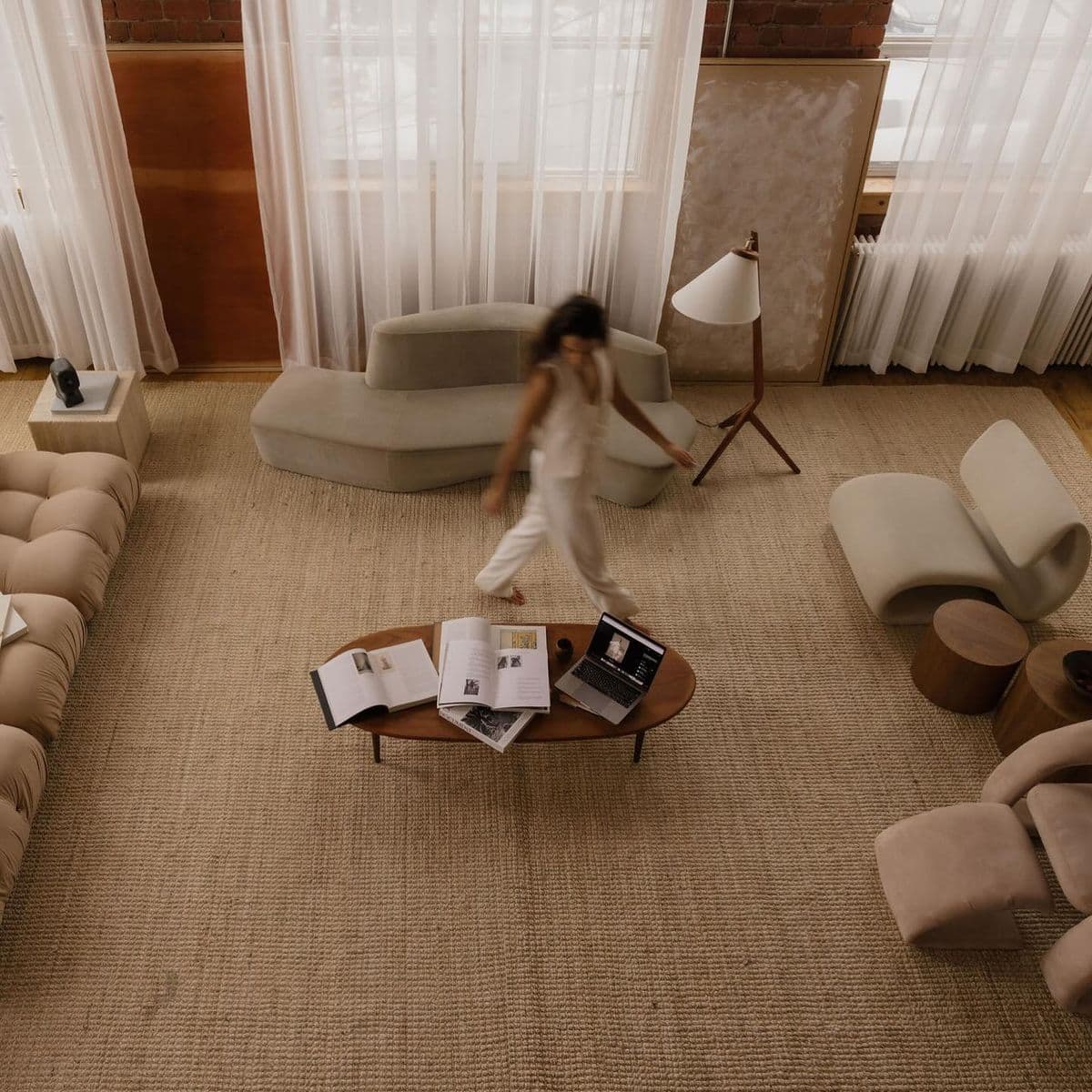
Photo by FRWD Furniture
The standard advice — "budget RM1,000 to RM5,000 for a good sofa" — is a number range that tells you nothing about quality. A sofa can cost RM2,500 because it's genuinely well-made, or it can cost RM2,500 because it has a trendy design, cheap internals, and an expensive marketing budget.
Price alone is not a quality indicator. What matters is what's inside the price — the frame, the foam, the suspension, the upholstery, and the warranty. These are the things that determine whether your sofa is comfortable and structurally intact in five years, or sagging and peeling.
This guide breaks down what each price tier actually delivers across those quality markers, so you can buy with clarity instead of guesswork.
The Hidden Cost of a Cheap Sofa (The 5-Year Maths)
Two budget sofas over 6 years — including delivery and disposal costs — typically costs more than one mid-range sofa that lasts the same period. And involves significantly more disruption.
Before the tiers, it's worth addressing the most common rationalisation for buying cheap: "I'll replace it later." Let's run the numbers on a Malaysian household that spends RM1,200 on a budget sofa:
Year 1–2: Sofa looks and feels fine.
Year 2–3: Cushions begin to compress and lose support. PU leather (if applicable) starts cracking at contact points.
Year 3–4: Structural creaking begins. Foam no longer returns to shape. The sofa looks visibly tired.
Year 4–5: Ready for replacement.
Total over 5 years: RM1,200 + RM1,400 replacement (purchase + delivery) = approximately RM2,600 — plus two rounds of furniture disposal (RM100–RM300 each) and two delivery disruptions.
Now compare with a buyer who spends RM3,200 on a mid-range sofa with a kiln-dried hardwood frame and 35 kg/m³ foam:
Year 1–5: Sofa holds its shape. Frame remains rigid. Upholstery maintains appearance with normal care.
Year 6–10: Minor cushion softening. Frame still structurally sound.
Year 10+: Possibly needs cushion refilling. Frame can continue longer.
Total over 10 years: RM3,200, one purchase — no replacement disruption, no disposal costs, and significantly better comfort at years 2–5 when the budget sofa's foam has compressed.
The real cost of cheap furniture never appears on the price tag. The budget sofa is cheaper today — and more expensive over time.
The 5 Price Tiers Explained
Five tiers cover the Malaysian sofa market, from under RM1,500 to RM8,000+. Each tier is defined by four quality indicators: frame material, foam density, suspension system, and upholstery grade.
Tier | Price Range | Frame | Foam Density | Upholstery | Warranty |
|---|---|---|---|---|---|
Tier 1 | Under RM1,500 | Softwood / particleboard / MDF | 18–22 kg/m³ | PU leather or basic polyester | 1 year or none |
Tier 2 | RM1,500–2,500 | Mixed — solid wood joints, MDF panels | 22–28 kg/m³ | Entry leathaire or performance polyester | 1–2 years structural |
Tier 3 ★ FRWD | RM2,500–4,500 | Kiln-dried solid hardwood, corner-blocked | 30–38 kg/m³ | Performance fabric, leathaire, entry leather | 1–3 years structural |
Tier 4 | RM4,500–8,000 | Premium hardwood, mortise-and-tenon joinery | 38–45 kg/m³ | Full/top-grain leather, premium fabric (30,000+ Martindale) | 2–5 years structural |
Tier 5 | RM8,000+ | Bespoke hardwood, custom joinery | HR foam + feather/down/latex topping | Full-grain aniline leather, Belgian/Italian fabric | 5+ years, repair service |
Detailed breakdown of each tier follows below.
Tier 1 — Under RM1,500
Frame: Softwood (rubber wood offcuts, pine), particleboard, or MDF. Not kiln-dried. Prone to warping in Malaysia's humid conditions.
Foam: Low-density polyurethane, typically 18–22 kg/m³. Will compress and lose shape within 1–2 years of daily use.
Suspension: Basic S-spring (sinuous/serpentine wire) or flat webbing. Functional at purchase, limited long-term performance.
Upholstery: PU leather coating or basic polyester. PU leather will begin peeling within 2–4 years — particularly in Malaysian humidity and daily AC cycling.
Warranty: Typically 1 year or none. Minimal after-sales support.
Who it suits: Buyers furnishing a short-term rental, a temporary space, or a guest room that won't see heavy daily use. Not recommended as a primary living room sofa in a home you plan to occupy long-term.
Honest limitation: A Tier 1 sofa bought for RM1,200 is unlikely to remain comfortable or structurally presentable beyond 3 years in a Malaysian home. The saving is real today; the cost appears later.
Example brands: Shopee/Lazada direct imports, warehouse clearance stores, unbranded furniture from Kepong or Klang furniture rows.
Tier 2 — RM1,500 to RM2,500
Frame: Mixed — some brands at this tier use solid wood for primary joints with MDF panels for less-stressed areas. Quality varies significantly between brands. Always ask whether the frame uses solid wood or MDF at the seat base — this is the highest-stress point and the first to fail.
Foam: Low-to-mid density, typically 22–28 kg/m³. Better than Tier 1 but still below the threshold where cushions reliably hold shape for 5+ years under daily use.
Suspension: Improved serpentine spring or elastic webbing. Noticeably more comfortable than flat webbing.
Upholstery: Better fabric selection begins appearing — some brands offer performance polyester or entry-level leathaire at this price point.
Warranty: Typically 1–2 years structural.
Who it suits: First-home buyers with a tight budget who prioritise spending elsewhere and accept that the sofa may need replacing in 5–7 years. Also reasonable for smaller-format sofas — a 2-seater at RM1,800 with solid wood frame is a better purchase than a 3-seater at RM1,800 with a compromised frame.
At Tier 2, the quality markers section below matters most. A well-made RM2,200 sofa can comfortably outlast a poorly-made RM2,000 one by several years. The difference is the internals, not the price tag.
Example brands: IKEA (selected models), SSFHome, some Lazada boutique brands, entry-level Majuhome offerings.
Tier 3 — RM2,500 to RM4,500 ★ FRWD's Core Range
Frame: Kiln-dried solid hardwood (rubber wood, beech, or similar) for primary structural components. Corner-blocked or dowel-jointed for added rigidity. This is the threshold where frame quality becomes reliably consistent.
Foam: Mid-to-high density, typically 30–38 kg/m³ for seat cushions. At 35 kg/m³ and above, foam retains shape meaningfully longer under daily use. Back cushions at lower density (20–25 kg/m³) is normal and acceptable — back cushions bear less sustained compression load than seat cushions.
Suspension: Robust serpentine spring or pocket spring system on higher-end pieces. Noticeably better bounce-back and support distribution than lower tiers.
Upholstery: Quality performance fabric, leathaire, genuine leather (entry grade), or performance velvet. Better fabric construction means greater durability and easier maintenance.
Warranty: Typically 1–3 years structural, with reputable brands offering post-sales support.
Who it suits: Most Malaysian homeowners buying a primary living room sofa. This is the tier where long-term value becomes genuinely compelling. A well-chosen Tier 3 sofa is realistically a 7–12 year investment — potentially longer with cushion maintenance.
This is where FRWD’s core sofa range sits. Our sofas at this price point use kiln-dried solid wood frames, higher-density foam (30–38 kg/m³ — confirm with our team for specific product figures), and materials suited for Malaysian conditions.
Some models using 36 kg/m³ seat foam include the Elsa Sofa, Lelsa Sofa, Camille Sofa, and Maple Sofa—ask our team for detailed specifications on any sofa you’re considering.
Example brands: FRWD Furniture, Cellini (mid-range), MUMU Living, Furniture & Choice, LINEA.
See our full sofa material guide for Malaysia (/blog/sofa-material-guide-malaysia) for a complete comparison of fabric options available at this tier — performance fabric, leathaire, genuine leather, and bouclé.
Tier 4 — RM4,500 to RM8,000
Frame: Premium hardwood throughout — typically European beech, American walnut, or similarly dense species. Mortise-and-tenon or multiple-dowel joinery. Frame built to last 20+ years.
Foam: High-density polyurethane (38–45 kg/m³) or high-resilience (HR) foam that returns to shape faster after sustained compression. Some pieces at this tier incorporate natural latex layers for enhanced comfort.
Suspension: 8-way hand-tied coil springs (the premium standard), or high-specification pocket spring systems. These provide superior weight distribution and maintain performance longer than sinuous spring alternatives.
Upholstery: Full-grain or top-grain genuine leather, or premium performance fabric with high Martindale abrasion ratings (30,000+). Some pieces offer European-sourced fabrics.
Warranty: 2–5 years structural. Brands at this tier typically have established after-sales processes.
Who it suits: Buyers who treat a sofa as a genuine long-term investment and want to buy once, decisively. Also appropriate for buyers with specific material requirements (full-grain leather) that don't exist in Tier 3. Professionals furnishing a home they plan to occupy for 10+ years.
Honest limitation: The jump from Tier 3 to Tier 4 is real in quality — but the returns diminish. A RM4,500 sofa is genuinely better than a RM3,000 one; a RM7,000 sofa is only marginally better than a RM4,500 one for most buyers. At this tier, the premium increasingly pays for brand heritage and design exclusivity rather than functional durability improvements.
Example brands: Cellini (premium range), Harvey Norman premium, Zolano, Lavino (selected lines).
Tier 5 — RM8,000 and Above
Frame: Bespoke hardwood, often with exposed wood detailing as a design feature. Custom joinery.
Foam and filling: Premium combinations — high-resilience foam cores with feather, down, or natural latex topping layers. Feather-wrapped cushions require regular plumping but offer a distinctive cloud-like feel.
Suspension: 8-way hand-tied coil springs or equivalent. Near-universal at this tier.
Upholstery: Full-grain aniline leather, Belgian fabric, Italian upholstery, or other premium-origin materials.
Warranty: 5+ years, with brands typically offering repair and restoration services.
Who it suits: Buyers for whom the sofa is a design statement as much as furniture. Interior designers sourcing for a specific project aesthetic. Buyers with a clear affinity for craftsmanship or material provenance who are prepared to pay for it.
Honest limitation: Functional durability does not increase linearly with price at this tier. A RM3,500 sofa with good internals and a RM12,000 designer sofa will both still be functional in 10 years — the difference is in the experience of ownership, the aesthetic, and the brand story. Neither is wrong to buy; the decision is about values and priorities, not just quality.
Example brands: Poliform, B&B Italia (imported), selected Zolano bespoke lines, custom Malaysian makers.
The 4 Quality Markers You Can Actually Check Before Buying
Price tells you the tier. These four markers tell you the actual quality within that tier — and can be assessed in any showroom in under 10 minutes.
1. Frame Material and Construction
Ask the seller directly: "What is the frame made of?" Accept answers of "solid rubber wood," "beech," or "kiln-dried hardwood." Be cautious of "engineered wood," "composite wood," or vague answers like "high-quality wood."
Showroom test: Press firmly on the corners of the sofa arm and feel for flex or movement. A quality solid wood frame should feel completely rigid. Any wobble or give at the joints indicates compromised construction that will worsen over time. This test takes 10 seconds and is the single most revealing quality check available to a showroom buyer.
2. Foam Density
This is the single most predictive indicator of how long your sofa cushions will remain comfortable. Ask for the foam density in kg/m³ — any reputable brand should be able to provide this figure. If they cannot, that itself is a signal.
Foam Density | Quality Rating | Expected Seat Life (Daily Use) | Typical Tier |
|---|---|---|---|
Below 25 kg/m³ | ⚠️ Low quality | 1–2 years before noticeable compression | Tier 1 |
25–30 kg/m³ | Below average | 3–4 years; acceptable for back cushions or low-traffic use | Tier 1–2 |
30–35 kg/m³ | Mid-range | 5–7 years; adequate for most households | Tier 2–3 |
35–40 kg/m³ | ★ Good quality | 7–10 years; reliable under daily family use | Tier 3 |
40 kg/m³ and above | ★★ High resilience | 10+ years; near-commercial grade | Tier 3–4 |
Showroom test: Sit in the sofa and press the seat cushion firmly with your hand. Quality high-density foam will resist compression and spring back quickly when you release. Low-density foam will compress easily and recover slowly or incompletely.
3. Suspension System
Lift a seat cushion (or examine the base of the sofa) and identify the suspension type:
Flat webbing (canvas or elastic straps across a frame): Basic. Fine for temporary furniture; limited long-term support.
Serpentine/sinuous springs (S-shaped metal wire): Standard for mid-range residential furniture. Adequate for Tier 2–3.
Pocket springs or coil springs: Better. Independent springs provide more even support and last longer.
8-way hand-tied coil springs: Premium. Hand-knotted individually at 8 points for maximum stability. Tier 4–5.
Showroom test: Sit at various points across the sofa — middle, corners, edges. The support should feel even across all positions. Noticeable softness or sag at any point indicates suspension issues that will worsen, not improve, with use.
4. Upholstery Finishing
Examine the stitching closely, particularly at seams, corners, and arm joints. Consistent, tight, even stitching indicates quality manufacturing. Uneven stitching, loose threads, or areas where the fabric pulls indicate rushed construction that will worsen with use.
Check that cushion covers sit flat without bunching. Fabric should feel substantial — thin, lightweight upholstery (you can feel how thin it is by pinching it between fingers) indicates cost-cutting on material that will show within 12–18 months.
See our full sofa material guide for Malaysia (/blog/sofa-material-guide-malaysia) for a complete 7-material upholstery comparison with humidity performance ratings, price ranges, and Malaysian climate-specific recommendations.
Hidden Costs to Factor Into Your Total Budget
The sticker price on a sofa is rarely the total cost. Malaysian buyers should budget for delivery, outstation surcharges, ongoing maintenance, eventual disposal, and — if applicable — extended warranty.
Hidden Cost Item | Typical Range (Malaysia) | Notes |
|---|---|---|
Delivery and installation | RM100–RM350 | Some brands include this; many don't. FRWD includes delivery and installation across all delivery zones — no hidden add-ons. |
Outstation delivery surcharge | RM150–RM500 | Applies to Penang, Johor, Seremban, Melaka and other outstation destinations. Confirm before purchase. |
Leather conditioning product | RM50–RM100 per bottle (quarterly) | Required for genuine leather sofas every 3–4 months. Not a sunk cost if budgeted, but invisible in the sticker price. |
Professional fabric cleaning | RM150–RM350 per service | Recommended every 12–18 months for primary living room sofas. More frequent with children or pets. |
Cushion refilling (foam replacement) | RM200–RM600 (depending on count) | When seat foam softens after years of use — necessary for high-quality frames that outlast their original foam. |
Extended warranty | Varies by brand | Worth evaluating for genuine leather sofas requiring specialist repair. Less necessary for performance fabric. |
Old sofa disposal | RM100–RM300 | Condo management bulky item removal, or private truck arrangement. Not free. Budget for this when replacing. |
See our full sofa buying guide for Malaysian condos (/blog/sofa-malaysia-condo-buying-guide) for the complete buying decision framework, including the full access route measurement checklist for condo delivery.
Where FRWD Sits — And Why

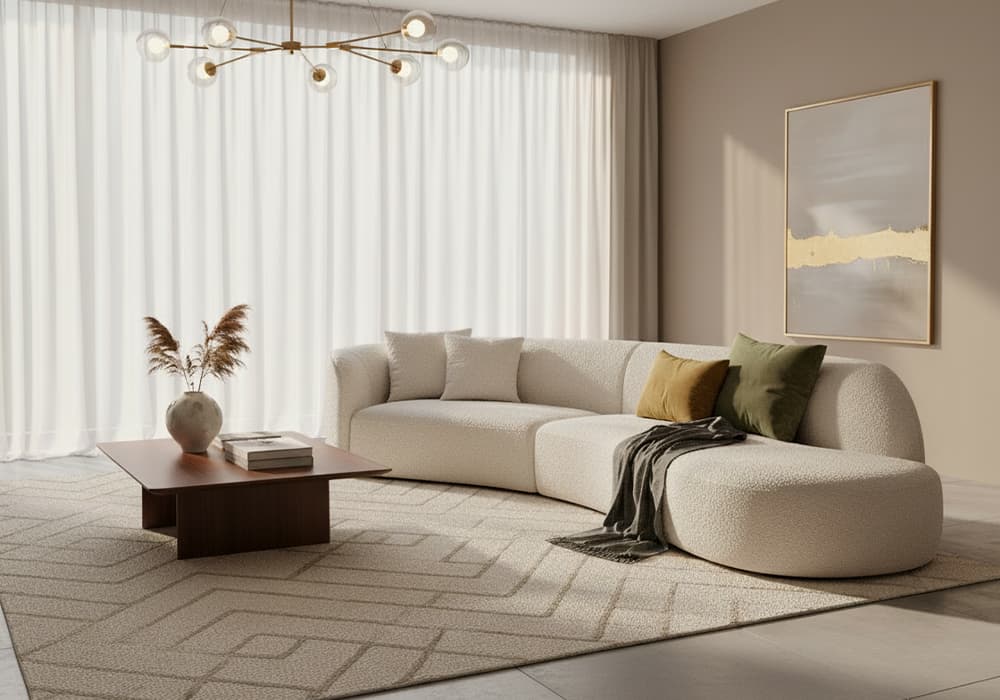
Photo by FRWD Furniture
FRWD's sofa range is positioned primarily in Tier 3 (RM2,500–RM4,500), with selected pieces extending into Tier 4 for premium materials.
We are transparent about what that price buys:
Frame: Kiln-dried solid wood construction on all structural components.
Foam: 30–38 kg/m³ seat cushion density depending on model (confirm the specific figure with our team for any product you are considering).
Upholstery: Materials selected for Malaysian conditions — leathaire, performance fabric, and bouclé ranges chosen for climate appropriateness and longevity in humid, AC-cycling environments.
Included: Free delivery, installation, and packaging removal across our delivery zones. No hidden add-ons.
Support: 14-day return policy and active customer service.
We also offer a free ID consultation — if you tell us your budget, your room dimensions, and your household setup, our consultants will tell you honestly which sofa makes sense for your situation. If a RM1,800 compressed sofa is genuinely the right answer for your space, we'll say so.
[Browse sofas by budget →] [Book a free ID consultation →] [See our full delivery policy →]
Browse the full FRWD sofa range, filtered by price tier, at [/cat/sofas].
Content & Branding at FRWD Furniture