INTRODUCTION
The wrong rug size is one of the most visible design mistakes in a living room, and it is almost impossible to unsee once noticed. A rug that is too small makes an expensive sofa look like it was placed on a bath mat. A rug that is too large removes all the visual breathing room around the furniture and turns a living room into a wall-to-wall carpet situation.
The right rug size is not a matter of taste. It follows clear proportional rules that produce a visually balanced room. This guide gives you those rules, a reference table for the most common Malaysian living room configurations, and the material guidance specific to our climate. Browse FRWD's rug collection →

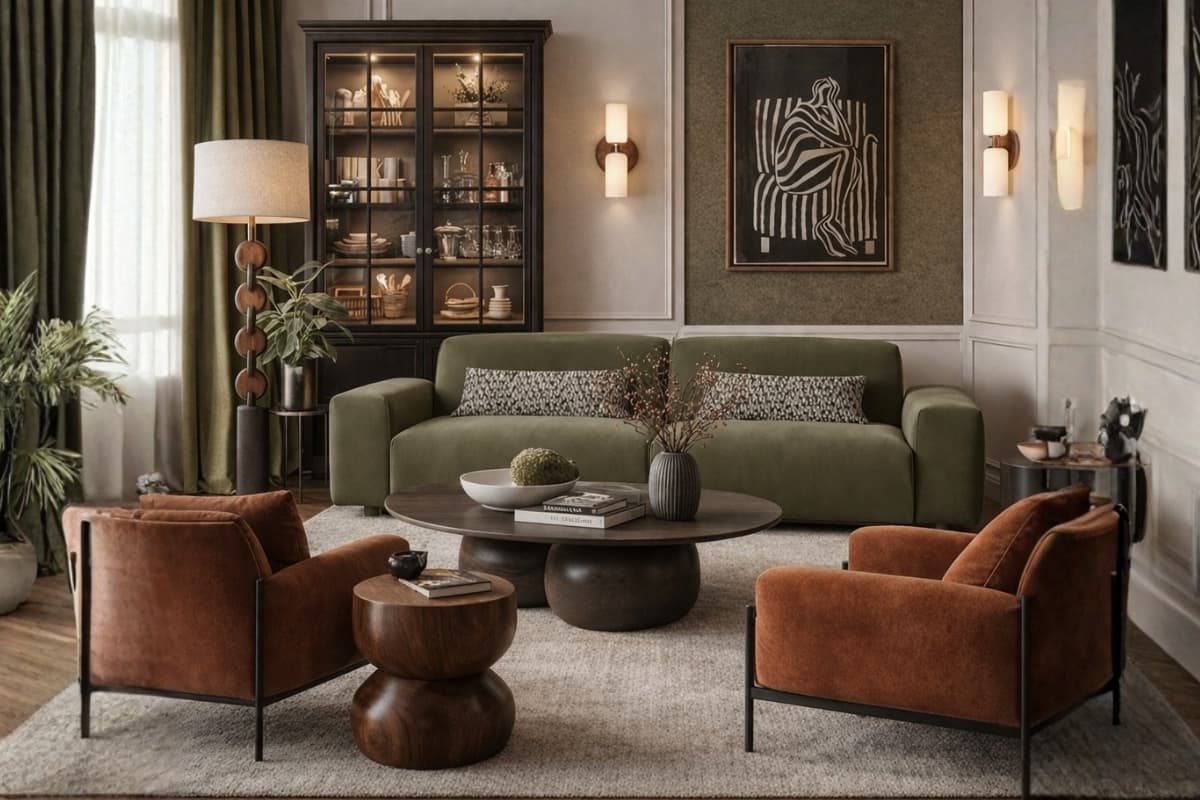
Photo By Pinterest
Why Getting the Rug Size Wrong Is So Visible
The Too-Small Rug: The Most Common Malaysian Living Room Mistake
The most common rug mistake in Malaysian homes is buying a rug that fits under the coffee table but not under the sofa's front legs. The result is a floating rug that has no visual relationship with the furniture above it — the sofa appears to hover separately from the rug, and the living room looks assembled from a clearance sale rather than designed.
The impulse behind this mistake is usually cost — larger rugs are more expensive, and a smaller rug seems like a reasonable economy. In practice, a small rug in a large sofa arrangement does more visual damage than no rug at all.
The Too-Large Rug: When a Rug Becomes a Carpet
A rug that extends to within 15–20cm of every wall removes the visual contrast between the rug zone and the bare floor — which is what gives a rug its zone-defining function. The floor around the rug should be visible as a clear border between the rug and the wall. If the rug fills the room, it stops being a design element and becomes a practical floor covering.
The Core Rule: All Front Legs on the Rug
TThe single most useful rug placement rule. When buying a rug for a sofa arrangement, ensure that the front two legs of the sofa and the front two legs of any accent chairs in the grouping sit on the rug. The back legs can sit off the rug — in fact, leaving them off creates a subtle visual layering effect that looks intentional. See our coffee table height guide for how rug-to-coffee-table clearance works in practice.
What 'All Front Legs on the Rug' Means in Practice
The rug must extend at least 15–20cm beyond the front legs of the sofa on both sides. If the sofa is 210cm wide and the front legs are positioned 15cm in from each end, the rug needs to be at least 240cm wide to have the front legs sitting clearly on the rug surface — not perched on the edge.
The rug must also extend far enough in front of the sofa that a person sitting on the sofa has their feet on the rug. This typically means the rug extends 30–40cm beyond the sofa's front leg line toward the coffee table.
The Alternative: All Four Legs on the Rug
In a larger room, placing all four legs of every piece on the rug creates a more formal, anchored arrangement. This works best in dining rooms and formal sitting areas where the furniture is unlikely to be rearranged. It requires a larger rug — typically 240×340cm or larger for a standard Malaysian living room — and creates a stronger zone definition.
The Option to Avoid: No Legs on the Rug
A rug placed in front of the sofa with no furniture legs on it floats in the room without visual connection to the furniture. The effect is that the rug and the sofa look like two separate decisions that ended up in the same room. This placement is not wrong in principle — it works in specific configurations like a bedroom rug at the foot of a bed frame — but in a living room it almost always produces a visually disconnected result.
Rug Size by Sofa Configuration
Use this as your primary reference when selecting a rug for an existing sofa. See FRWD's rug collection for available sizes. For help choosing the right sofa type first, see our sofa buying guide.
Sofa Configuration | Minimum Rug Size | Recommended Rug Size |
|---|---|---|
2-seater sofa (145–170 cm) | 160 × 230 cm | 200 × 290 cm |
3-seater sofa (190–220 cm) | 200 × 290 cm | 240 × 290 cm |
240 × 290 cm | 240 × 340 cm | |
L-shape sofa (short side under 200 cm) | 240 × 290 cm | 240 × 340 cm |
L-shape sofa (long side over 250 cm) | 290 × 340 cm | 300 × 400 cm |
Modular sofa / large sectional | 290 × 340 cm or layered rugs | 300 × 400 cm |
For L-shape sofa arrangement guidance specifically, see our living room with L-shape sofa guide.
Standard Rug Sizes Reference (cm)
A quick-reference list of standard rug sizes available in Malaysia. Use this alongside the sofa-configuration and room-dimension tables above.
Accent: 140 × 200 · 160 × 230
Small Living Room: 200 × 290 · 200 × 300
Standard Living Room: 240 × 290 · 240 × 340
Large Living Room: 290 × 340 · 300 × 400
XL / Open Plan: 400 × 500
Rug Size for Malaysian Living Room Dimensions
For buyers who want to approach rug size from the room dimensions rather than the sofa. For a full guide on measuring your room before buying any furniture, see our room measurement guide.
Living Room Size | Recommended Rug Size | Notes |
|---|---|---|
Under 130 sqft (e.g. 10 × 12 ft) | 160 × 230 cm | Studio condo; rug defines seating zone only |
130–160 sqft (e.g. 12 × 13 ft) | 200 × 290 cm | Small condo living room — standard choice |
160–200 sqft (e.g. 13 × 15 ft) | 240 × 290 cm | Standard Malaysian condo living room |
200–250 sqft (e.g. 14 × 17 ft) | 240 × 340 cm | Larger condo or terrace house |
Over 250 sqft | 300 × 400 cm or layered rugs | Landed property — consider layering or double-zone |

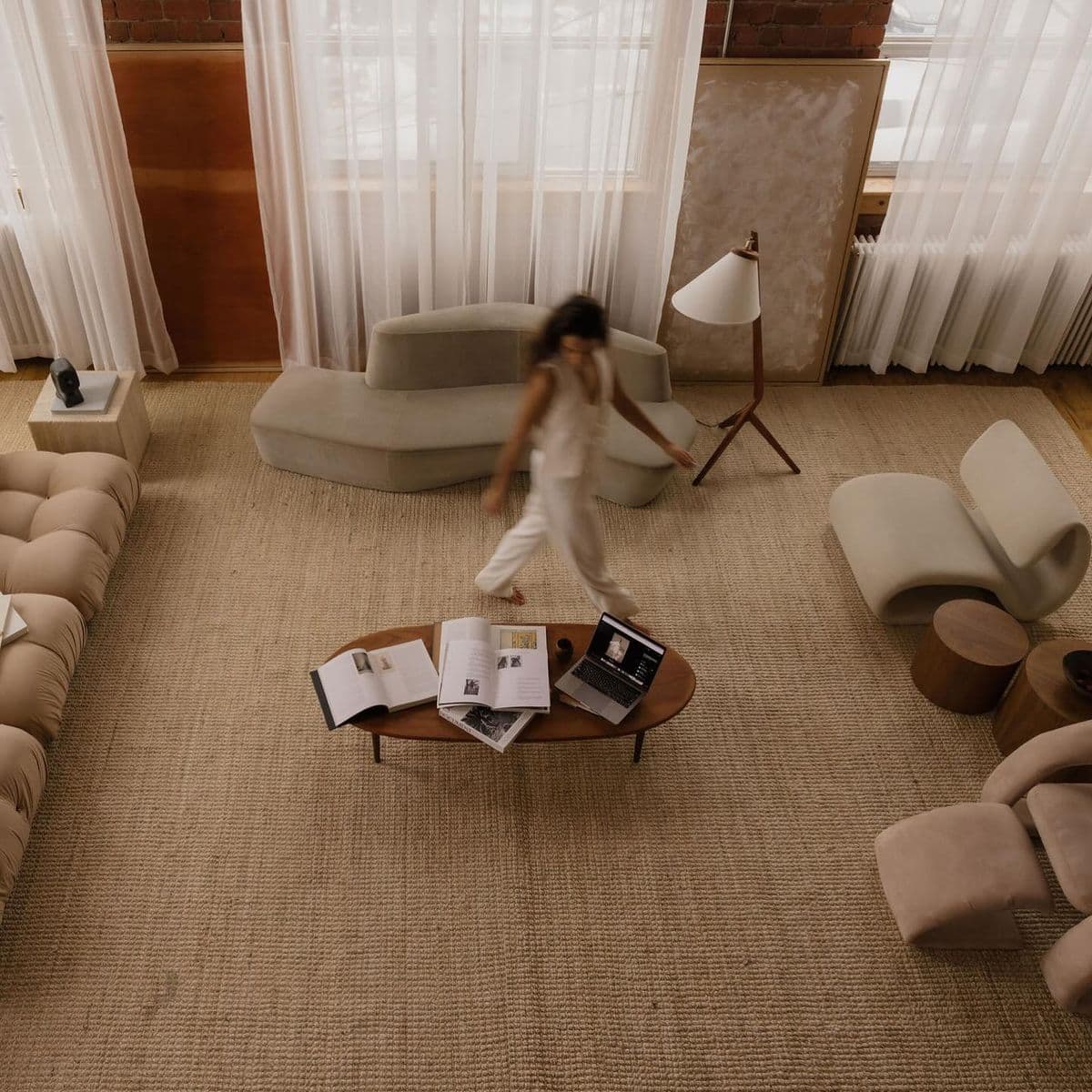
Photo By Pinterest
Rug Placement Rules by Room Configuration
Sofa Against the Wall
When the sofa sits against the wall (the most common Malaysian condo arrangement), the rug extends forward from the sofa — into the room, not behind it. The rug should be at least as wide as the sofa and extend far enough toward the coffee table that a seated person has their feet on the rug. The back edge of the rug can be tucked under the sofa's front legs or left slightly in front of them. For broader living room arrangement guidance specific to Malaysian condos, see our living room layout guide.
Sofa Floating in the Room
In a larger room where the sofa floats away from the wall, the rug anchors the seating zone. The front legs of all seating pieces sit on the rug; the rug extends approximately 30cm beyond the sofa on each side and behind it. The bare floor visible between the rug edge and the wall defines the zone's boundary.
Open-Plan Living-Dining: Rug as Zone Divider
In a combined living-dining space, two separate rugs — one defining the living zone under the sofa arrangement, one defining the dining zone under the dining table — are more effective than one large rug attempting to cover both. Each rug should be sized and positioned independently for its zone, with 30–60cm of bare floor visible between them. This floor gap is the visual boundary between zones. For full guidance on dividing open-plan Malaysian living-dining spaces, see our living and dining room combo guide.
Rug Materials for Malaysian Conditions
Rug material choice has a practical dimension in Malaysia that most design guides ignore. Humidity, occasional flooding, ease of cleaning, and how well materials resist mould are all relevant to Malaysian rug selection.
Polypropylene: The Practical Malaysian Choice
Polypropylene (PP) rugs are the most practical choice for Malaysian conditions. Moisture-resistant, mould-resistant, easy to clean with water, fade-resistant, and available in a wide range of pile heights and textures from flatweave to thick pile. The aesthetic range of polypropylene rugs in 2026 is wide enough that most Japandi, contemporary, and minimalist palette requirements can be met in this material.
Particularly recommended for: homes with young children or pets, rooms that receive direct sun, and rooms that are not consistently air-conditioned.
Wool Rugs: Beautiful but Demanding in Malaysia
Wool is the premium rug material — warm, naturally textured, durable, and beautiful in Japandi and natural-palette interiors. In Malaysian conditions, wool rugs require regular vacuuming to prevent dust and mite accumulation, cannot be wet-cleaned on-site (professional cleaning required), and are at risk of mould in rooms with consistent high humidity.
Wool rugs are a good choice for air-conditioned rooms that maintain consistent temperature and humidity. In rooms that cycle between AC and ambient, the humidity variation causes wool to absorb and release moisture repeatedly, which accelerates deterioration.
Natural Fibre: Jute, Seagrass, and Sisal in Malaysia
Jute, seagrass, and sisal rugs have a natural, textural quality that suits tropical and Japandi interiors. All three are more susceptible to moisture damage than polypropylene and should be used only in consistently air-conditioned rooms. Jute in particular should be kept away from any potential water exposure — it develops mould rapidly when wet and is extremely difficult to dry completely once saturated.
For Malaysian buyers who want the natural fibre aesthetic with more practical durability, look for polypropylene rugs with a flatweave natural-fibre texture.
Viscose and Silk-Look: The High-Maintenance Option
Viscose rugs have a beautiful sheen and a soft texture but are among the most demanding rug materials in Malaysian conditions. They stain easily, are difficult to clean at home, and flatten permanently under furniture legs over time. For a first home or a high-use living room in Malaysia, viscose is a high-risk choice.

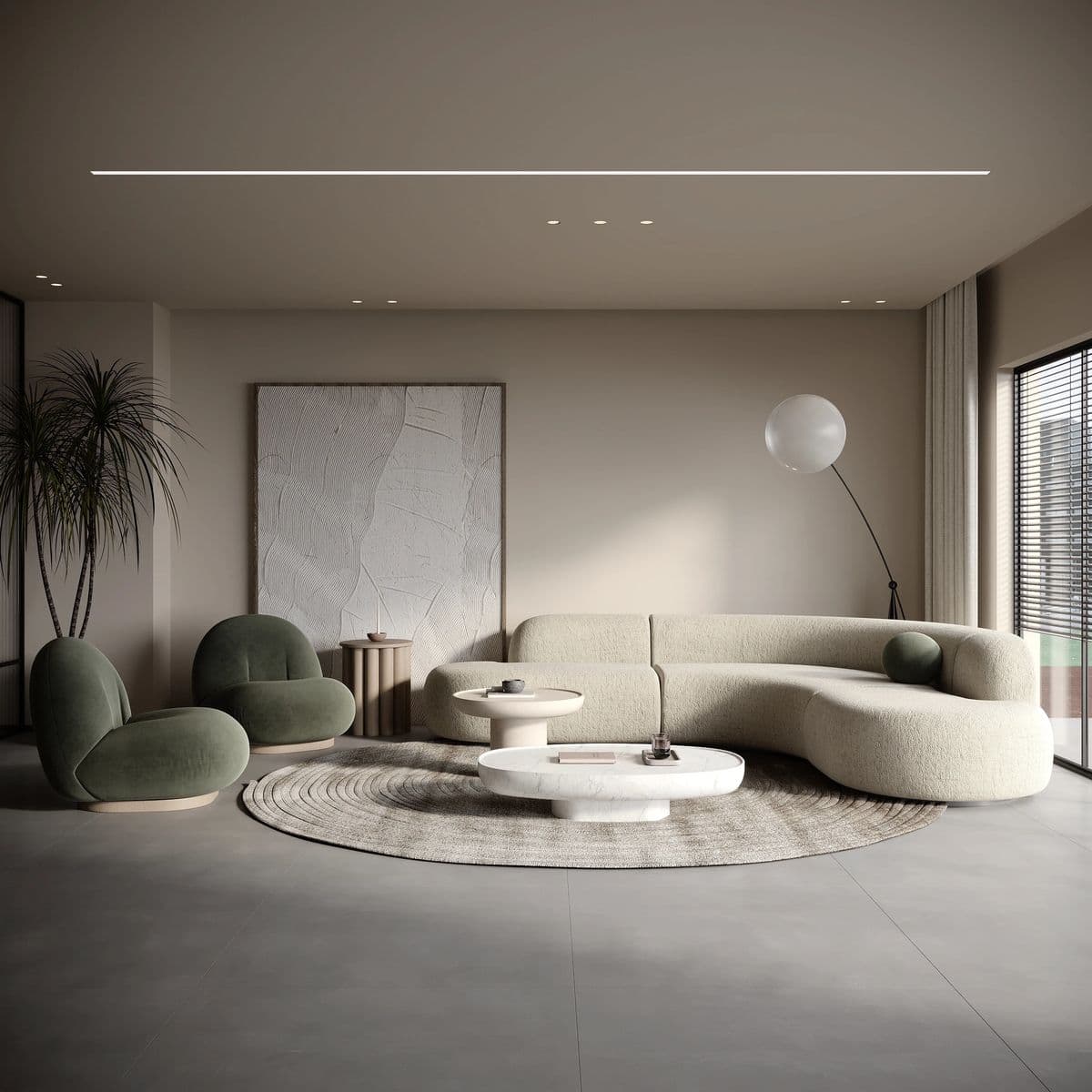
Photo By Pinterest
Rug Maintenance in Malaysia
Humidity and Mould Prevention
In rooms that are not consistently air-conditioned, lift rugs from the floor periodically (monthly in high-humidity periods) to allow the floor underneath to dry. Use a rug pad with moisture-resistant properties between the rug and the floor — this improves grip, cushioning, and airflow under the rug. If any section of a rug smells musty, act immediately — surface clean, lift, and air in direct sunlight.
Cleaning Frequency by Material
Polypropylene: vacuum weekly, spot clean as needed, hose down and dry flat every 6 months. Wool: vacuum twice weekly (both sides), professional clean annually. Jute/sisal: vacuum weekly with a brush attachment, spot clean with dry methods only — no water. Cotton: machine wash small rugs according to care label, professional clean larger rugs annually.
Interior Designer · FRWD Furniture
Malique is an interiors and lifestyle specialist at FRWD Furniture's Bangsar Experience Centre, offering practical perspective on furniture selection, room styling, and the design principles that make a home feel intentional.
Frequently Asked Questions
1.What size rug should I get for my Malaysian living room?
What size rug should I get for my Malaysian living room?
For a standard Malaysian condo living room with a 3-seater sofa, a 200×290cm rug is the minimum and a 240×290cm rug is the recommended size. The rug should be wide enough to have the sofa's front legs sitting on it, with 15–20cm of rug extending beyond the front legs on each side.
2.Should I put a rug under my sofa or in front of it?
Should I put a rug under my sofa or in front of it?
Both work — the correct placement is 'all front legs on the rug'. The front two legs of the sofa (and any accent chairs in the grouping) should sit on the rug surface. The back legs can sit off the rug. Placing the rug entirely in front of the sofa with no furniture legs on it creates a disconnected appearance.
3.What rug material is best for Malaysian homes?
What rug material is best for Malaysian homes?
Polypropylene is the most practical choice for most Malaysian homes — it is moisture-resistant, mould-resistant, easy to clean, and available in a wide aesthetic range. Wool is beautiful but requires consistent AC and professional cleaning. Natural fibres (jute, seagrass) are suitable only for consistently air-conditioned rooms.
4.How do I prevent rug mould in Malaysia?
How do I prevent rug mould in Malaysia?
Use a moisture-resistant rug pad between the rug and the floor, vacuum regularly (both rug surface and pad), lift the rug monthly in humid periods to allow the floor to dry, and air the rug in direct sunlight if any mustiness develops. In rooms that cycle between AC and ambient, polypropylene or synthetic materials are significantly lower risk than natural fibres.
5.Can I use two rugs in an open-plan living-dining space?
Can I use two rugs in an open-plan living-dining space?
Yes — two separate rugs (one for the living zone, one for the dining zone) are more effective than one large rug in an open-plan space. Each rug defines its zone independently. Leave 30–60cm of bare floor between the two rugs — this gap functions as the visual boundary between the living and dining areas.