INTRODUCTION
Walk into any Malaysian furniture store and you will see the words 'modern' and 'contemporary' used almost interchangeably. They are not interchangeable. They describe genuinely different design traditions, with different furniture forms, different material palettes, and different ways of ageing over time.
Understanding the difference matters because buying modern furniture for a contemporary interior — or vice versa — produces a room that feels slightly wrong without any obvious reason why. This guide explains the distinction clearly, shows you how it applies to Malaysian homes, and helps you decide which direction suits your space.
Why This Question Matters More Than It Seems
Most people ask 'modern vs contemporary?' as a vocabulary question. But it is really a design decision question. Buyers who understand the difference buy furniture that reinforces each other. Buyers who treat the terms as synonyms end up with a living room where the sofa, the coffee table, and the TV console are all stylistically coherent in isolation and slightly at odds with each other in combination.
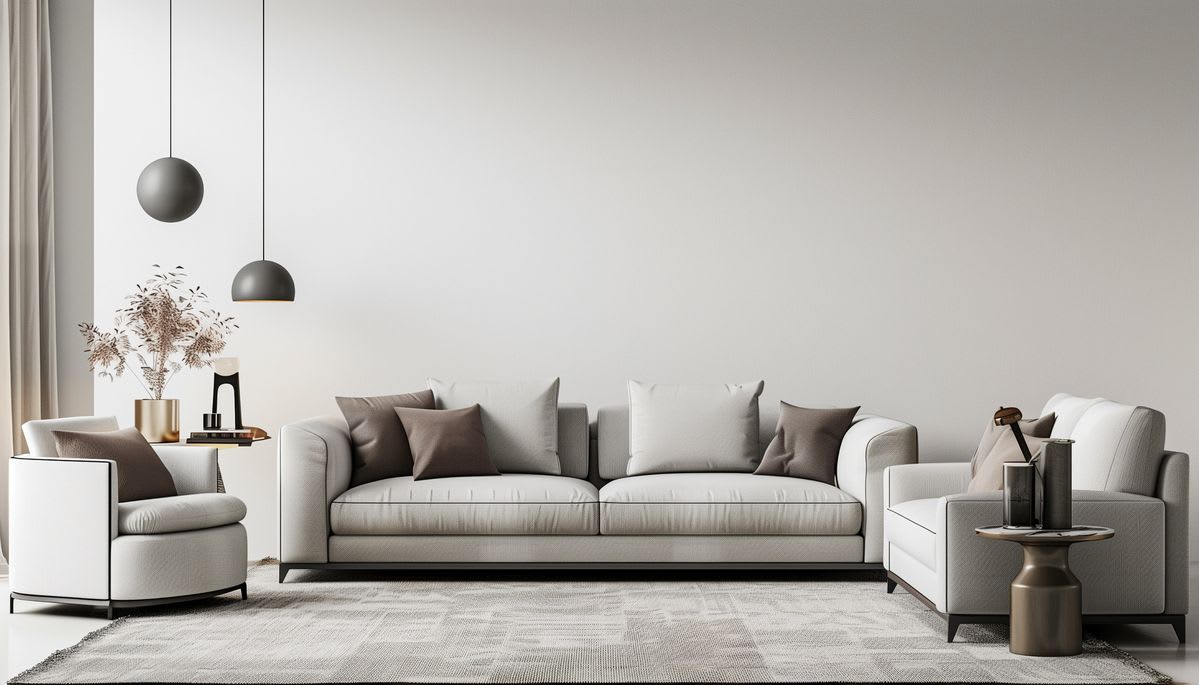
Photo By Pinterest
Modern Furniture: What It Actually Means
Modern as a Historical Period
In design, 'modern' refers to the Modernist movement of the early to mid-twentieth century — roughly 1920 to 1970. This period produced furniture by designers like Le Corbusier, Mies van der Rohe, Charles and Ray Eames, and Hans Wegner. The movement was defined by a rejection of ornament, a celebration of industrial materials (steel, plywood, moulded plastics), and the principle that form should follow function.
When furniture is described as 'modern' with design accuracy, it means it draws from this specific visual tradition — not that it was made recently. For a broader map of where modern sits among other popular design styles, see our interior design styles guide.
The Visual Language of Modern Furniture
Modern furniture is characterised by: straight lines and geometric forms, minimal or no ornamentation, visible structural logic (legs that are the structure, not decoration), industrial materials used expressively (tubular steel, moulded plywood, leather), and a colour palette that tends toward primary colours, black, white, and natural material tones.
Mid-Century Modern: The Most Recognised Sub-Style
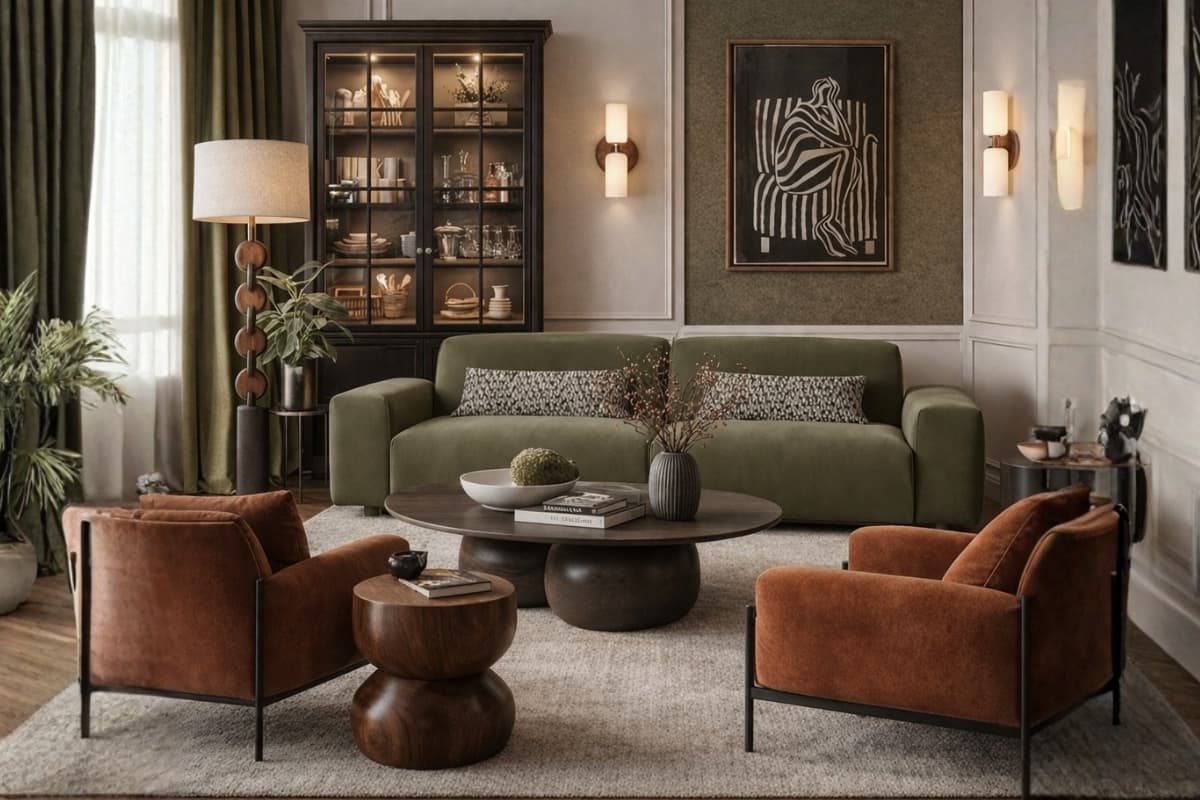
Mid-century modern is the most searched and most purchased modern design sub-style in Malaysia. Its visual signatures — tapered wooden legs, walnut or teak tones, low-slung forms, organic cushion shapes on geometric frames — are immediately recognisable and widely reproduced.
In a Malaysian home, mid-century modern works best in rooms with sufficient floor area for its characteristic wide, low proportions. In a standard Malaysian condo living room, a single mid-century modern accent chair or sideboard reads well; a full mid-century modern suite can feel crowded.
Where Modern Works in Malaysian Homes
Modern furniture with its geometric precision and industrial material confidence works well in: larger Malaysian living rooms with clean, uninterrupted wall runs; home offices and study areas where functional clarity suits the activity; dining rooms where a structural, upright dining table and dining chair combination suits the formality of the space. Modern is harder to execute in small Malaysian condo bedrooms, where its angular precision can feel austere at the scale of a 10×12 foot room. For minimalist bedroom applications, see our minimalist bedroom guide.
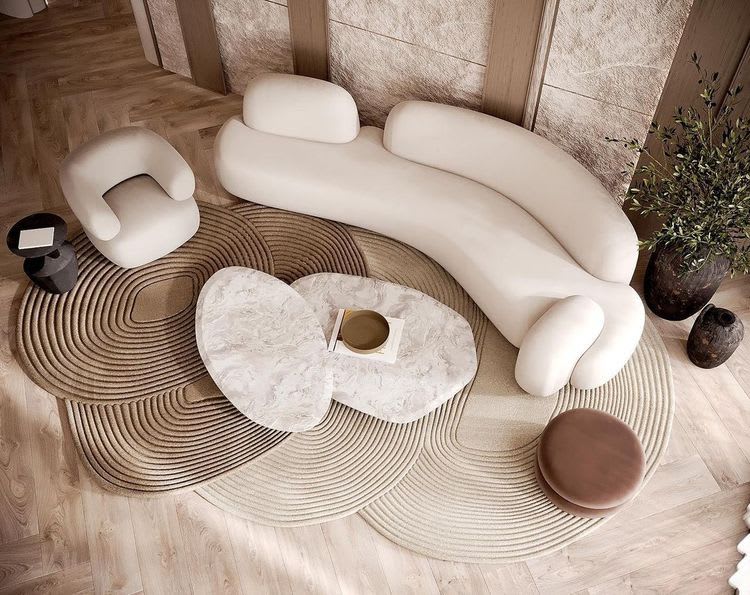
Photo By Pinterest
Contemporary Furniture: What It Actually Means
Contemporary as a Moving Target
Contemporary means 'of the current moment' — which makes it a genuinely moving target. Contemporary design in 1990 was minimalist and angular. Contemporary design in 2010 was transitional and ornate. Contemporary design in 2026 is characterised by curved forms, warm neutrals, tactile textures, and mixed natural materials.
This is why contemporary furniture in a showroom can look very different from contemporary furniture described in a ten-year-old design guide — both are correct to their moment.
The Visual Language of Contemporary Furniture in 2026
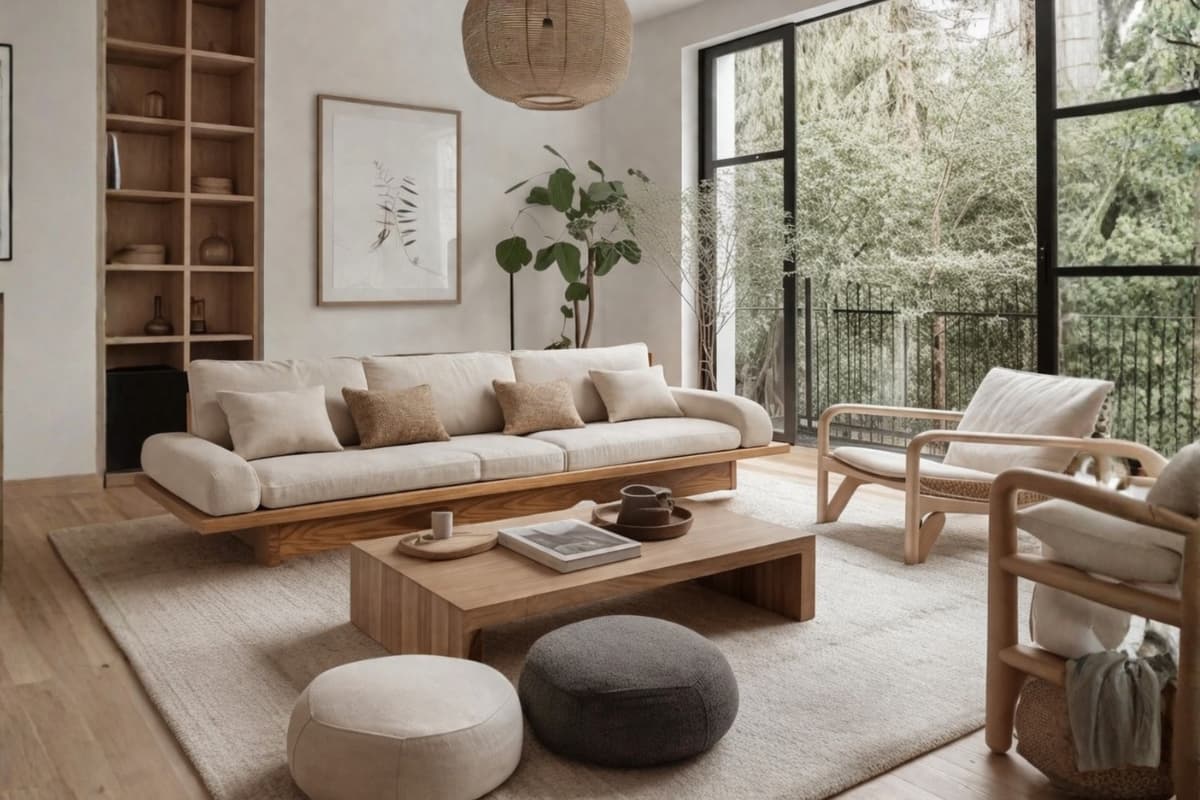
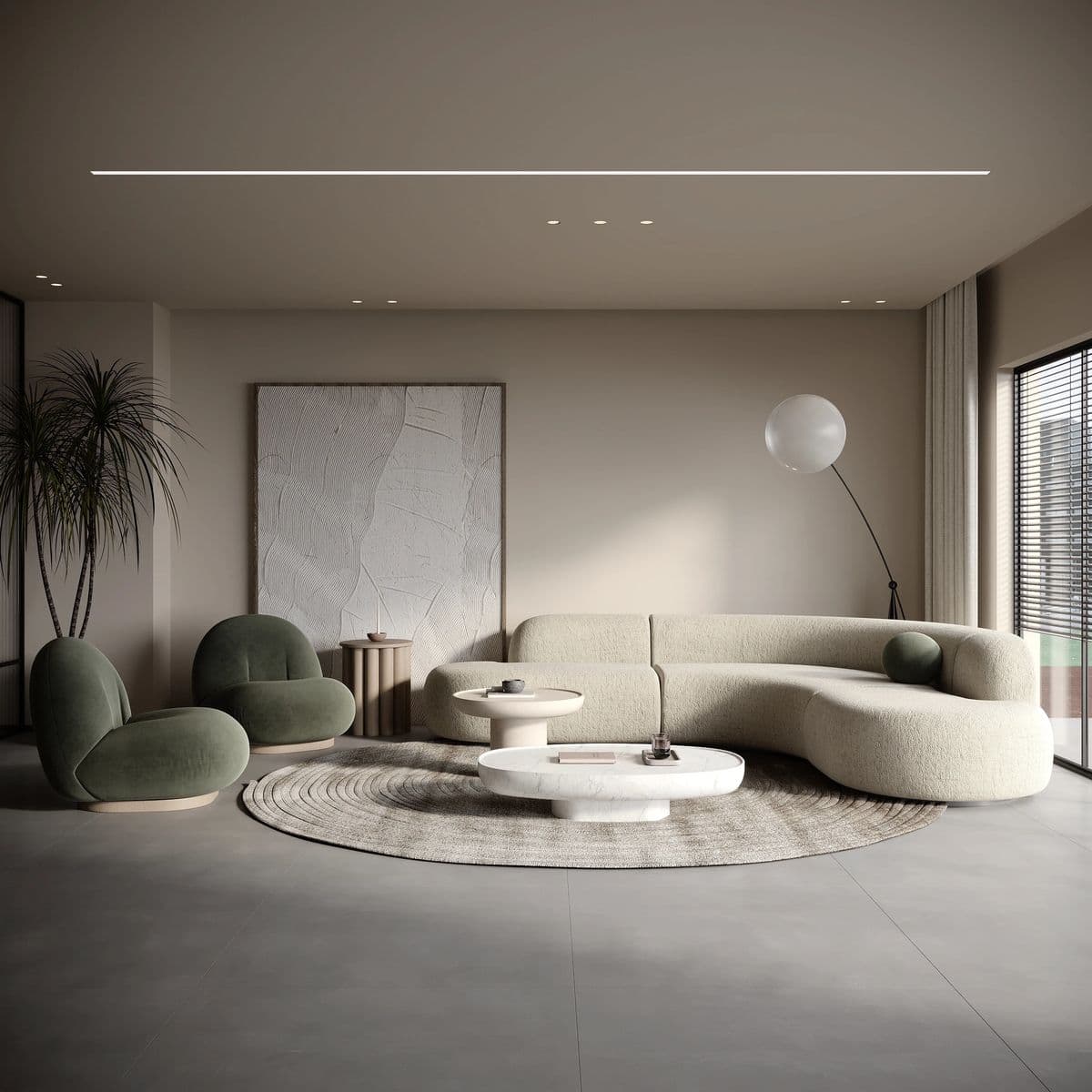
In 2026, contemporary Malaysian furniture is characterised by: gently curved silhouettes (rounded sofa arms, oval coffee tables, arched floor lamps), warm neutral fabric tones (boucle, ribbed fabric, performance linen in warm white, stone, and caramel), mixed material combinations (wood base with stone top, metal frame with fabric body), and a colour palette that favours warm beige, warm white, sage green, and terracotta accent tones. The contemporary aesthetic in Malaysia shares significant overlap with Scandinavian furniture and Japandi interior design — both of which apply warm neutrals and natural materials to similar effect.
Why Most Malaysian Furniture Stores Call Everything Contemporary
Because 'contemporary' is commercially safe — it implies relevance without committing to a specific aesthetic. A store can label a mid-century-influenced sideboard, a Japandi-inspired bed frame, and a traditional-derived cabinet all as 'contemporary' without being technically wrong.
For buyers, this means 'contemporary' as a store category label is not a useful design filter. Look at the furniture's actual visual language — its silhouette, material, and form — rather than its category descriptor. For the consumer-grade entry point into the Japandi-contemporary overlap, see our MUJI interior design guide.
Side-by-Side Comparison: Modern vs Contemporary
Dimension | Modern (Modernist) | Contemporary (2026) |
|---|---|---|
Origin | Design movement, 1920–1970 | Current moment — changes over time |
Shapes | Geometric, straight lines, right angles | Curved, organic, softened edges |
Materials | Steel, plywood, leather, glass | Wood, boucle fabric, stone, mixed natural |
Colours | Primary accents, black/white, natural | Warm neutral — beige, greige, sage, terracotta |
Ornamentation | None — form follows function | Minimal — texture replaces decoration |
Leg style | Tapered wood or tubular metal | Wood block legs or concealed base |
How it ages | Timeless — Eames chair looks the same in 50 years | Dates as trends shift — may need updating in a decade |
Which Style Is Right for a Malaysian Home?
For Condos: Contemporary Usually Works Better
In a Malaysian condo, contemporary furniture's curved forms and warm neutral tones create a softer, more welcoming environment at the scale of a 650–1,000 sqft space. Modern's geometric precision and cooler palette can feel slightly clinical in a small room under warm Malaysian light.
Contemporary also tends to work better in open-plan living-dining arrangements, where its warmer palette creates a more unified zone between the living and dining areas.
For Landed Properties: Modern Has More Room to Breathe
In a larger Malaysian terrace house or semi-D with separate rooms and higher ceilings, modern furniture has more room to express its characteristic geometric clarity. A mid-century modern dining table in a dedicated dining room reads confidently. A steel-framed modern desk in a dedicated home office works well. The additional floor area allows modern's proportional logic to resolve correctly.
For a Mixed Interior: How to Use Both Without Conflict
Most real Malaysian interiors blend elements of both styles — a contemporary sofa in a room with a mid-century modern accent chair; a modern pendant light above a contemporary dining table. This works when the visual weight of the pieces is compatible: a heavy modern sideboard pairs with a contemporary sofa that has solid wood legs; a light modern side table works with a contemporary upholstered armchair.
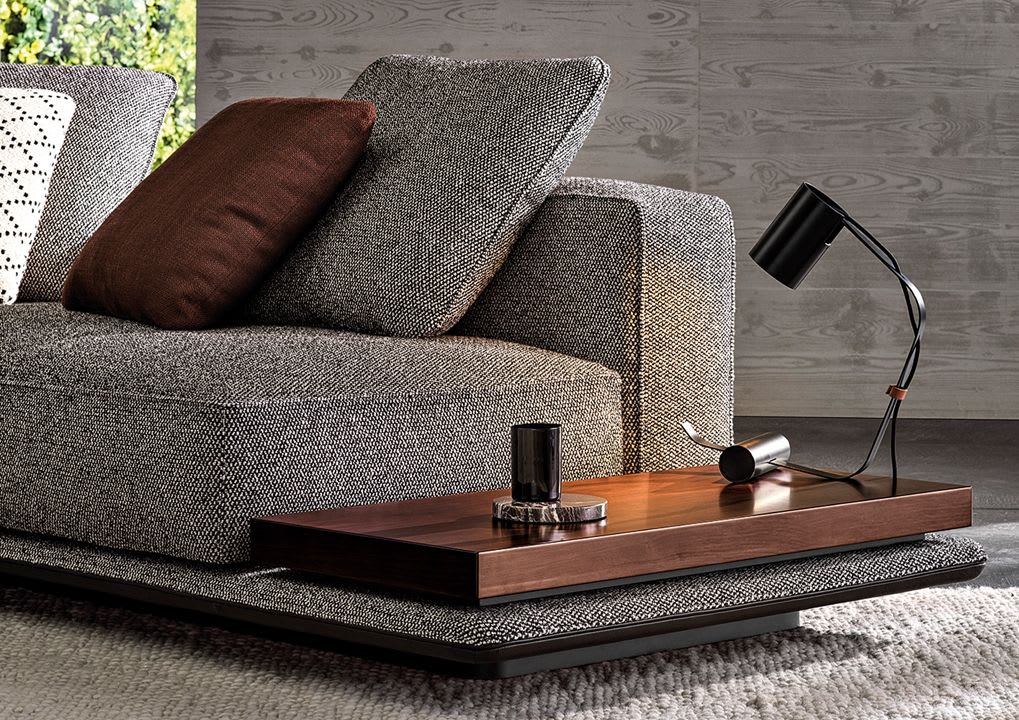
Photo By Pinterest
Mixing Modern and Contemporary: When It Works
The Consistent Material Weight Rule
Visual weight — the apparent heaviness of a piece based on its mass, material, and colour — is the primary factor in whether modern and contemporary pieces coexist comfortably. A heavy, dark walnut mid-century sideboard pairs naturally with a contemporary sofa that has solid wood block legs and a substantial upholstered form. The same walnut sideboard would conflict with a contemporary sofa on slim tapered brass legs — the visual weights are incompatible.
Accent Pieces That Bridge Both Styles
Certain furniture types function as natural bridges between modern and contemporary: wooden dining benches, rattan accent chairs, ceramic table lamps, and linen-covered ottomans all have enough visual neutrality to coexist with either style without disrupting the room's coherence.
What to Look for in a Modern Bed Frame
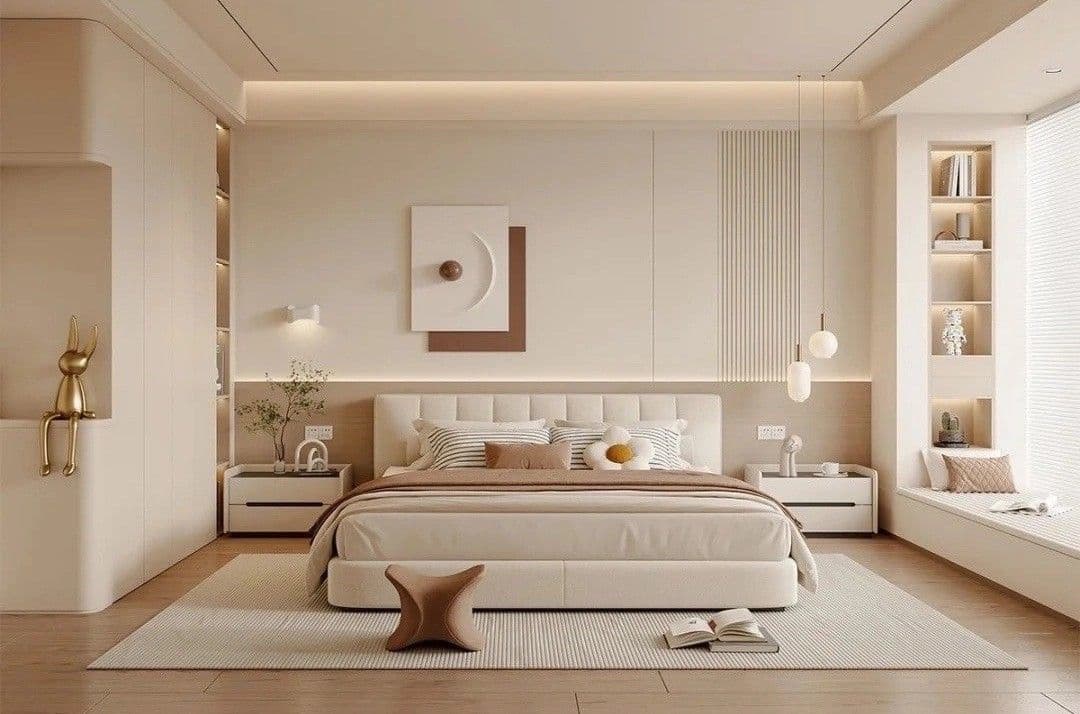
For modern design: look for clean geometric forms, visible structural logic (legs that are the same material as the frame, not applied decoration), a natural walnut or teak tone or a matte black finish, and no ornamental routing or hardware. Tapered legs, low profiles, and natural linen or leather upholstery all signal modern design credibility. See our best bed frame styles in Malaysia 2026 guide and bed frame collection for specific options.
What to Look for in a Contemporary Sofa
For contemporary 2026: look for curved or softened arm forms, fabric in boucle, ribbed texture, or performance linen in warm neutral tones, wooden block legs or a concealed base, and a colour in the warm neutral family (stone, caramel, warm white, sage). Avoid: tufting, chrome legs, pattern, and very high backs — these have moved outside the current contemporary vocabulary. Browse the FRWD sofa collection for contemporary 2026 options.
Price and Brands in Malaysia
Both modern and contemporary furniture are available across the full Malaysian price spectrum. At budget to mid-range, IKEA and MUMU Living carry credible contemporary pieces with consistent quality for the price. At mid-range to quality tier, brands like FRWD, Cellini, and Commune offer more material depth and better construction in both styles. At premium, locally commissioned pieces in solid wood to contemporary or modern specification offer the best outcome for buyers who want furniture that will age rather than date.
Interior Designer · FRWD Furniture
Malique is an interiors and lifestyle specialist at FRWD Furniture's Bangsar Experience Centre, offering practical perspective on furniture selection, room styling, and the design principles that make a home feel intentional.
Frequently Asked Questions
1.What is the difference between modern and contemporary furniture?
What is the difference between modern and contemporary furniture?
Modern furniture refers to the Modernist design movement (roughly 1920–1970) — geometric forms, industrial materials, minimal ornamentation. Contemporary furniture describes what is current right now, which in 2026 means curved forms, warm neutrals, tactile textures, and mixed natural materials. Modern is a fixed historical period; contemporary moves with the times.
2.Is contemporary or modern furniture better for a Malaysian condo?
Is contemporary or modern furniture better for a Malaysian condo?
Contemporary generally works better for a Malaysian condo. Its curved forms and warm neutral tones create a softer, more welcoming environment at condo scale, and its warm palette reads better under Malaysian tropical light than modern's cooler tones.
3.Can you mix modern and contemporary furniture in the same room?
Can you mix modern and contemporary furniture in the same room?
Yes — the key is matching visual weight. A heavy, dark-toned modern sideboard pairs with a substantial contemporary sofa; a light modern side table pairs with a lighter contemporary armchair. Mismatched visual weights create the slightly-off quality that most people feel without being able to identify.
4.Why do Malaysian furniture stores label everything as contemporary?
Why do Malaysian furniture stores label everything as contemporary?
Because 'contemporary' is commercially non-specific — it implies current relevance without committing to a design vocabulary. As a shopper, ignore category labels and look at the actual visual language of each piece: its silhouette, material, and form tell you more about its design heritage than any store classification.
5.Does modern furniture go out of style?
Does modern furniture go out of style?
True modern furniture — pieces that genuinely draw from the Modernist design tradition — ages extremely well. A mid-century modern chair from 1960 looks as relevant in 2026 as it did when designed. Contemporary furniture, by contrast, is more time-specific and may feel dated in a decade as current trends evolve.
6.What is the 2/3 rule for furniture?
What is the 2/3 rule for furniture?
The 2/3 rule is a proportional guideline used in interior design. A coffee table should be roughly two-thirds the length of the sofa it serves. A rug should be roughly two-thirds the length of the seating arrangement it anchors. A dining-room pendant light should sit roughly two-thirds the width of the dining table. The rule is not absolute, but it produces visually settled rooms more often than placing pieces at random scale. In modern furniture's proportional logic and contemporary furniture's softer arrangements alike, the 2/3 ratio holds.
7.What is the difference between modern classic and modern contemporary?
What is the difference between modern classic and modern contemporary?
Modern classic combines mid-century modern's structural confidence with traditional craftsmanship cues — solid wood, hand-finished joinery, leather upholstery. It ages well and reads as quietly luxurious. Modern contemporary combines modern's clean lines with 2026's curved, warm-neutral contemporary vocabulary — a structural mid-century sideboard paired with a softly-curved boucle sofa, for example. Modern classic leans toward timelessness. Modern contemporary leans toward today.