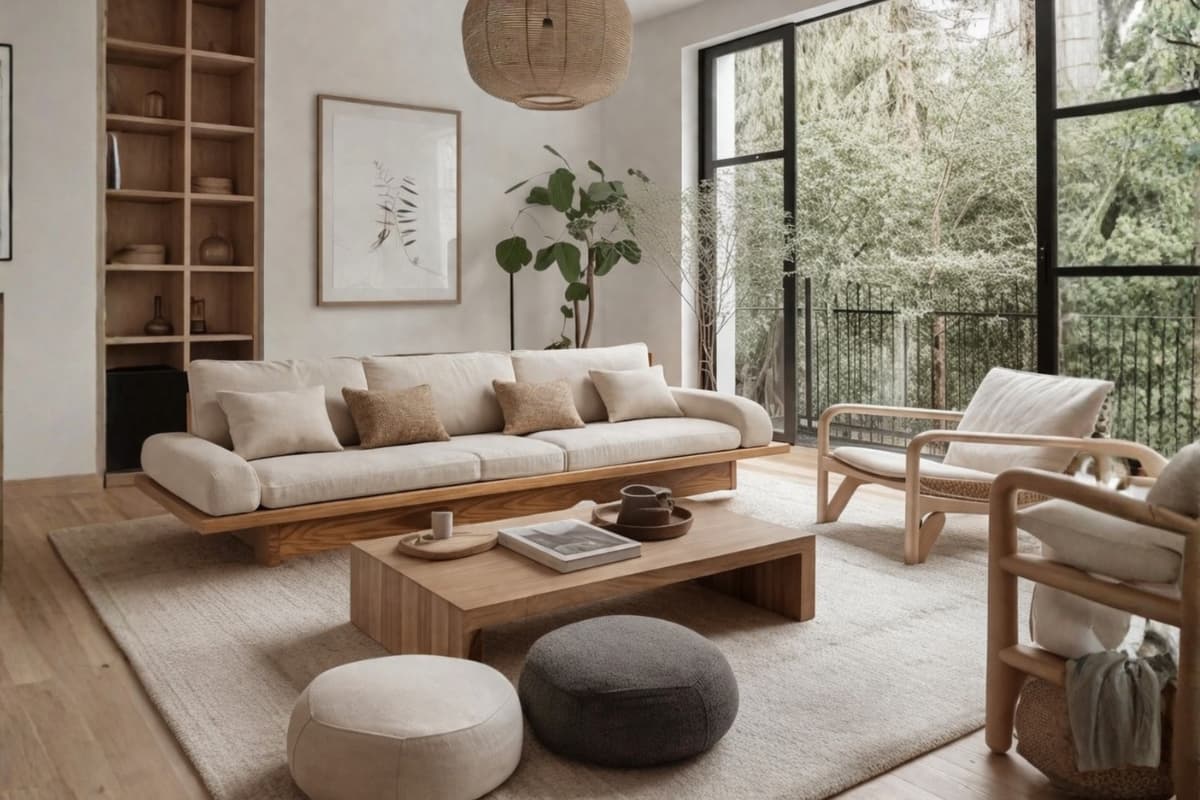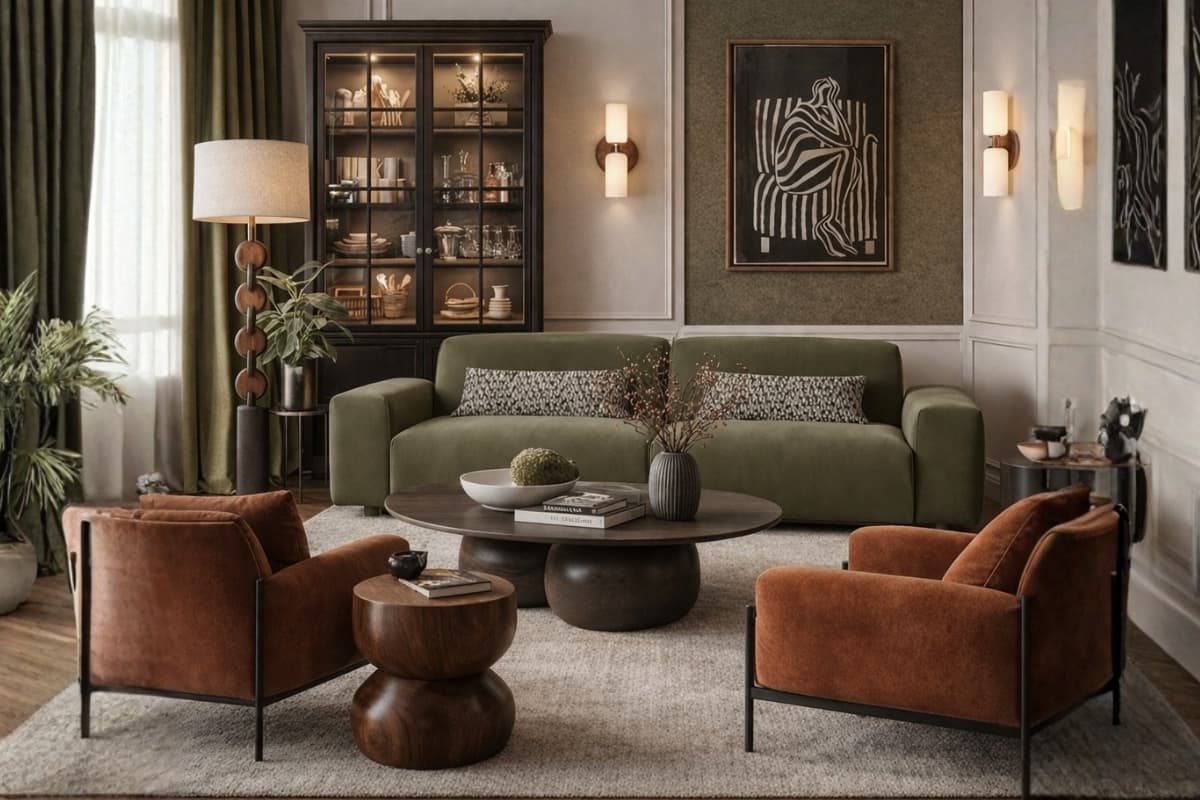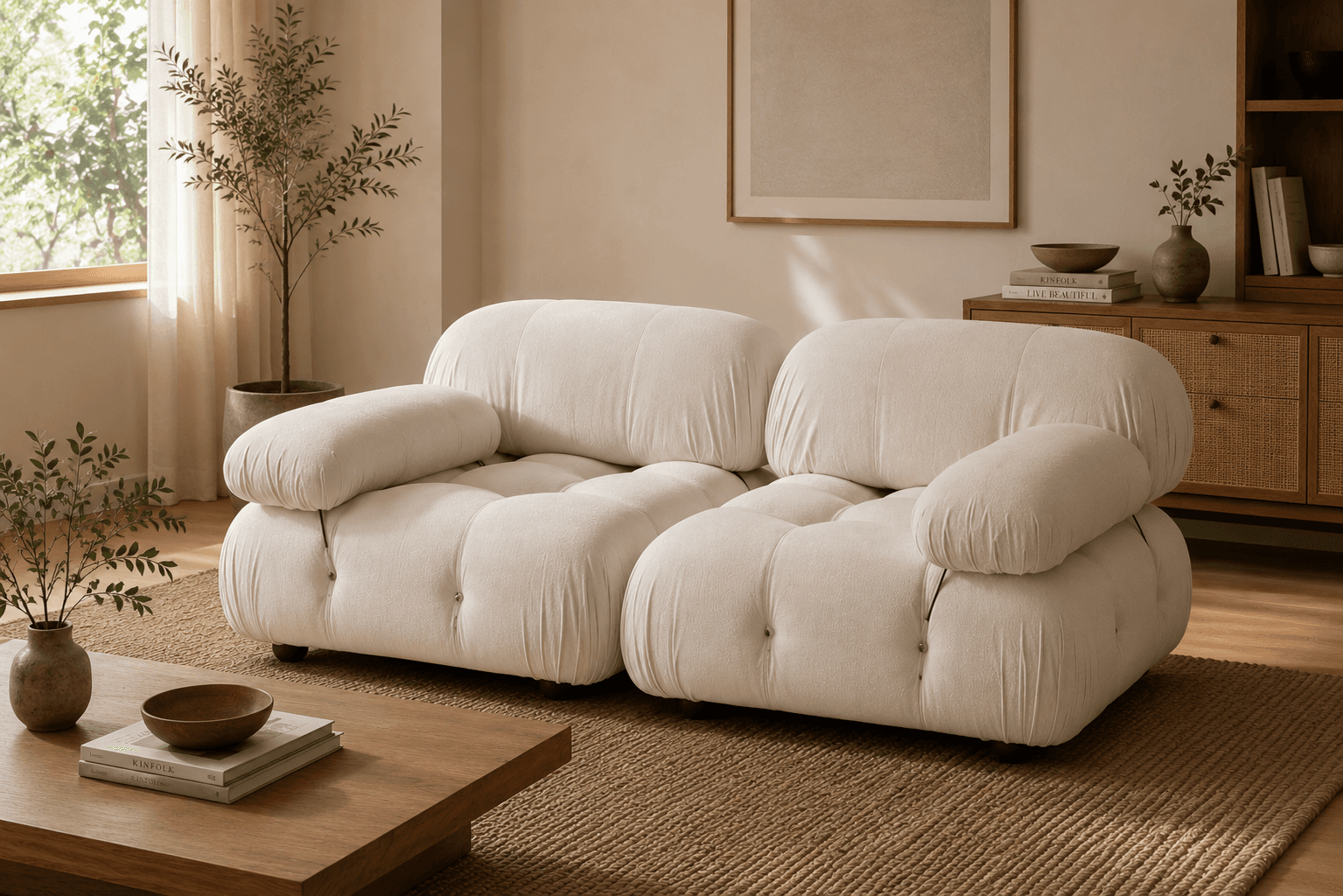
The short answer: a Muji style living room is built on five things — low-profile wood-toned furniture, visible floor space, warm neutrals (beige/oat/light grey), natural materials (wood, rattan, cotton, linen), and nothing without a purpose. It's calmer and warmer than pure minimalism, and simpler than Japandi (the one-line difference: Japandi adds Scandinavian contrast and styling; Muji subtracts until only function remains). Here's how to build it in a Malaysian living room, on a Malaysian budget.

Photo by FRWD Furniture featuring Anna 2 Seater Sofa
What Makes a Living Room "Muji" — the 5 Elements
Element | What it means in practice | What to avoid |
|---|---|---|
1. Low-profile furniture | Sofas and tables that sit low (seat height ~40 cm), rounded edges, legs visible so light passes under | Bulky arms, skirted bases, tall backs |
2. Visible floor | Clear pathways; furniture occupies ~60% of the floor, not 90% | Filling every corner |
3. Warm neutral palette | Beige, oat, off-white, light grey + pale wood tones | Pure stark white (that's minimalism), bold accent walls |
4. Natural materials | Light woods, rattan, cotton, linen — repeated across 2–3 materials max | Glossy laminates, chrome, velvet |
5. Purposeful objects | Every visible item earns its place; storage hides the rest | Open shelves of display clutter |
Print that table — it's the checklist for every purchase below.
Muji vs Japandi vs Minimalist: Which One Are You Actually After?
The three get mixed up constantly (it's the most-asked question on this topic). The differences matter when you're buying furniture:
Muji | Japandi | Minimalist | |
|---|---|---|---|
Mood | Calm, soft, lived-in | Styled, contrast-rich | Stark, architectural |
Palette | Warm neutrals, pale wood | Neutrals + black/dark wood accents | Whites, greys, monochrome |
Furniture | Low, rounded, functional | Low + one sculptural statement piece | Fewest possible pieces |
Feels like | A quiet Japanese apartment | A Kinfolk magazine spread | A gallery |
Pick it if… | You want calm without coldness | You want calm that photographs well | You genuinely own very little |
If Japandi is calling you instead, we've got a dedicated guide: Japandi Interior Design for Malaysian Homes — and for the full landscape of options, the Interior Design Styles for Malaysian Homes pillar.
Building the Room: What to Buy (and What It Costs)
The sofa — low, neutral, fabric
The anchor decision. Muji living rooms want a low-profile fabric sofa in oat/beige/grey — seat height around 40 cm, clean silhouette, visible legs. From our range (all verified live):

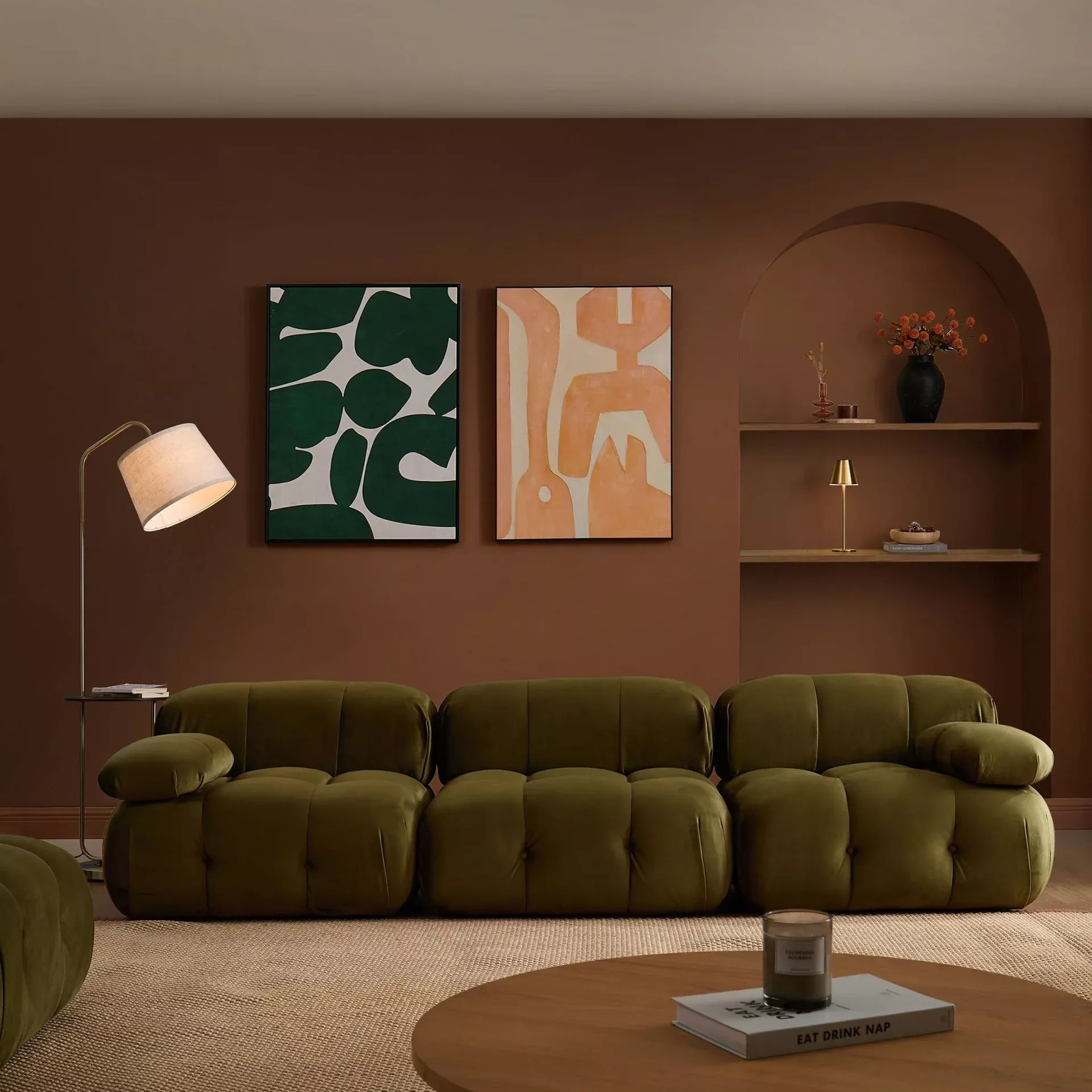
Photo by FRWD Furniture featuring Camille 3 Seater
Camille 3-Seater (RM4,060) — literally designed as a "sleek, low-profile" sofa; breathable neutral weave, pine frame. The closest thing to a Muji archetype we make.

Photo by FRWD Furniture featuring Loaf 3 Seater
Loaf (RM4,800, 3-seater) — bouclé over solid oak legs, low 40 cm seat; softer and rounder, still Muji-appropriate.

Photo by FRWD Furniture featuring Woody 2 Seater
Woody 2-Seater (RM3,475) — cherry-wood frame with visible legs; reads light, lets the floor show (element #2).
Storage — the Muji make-or-break
Muji rooms look calm because storage does the hiding. Closed low cabinets beat open shelving:
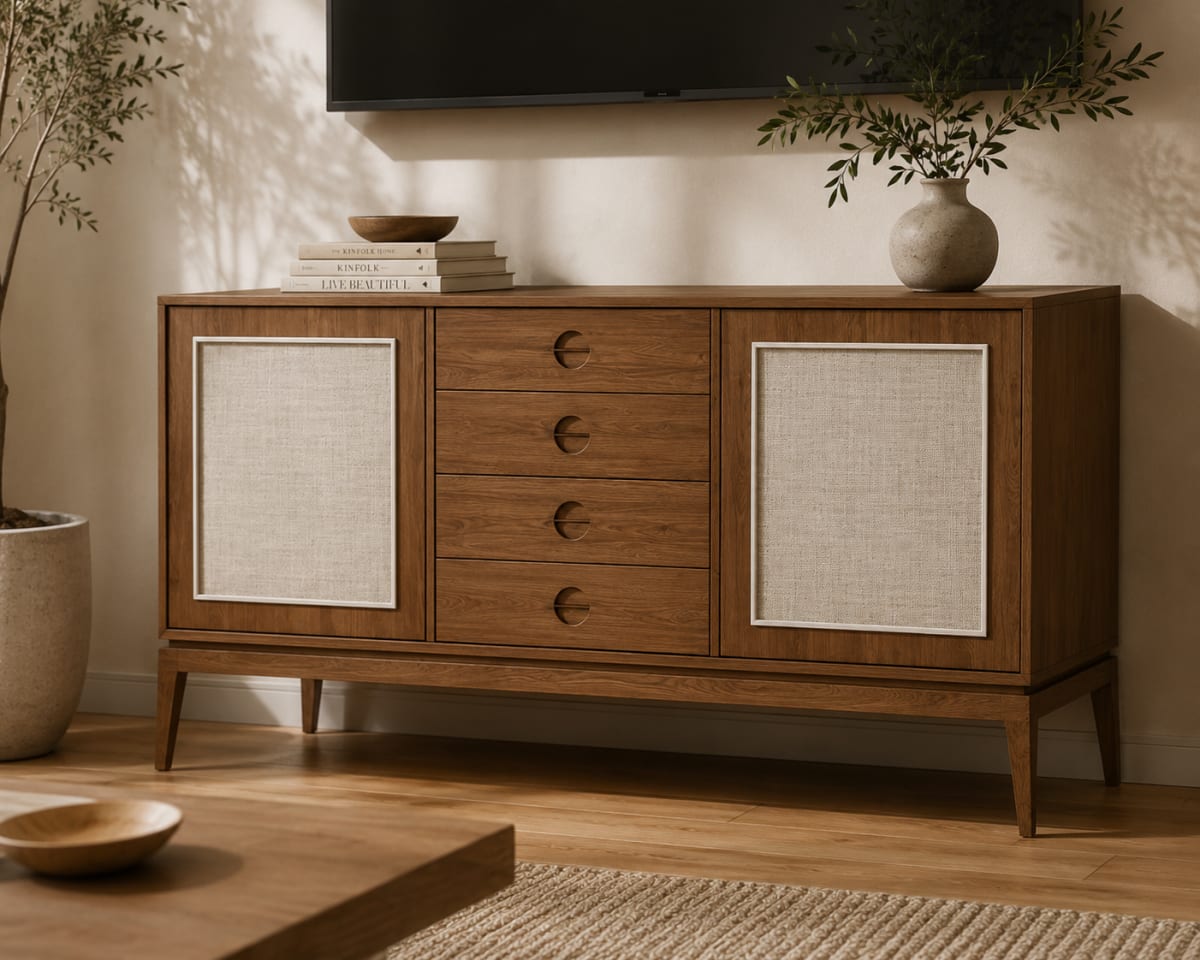
Photo by FRWD Furniture featuring Homer Cabinet
Homer Cabinet (RM4,290) — a closed cabinet sized to swallow the clutter that would otherwise live on surfaces. Wood-and-rattan storage is the classic Muji pairing, so check the Homer's current finish on the floor.

Photo by FRWD Furniture featuring Mylo TV Cabinet
A low, long TV console keeps the media wall grounded — the Mylo (210 cm, RM1,600) is the low-silhouette pick from our TV cabinet range.
Lighting — warm and layered, never harsh
Swap the ceiling glare for 2700–3000K warm white at two heights: one floor or table lamp beside the sofa, one soft source near the TV wall. Paper and fabric shades diffuse light the Muji way; a bare LED bar does not.
Textiles & greenery — the warmth layer
Cotton or linen cushions and a low-pile rug in the same neutral family (two textures, one palette); if you're changing curtains, unlined linen curtains in oat or off-white are the single most Muji-defining textile in the room. One or two plants — snake plant and monstera survive Malaysian indoor conditions with minimal care; if your track record with plants is honest, artificial plants get the look with zero maintenance.
Muji on a Malaysian Budget (the smart order)
You don't need to buy the look in one weekend. The budget-honest sequence:
Declutter first — it's free and does more for the Muji effect than any purchase. Clear surfaces, hide cables, remove the third side table.
Paint/palette next (RM200–500): warm off-white walls move the room 40% of the way there.
The sofa (RM3,000–5,000) — the anchor; see picks above. 0% instalments spread it (~RM290–400/mo over 12 months).
Storage (RM1,500–3,000) — one good closed cabinet replaces five baskets.
Lighting + textiles last (RM300–800) — cheap, high-impact, easy to get wrong if bought first.
Total: a genuine Muji living room lands around RM5,000–9,500 built over 2–3 months — far from the "expensive Japanese aesthetic" it's assumed to be.
Beyond the Living Room (quick notes)
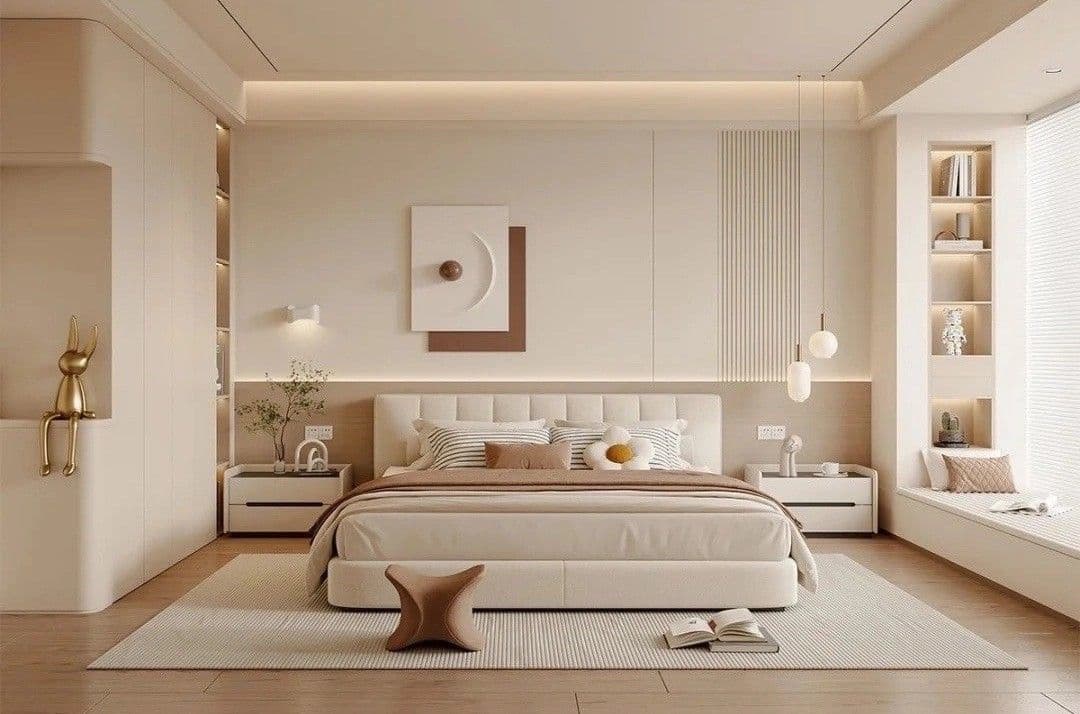
Muji bedroom: low bed frame (or platform), linen bedding in oat/white, one bedside lamp, everything else in the wardrobe. Our bed frame range has the low-profile options; sizes in the bed size guide.
Muji kitchen: it's 90% decanting and hiding — matching containers, clear counters; the furniture layer is just a light-wood dining set kept to essentials.
Related: Japandi Interior Design Malaysia · Interior Design Styles for Malaysian Homes · Sofa size guide · Browse sofas
Interior Designer · FRWD Furniture
Malique is an interiors and lifestyle specialist at FRWD Furniture's Bangsar Experience Centre, offering practical perspective on furniture selection, room styling, and the design principles that make a home feel intentional.
Frequently Asked Questions
1.What design style is Muji?
What design style is Muji?
Muji is Japanese functional minimalism — warm neutrals, natural materials, low-profile furniture, and strictly purposeful objects. Softer and more lived-in than Western minimalism, less styled than Japandi.
2.What is the difference between Muji and Japandi style?
What is the difference between Muji and Japandi style?
Japandi blends Japanese restraint with Scandinavian styling — expect contrast (black or dark-wood accents), one sculptural statement piece, and a more "designed" look. Muji subtracts instead: no statement pieces, no contrast for its own sake, only function in warm neutrals. If a room photographs dramatically, it's probably Japandi; if it just feels quiet, it's Muji.
3.What are Muji style key elements?
What are Muji style key elements?
Five: low-profile wood-toned furniture, visible floor space, a warm neutral palette, natural materials (wood, rattan, cotton, linen), and purposeful objects with everything else in closed storage.
4.How do you create a Muji style home?
How do you create a Muji style home?
In order: declutter, shift the palette to warm neutrals, anchor each room with one low-profile furniture piece, add closed storage to hide daily clutter, then finish with warm lighting and natural-fibre textiles. Budget RM6,000–9,500 for a Malaysian living room done over 2–3 months.